A crochet top made in one color is a good top. The same pattern made in three colors is a wardrobe. This is the specific mathematics of a pattern worth repeating: when the construction is interesting enough that the color is the only variable that needs to change, you have found a pattern worth making more than once. These seventeen tops range from the simplest mesh tank a beginner can finish in a weekend to the most complex lace shell that takes a month of slow evenings, and every one of them earns the title of the list by being the kind of pattern where finishing the first one immediately raises the question of which color to start next.
This list covers 17 crochet top patterns across all skill levels, each with construction notes, the specific color combinations that produce the most striking version, and what makes each top worth making again in a different color the moment the first one is off the hook.
1. Simple Mesh Tank Top
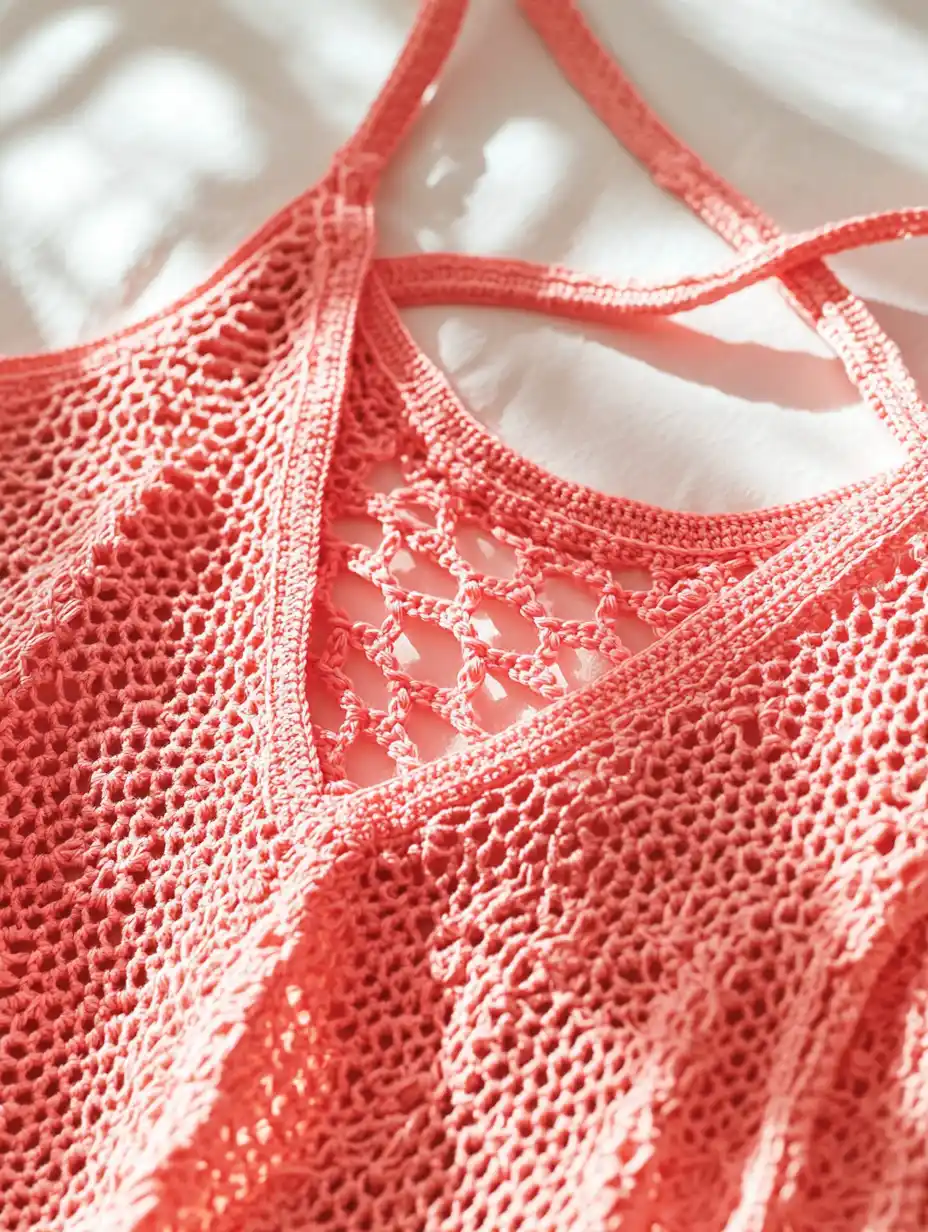
A sleeveless tank worked in a simple chain-space mesh pattern from the bottom up, with adjustable strap lengths and a straight hem. The simplest top on this list and the first one a confident beginner should attempt, producing a lightweight layering piece that works over a swimsuit, over a bralette, or under a blazer depending entirely on the color chosen.
In a vivid coral cotton the simple mesh tank top worn over a white bralette is a summer outfit. The same pattern in deep forest green worn under a cream linen blazer is an autumn outfit. The same pattern in bright white worn over a black swimsuit is a beach outfit. Three colors, three contexts, one construction that takes under a weekend at any skill level. The mesh gauge determines the opacity: a chain-three mesh worked in a four-weight cotton at four millimeters produces a fabric that layers well without being fully opaque alone. A chain-five mesh produces a more open fabric that reads as beach cover-up rather than standalone top.
Yarn: DK weight cotton in any vivid or neutral color
Hook: 4 mm
Construction: Bottom up, worked in rows or in the round
Time: 6 to 10 hours
Skill level: Beginner
Best color argument: Vivid coral, bright white, and deep forest green are three different tops requiring three different outfits built around them, which is the correct reason to make all three
2. Granny Square Patchwork Top

A top constructed from multiple granny squares joined into a front panel and back panel, the squares in a coordinated palette of four to six colors with the join method providing its own graphic element. The granny square top is the construction where the color decision is made at the individual square level rather than at the garment level, which produces the most complex color result of any top on this list.
In a palette of vivid teal, warm coral, bright yellow, and natural cream squares with a deep navy join the granny square patchwork top produces the specific maximum-color effect of a garment that reads as a single piece from a distance and as a collection of individual color decisions from close range. The deep navy join is the element that makes the vivid palette work as a cohesive garment rather than as a collection of competing colors: a dark join between vivid colors acts as a visual separator that allows each color to be itself without fighting its neighbors. A join in any of the palette colors produces a garment that reads as too much of that color.
Yarn: DK weight cotton in four to six coordinated colors plus a join color
Hook: 4 mm
Construction: Individual squares joined flat, then assembled into front and back panels
Time: 15 to 25 hours depending on square count
Skill level: Beginner to intermediate
Best color argument: The palette’s success depends on the join color doing its separating work: choose the darkest color in or adjacent to the palette and use it for every join
3. Off-Shoulder Ruffle Top
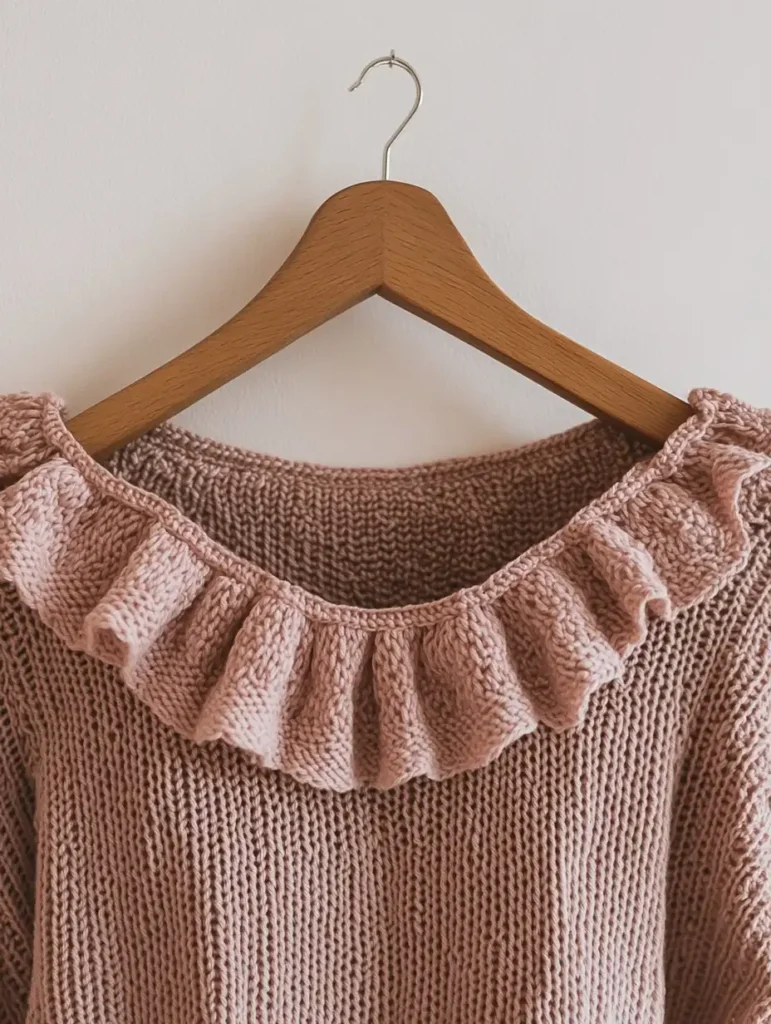
A fitted top with a wide off-shoulder neckline finished with a ruffle of two to three rounds of increasing stitches, the ruffle producing the characteristic soft drape that the off-shoulder silhouette requires. The ruffle is the construction element that most determines the top’s character and the one that reads most differently in different colors.
In a soft dusty rose the off-shoulder ruffle top reads as romantic and specifically feminine. In a vivid cobalt blue the same construction reads as graphic and confident. In a warm terracotta it reads as autumnal and grounded. The ruffle’s drape quality depends on the yarn’s weight and twist: a loosely twisted DK cotton produces a ruffle that falls softly and does not stand away from the shoulder. A tightly twisted DK or a linen-blend produces a ruffle with more structure that fans outward at the shoulder edge. The construction is the same; the character is determined entirely by the yarn’s behavior in the ruffle rounds.
Yarn: DK weight cotton or cotton-linen blend
Hook: 4 mm
Construction: Worked in the round from the bottom, ruffle added to the neckline after main body is complete
Time: 10 to 14 hours
Skill level: Intermediate
Best color argument: Make the first in dusty rose for the romantic read and the second in vivid cobalt to confirm that it is the construction doing the structural work and the color doing the character work
4. Striped Crop Top
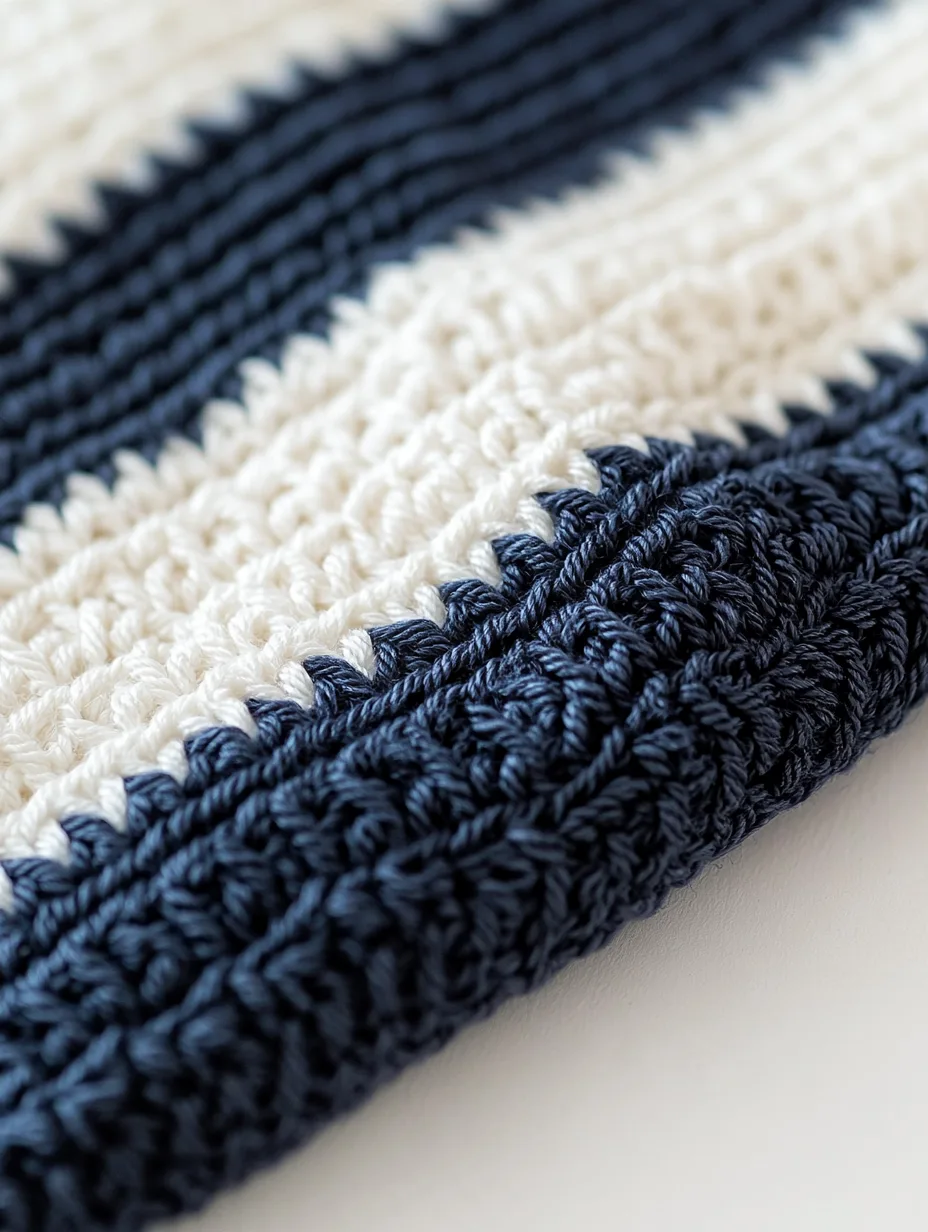
A cropped top worked in horizontal stripes of two to four colors, the stripe width and color sequence chosen to produce a specific graphic result. The stripe top is the construction where color IS the pattern, which means the same stitch repeated across every row and all the interest coming from where one color ends and another begins.
In wide stripes of deep navy and bright white for a nautical read, or narrow stripes of vivid coral and warm gold for a maximalist read, or a single thick stripe of vivid yellow on a white body for a graphic read, the striped crop top changes character completely with each color combination while the construction remains identical across all three versions. Stripe width is the variable that most determines the reading: stripes of equal width in two colors produce a classic, balanced graphic. Unequal stripes, one wide and one narrow, produce a more dynamic graphic. A single accent stripe on a solid body is the understated version. All are correct; all are different garments.
Yarn: DK weight cotton in two to four colors
Hook: 4 mm
Construction: Worked in rows, color changes at row end
Time: 8 to 12 hours
Skill level: Beginner
Best color argument: The navy and white version and the coral and gold version are two different garments with two different wardrobes around them, and making both takes less combined time than most single garment projects
5. Lace Shell Top
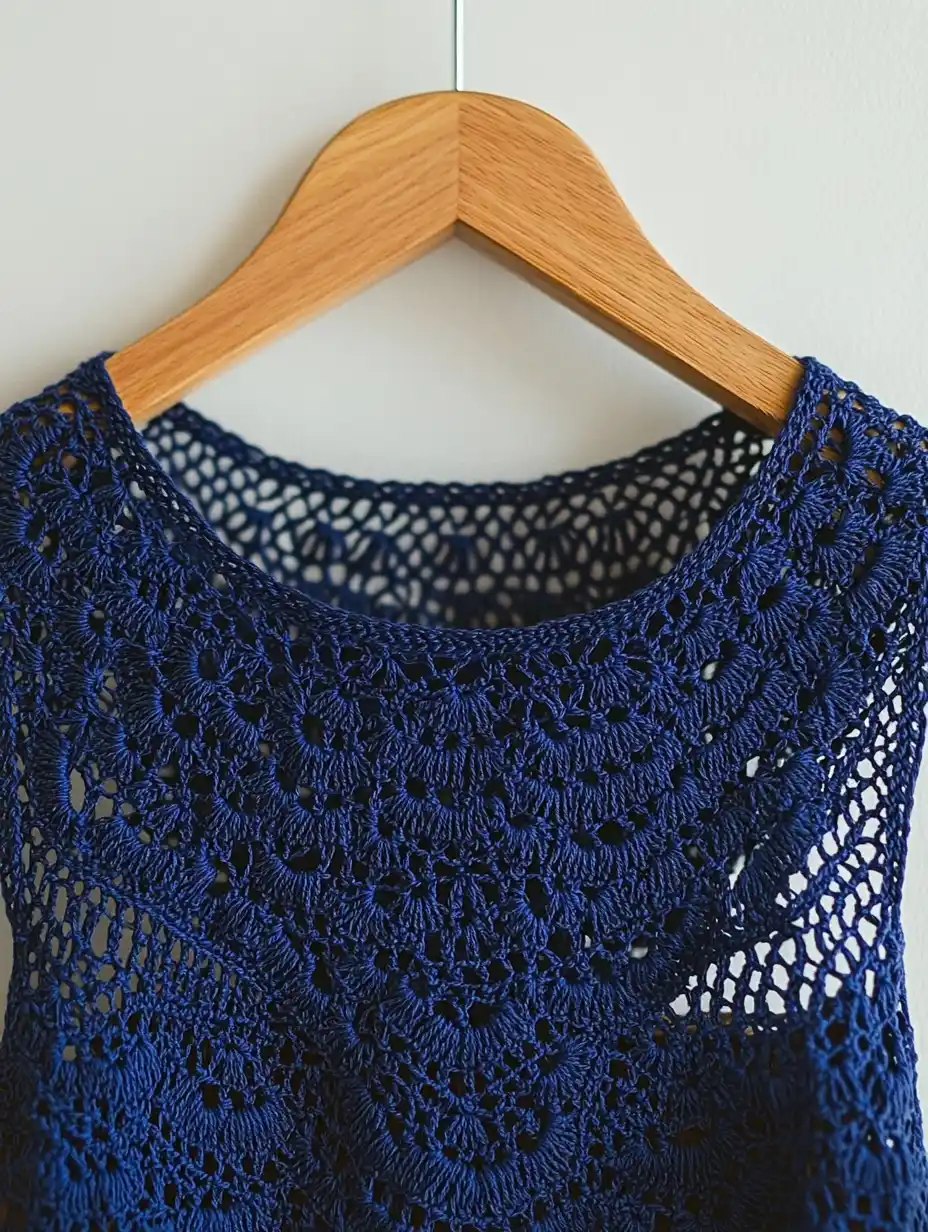
A sleeveless shell worked in a repeating shell stitch or fan stitch pattern, producing a fabric of overlapping fan shapes that reads as lace from a distance and as textured textile up close. The lace shell is the top where the stitch itself produces the visual interest and the color’s job is to let the stitch pattern be seen clearly.
In a deep jewel tone, vivid sapphire or deep emerald or rich amethyst, the lace shell top produces a top where the shell stitch pattern is fully visible because the dark color allows every fan’s shadow and highlight to read clearly. In a pale color, soft cream or pale blush, the same pattern reads as more delicate because the low contrast between yarn and shadow reduces the stitch definition. Both readings are correct for different occasions: the deep jewel tone for evenings and maximum impact, the pale version for layering and a softer register. The shell stitch pattern looks identical in both; the experience of wearing each is completely different.
Yarn: DK weight cotton or bamboo-cotton blend
Hook: 4 mm
Construction: Worked in rows, shell stitch repeat
Time: 12 to 18 hours
Skill level: Intermediate
Best color argument: Deep jewel tones make the shell stitch pattern read at maximum definition; pale colors make it read as delicate: both are correct, for different versions of the same occasion
6. Halter Neck Tie-Top

A triangle-front halter top with long tie strings at the neck and back, worked in a dense single crochet or a textured stitch for the front triangles and a simple chain for the ties. The halter top is the most season-specific garment on this list and the one where a vivid color makes the strongest individual statement.
In a vivid hot pink the halter neck tie-top read as the garment that requires no other decision about the outfit because the color has already made it. In a natural undyed cotton it reads as the considered, understated version of the same silhouette. In a vivid color-blocked version, one triangle in vivid yellow and one in deep teal, it reads as a graphic object that most people look at twice. The triangle panels are small enough that a vivid or unusual color choice does not feel overwhelming: a color that would be too much across a full top is exactly the right amount across two small triangles.
Yarn: DK weight cotton in one vivid color or two contrasting colors for color-block version
Hook: 4 mm
Construction: Two triangle panels worked separately, joined at center front, ties added at corners
Time: 4 to 6 hours
Skill level: Beginner to intermediate
Best color argument: The color-block halter with one vivid triangle in each of two contrasting colors is four hours of making that produces the most photographed garment at any summer gathering
7. Boho Fringe Tank

A tank top with a fringe of twelve to eighteen centimeters added along the hem and optionally at the sleeve edges, the fringe cut from the same yarn as the body or in a contrasting color for maximum drama. The fringe is the element that converts a standard tank silhouette into a boho garment, and the fringe color is an independent color decision from the body color.
In a natural cream body with a vivid turquoise fringe, or a deep burgundy body with a warm gold fringe, or a vivid orange body with a natural cream fringe, the boho fringe tank produces three very different garments from the same construction through two color decisions rather than one. The fringe length determines the movement quality: twelve centimeters produces a fringe that swings with walking. Eighteen centimeters produces a fringe that swings independently of the body, which is the specific kinetic quality of a well-fringed boho garment. The fringe is added after the body is complete by cutting lengths of yarn twice the desired fringe length and folding each length in half through a stitch at the hem edge.
Yarn: DK weight cotton in one color for body, same or contrasting for fringe
Hook: 4 mm
Construction: Standard tank body worked in the round, fringe added at hem after completion
Time: 8 to 12 hours plus fringe
Skill level: Beginner
Best color argument: The body color and the fringe color are two independent decisions and the most interesting version is the one where they are most unexpected together
8. Color-Block Boxy Tee
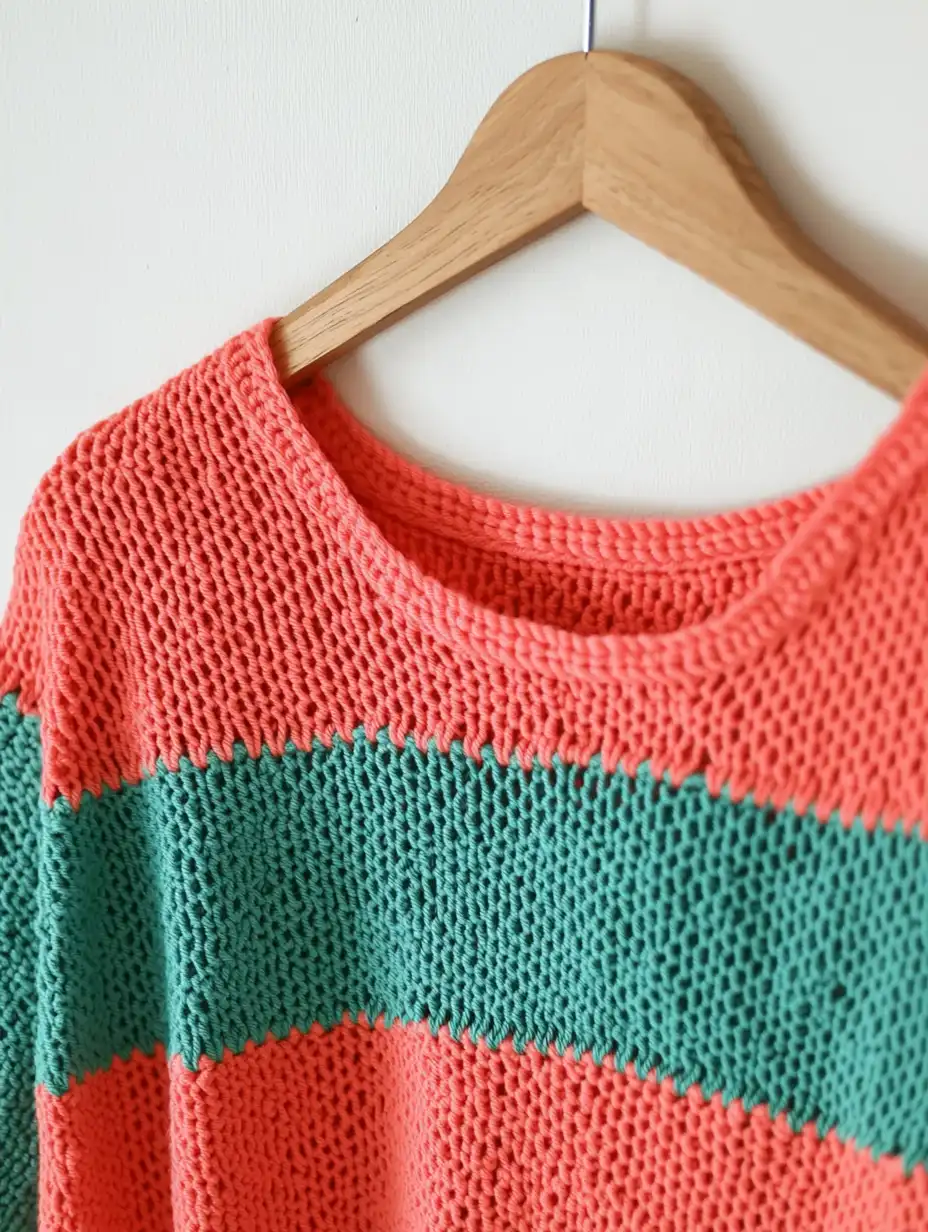
A boxy, slightly oversized tee silhouette worked in two or three color blocks, the color boundary running horizontally across the body at a deliberate proportion rather than at the middle. The boxy tee is the top where color placement replaces color complexity: two colors in the right proportions produce a garment that reads as more deliberately designed than many more complex constructions.
In a deep teal body with a vivid coral yoke and sleeve section, or a warm mustard lower body with a bright white upper body and sleeves, the color-block boxy tee makes the color boundary position the most important design decision: a boundary at the chest creates a yoke effect. A boundary at the waist creates a two-tone effect. A boundary at the hip creates an extended-color-block effect. Moving the boundary three centimeters in either direction produces a different garment read. Choose the proportion deliberately rather than placing it at the mathematical center, which produces the least interesting color-block proportion.
Yarn: DK weight cotton in two or three colors
Hook: 4 mm
Construction: Worked in the round from bottom, color change at planned boundary row
Time: 12 to 16 hours
Skill level: Intermediate
Best color argument: The color boundary proportion is more important than the color choice: a deliberately placed boundary at a non-center proportion reads as designed; a boundary at the mathematical middle reads as defaulted
9. Crochet Corset-Style Top
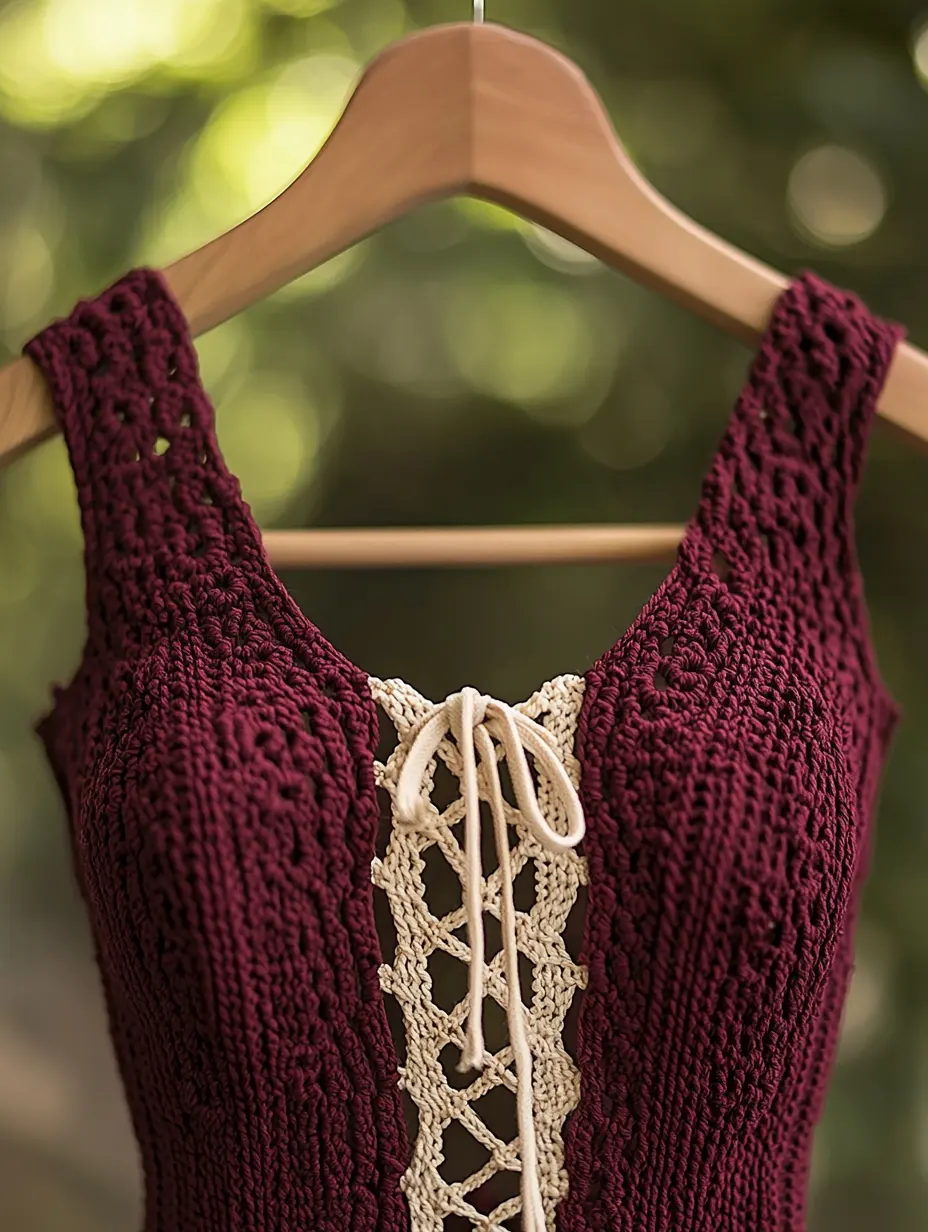
A fitted top with vertical panels worked in a dense stitch that provides structure, finished with a lace-up detail at the back or front using a contrasting cord threaded through chain-space eyelets. The corset top is the most fashion-forward construction on this list and the one where yarn choice has the most impact on the final reading.
In a deep burgundy cotton with a natural cream lace-up cord the crochet corset-style top reads as a deliberately historical reference made modern through the crochet construction. In a vivid cobalt blue with a gold-effect cord it reads as a maximum-impact statement piece. In a soft sage with a white cord it reads as the relaxed version of the silhouette. The lace-up detail is the element that most determines which register the garment occupies: a natural or neutral cord keeps the lace-up as a functional closure that happens to be visible. A contrasting vivid cord makes the lace-up the garment’s primary visual feature.
Yarn: DK weight cotton in a main color; contrasting cord for lace-up
Hook: 3.5 mm for a denser fabric
Construction: Worked in vertical panels joined at the sides, eyelets worked into the edge stitches
Time: 14 to 18 hours
Skill level: Intermediate to advanced
Best color argument: Deep burgundy with cream cord is the classic version; vivid cobalt with gold cord is the maximalist version: both are correct, made for different days
10. Floral Motif Yoke Top
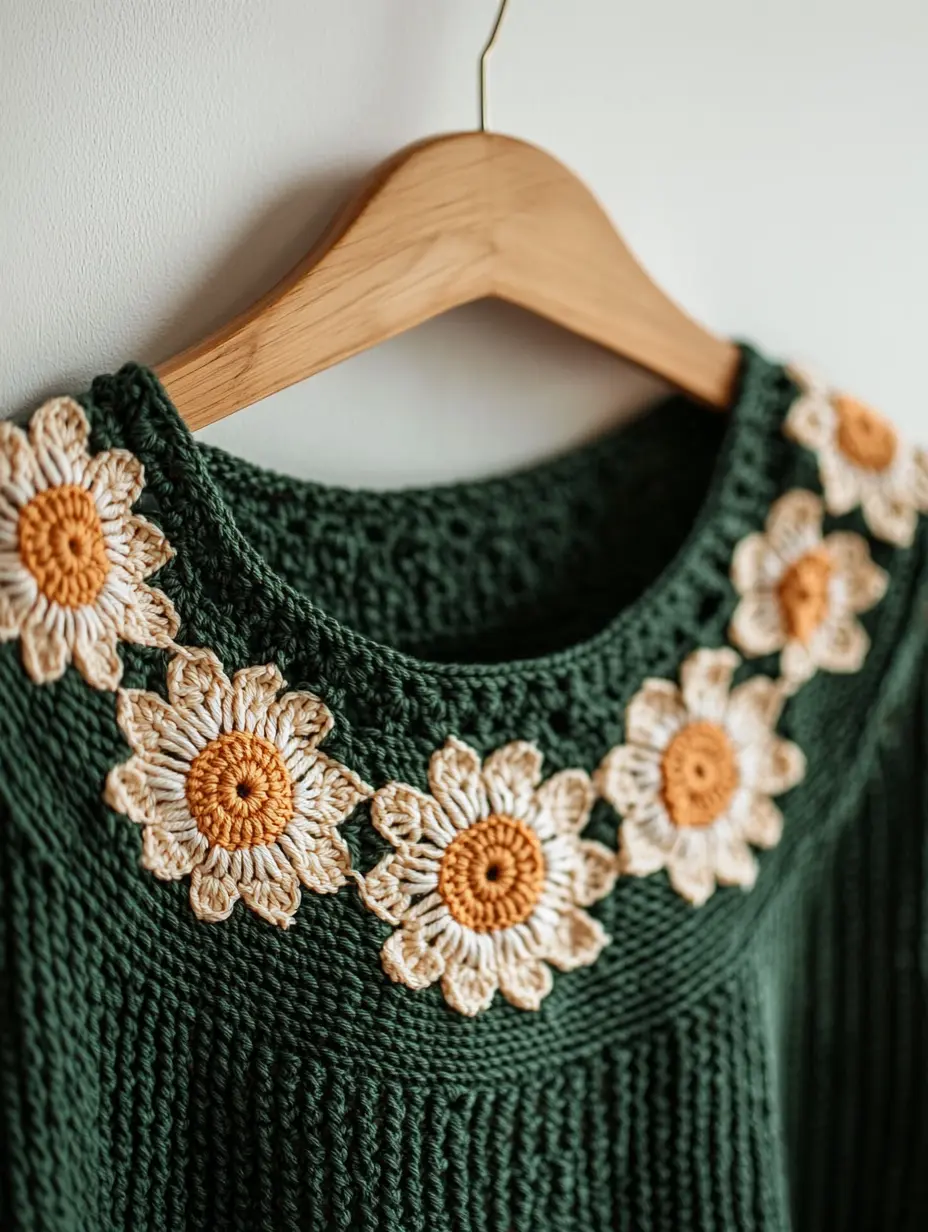
A round-yoke top where the yoke is constructed from individual floral motifs joined together into a circular section, the body worked downward from the joined yoke. The floral yoke top is the garment where the motif color palette and the body color are two separate design decisions that must work together.
In a body of deep forest green with a yoke of cream and soft yellow and warm peach floral motifs the floral motif yoke top produces the specific quality of a garment that has been designed from the neckline outward, the most interesting visual part at the top where it is visible when worn rather than hidden at the hem. The floral motifs in the yoke should be in colors that appear in the wearer’s wider wardrobe, not in colors chosen for the garment alone: a yoke in colors that coordinate with three different pairs of trousers produces a top that gets worn more than a yoke in a palette chosen for its own beauty.
Yarn: DK weight cotton in a body color and two to four motif colors
Hook: 4 mm
Construction: Floral motifs worked individually, joined into a circle, body worked downward from yoke
Time: 16 to 22 hours
Skill level: Intermediate
Best color argument: The body color should be the deepest or most neutral of all the palette colors so the floral yoke reads as the focal point rather than competing with the body
11. Bandeau Top with Ties
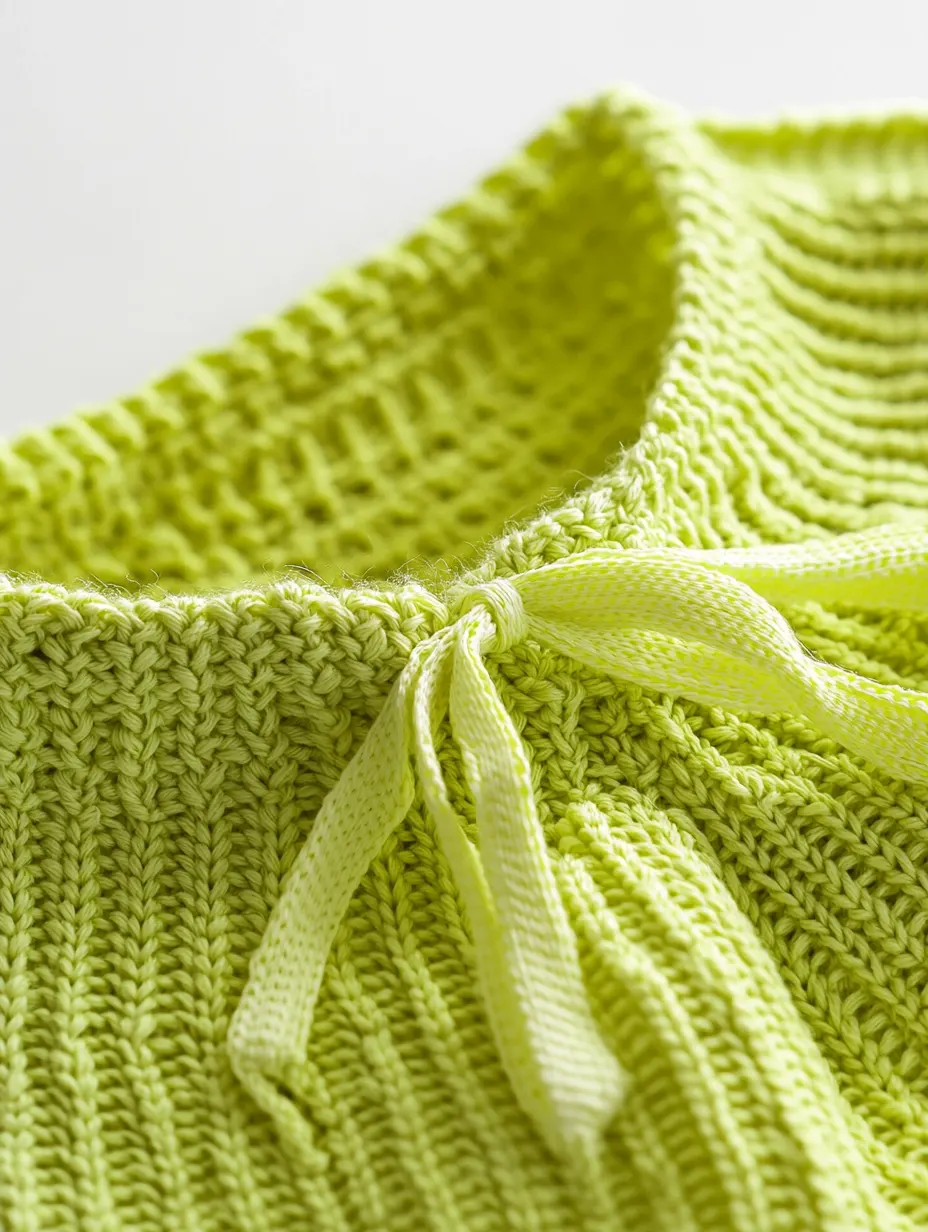
A tube-style bandeau of fifteen to eighteen centimeters height worked in a firm ribbed stitch for stretch and structure, with long fabric or crochet ties at the sides for adjustable fit and styling options. The bandeau is the most versatile top on this list in terms of how it is worn, which means the color is doing the most work of determining what kind of garment it reads as.
In a vivid chartreuse the bandeau with ties worn with wide-leg trousers reads as a fashion-conscious summer outfit. In a warm terracotta it reads as the warm-palette version of the same outfit. In a deep navy ribbed cotton it reads as the elevated athleisure version. The ribbed stitch is essential to both the structure and the stretch: a bandeau worked in single crochet without ribbing does not stretch enough to be comfortable and reads as a tube of fabric. A bandeau worked in a ribbed stitch pattern has the stretch to fit comfortably and the structure to stay in place, which is the construction requirement that everything else about the garment depends on.
Yarn: DK weight cotton with good stretch recovery
Hook: 4 mm
Construction: Worked in the round in a ribbed stitch pattern, ties added at side seam positions
Time: 4 to 6 hours
Skill level: Beginner to intermediate
Best color argument: Vivid chartreuse and warm terracotta are two versions of the same garment for two different palettes, and both take under a day to make
12. Open-Back Crochet Top
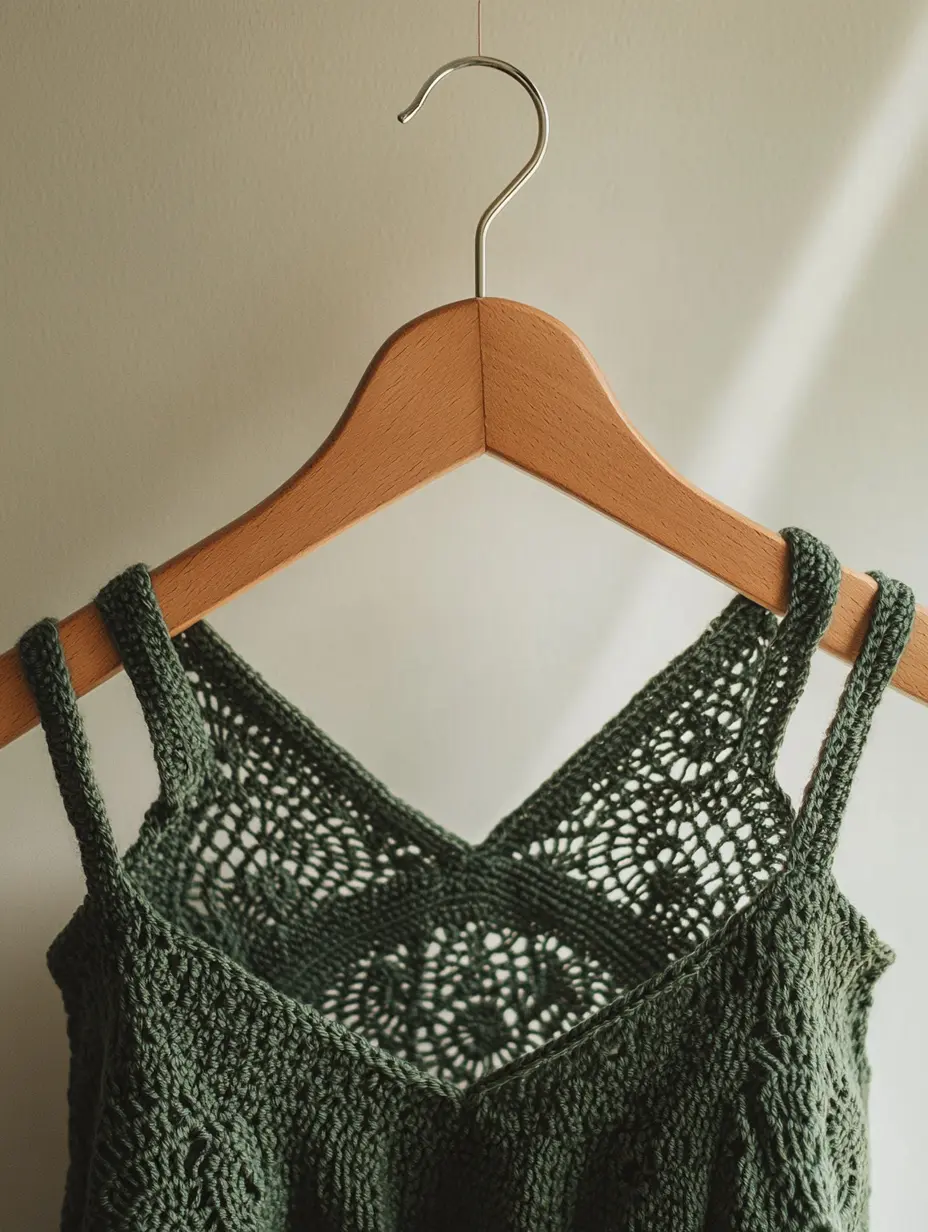
A top with a standard front panel and a dramatically open back, the back section reduced to two side panels and a crossing strap or a geometric web of yarn that covers the minimal required area while maximizing the visual interest. The open-back top is the construction where the back is as considered as the front, which makes it the most interesting top to wear and the most interesting to make.
In a solid vivid color, deep jade or vivid saffron yellow or rich plum, the open-back crochet top is the garment that reads as a standard top from the front and as a deliberate design statement from the back, which is the specific quality of a garment that rewards being looked at from more than one direction. The crossing strap or geometric back detail is worked in the same color as the front panel: a contrasting back section reads as two different garments joined at the sides. A matching color throughout reads as one garment where the back has been given as much design attention as the front.
Yarn: DK weight cotton in one vivid solid color
Hook: 4 mm
Construction: Front panel worked first, back panels worked separately, crossing strap or geometric detail connects the back panels
Time: 12 to 16 hours
Skill level: Intermediate
Best color argument: The back detail reads most clearly in a solid vivid color with no pattern distraction: the construction is the statement and the color is its amplifier
13. Pineapple Stitch Blouse
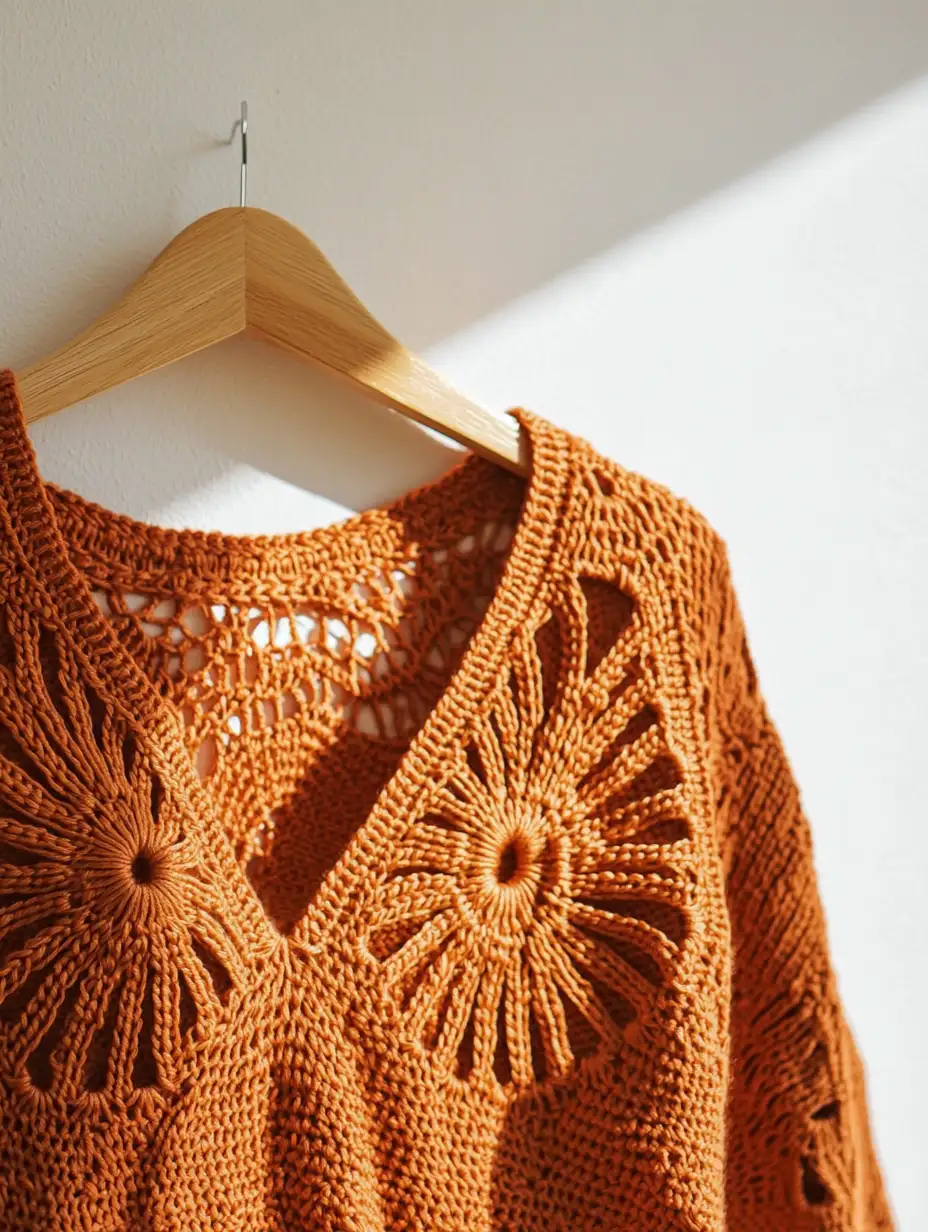
A loose-fitting blouse with short sleeves or cap sleeves worked entirely in the pineapple stitch, a classic fan-based lace pattern that produces a fabric of repeated pineapple motifs readable as a decorative pattern at a distance. The pineapple stitch blouse is the heirloom pattern made contemporary through color and fit.
In a vivid rust orange the pineapple stitch blouse reads as a modern fashion garment that happens to use a hundred-year-old stitch. In a soft antique cream it reads as a deliberately vintage-influenced piece. In a vivid chartreuse it reads as the maximalist position on a traditional stitch, the color arguing that the pineapple stitch is not a nostalgic choice but a current one worn by a person with strong opinions about textile history. The pineapple stitch pattern is the same in all three colors; the wearer’s relationship to craft tradition reads completely differently in each.
Yarn: DK weight cotton or bamboo-cotton blend
Hook: 4 mm
Construction: Worked in rows, pineapple stitch repeat across the full width
Time: 18 to 25 hours
Skill level: Intermediate to advanced
Best color argument: A vivid non-traditional color in a traditional stitch pattern makes both the color and the stitch more interesting simultaneously: each one makes the other more visible
14. Asymmetric Hem Top
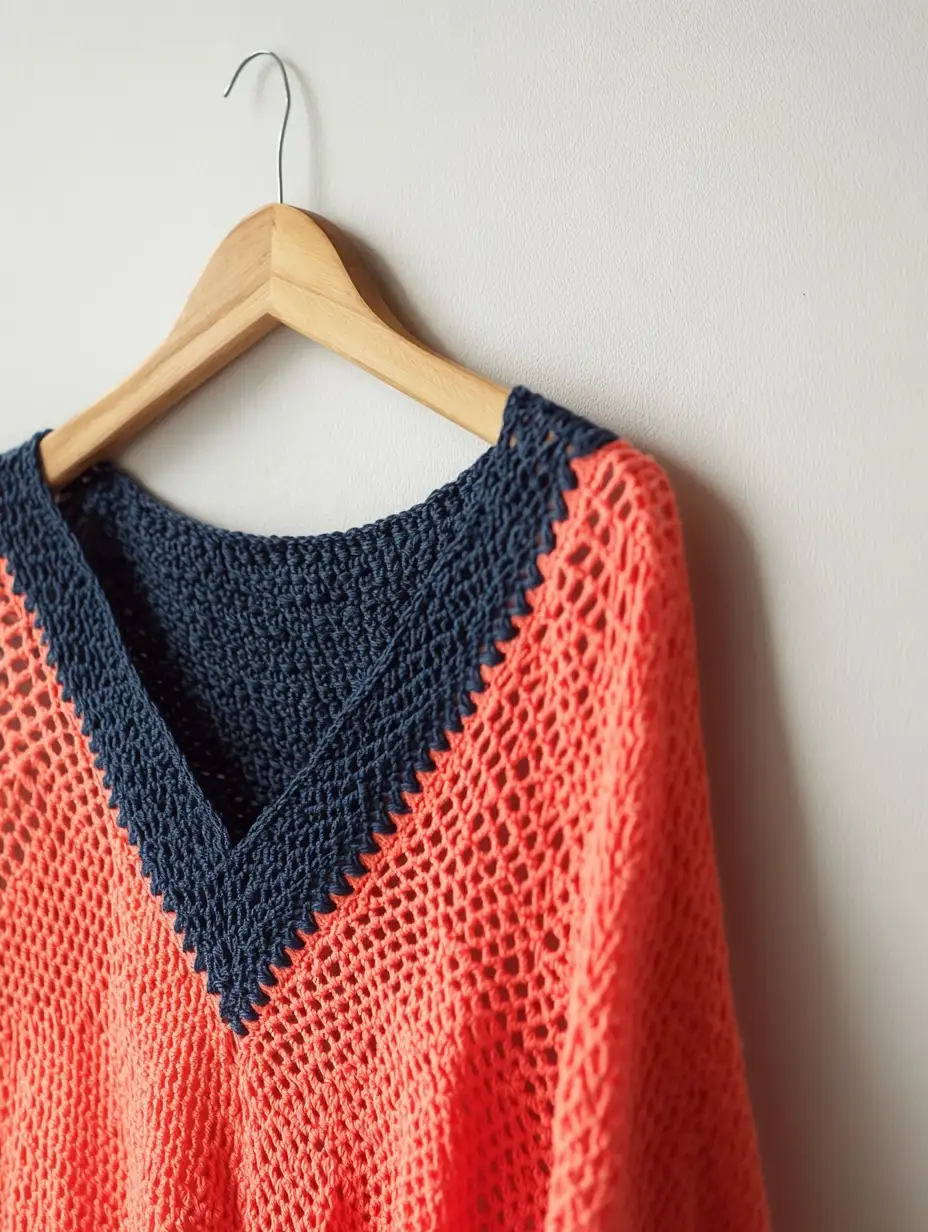
A top with a standard front hem and a longer back hem of ten to fifteen centimeters, the hem difference creating a draped back silhouette and the specific visual interest of a garment that is doing something unexpected at the bottom edge. The asymmetric hem top is the construction that looks more complex than it is, because the hem difference is simply a matter of continuing the back panel for additional rows.
In a deep teal single-color the asymmetric hem top reads as a specifically considered fashion garment where the silhouette is the statement. In a two-color version with the front panel in vivid coral and the extended back hem in deep navy, the hem difference also becomes a color reveal: from the front, a solid coral top. From the side or back, a navy hem extension that announces itself only from certain angles. The two-color asymmetric version is the maximalist reading of a construction that most makers approach in a single color.
Yarn: DK weight cotton in one or two colors
Hook: 4 mm
Construction: Front and back panels worked separately, back continued for additional rows before joining
Time: 10 to 14 hours
Skill level: Intermediate
Best color argument: The two-color asymmetric version where the extended hem is a contrasting color is the construction reading that most rewards being worn rather than looked at on a hanger
15. Cropped Cardigan with Buttons
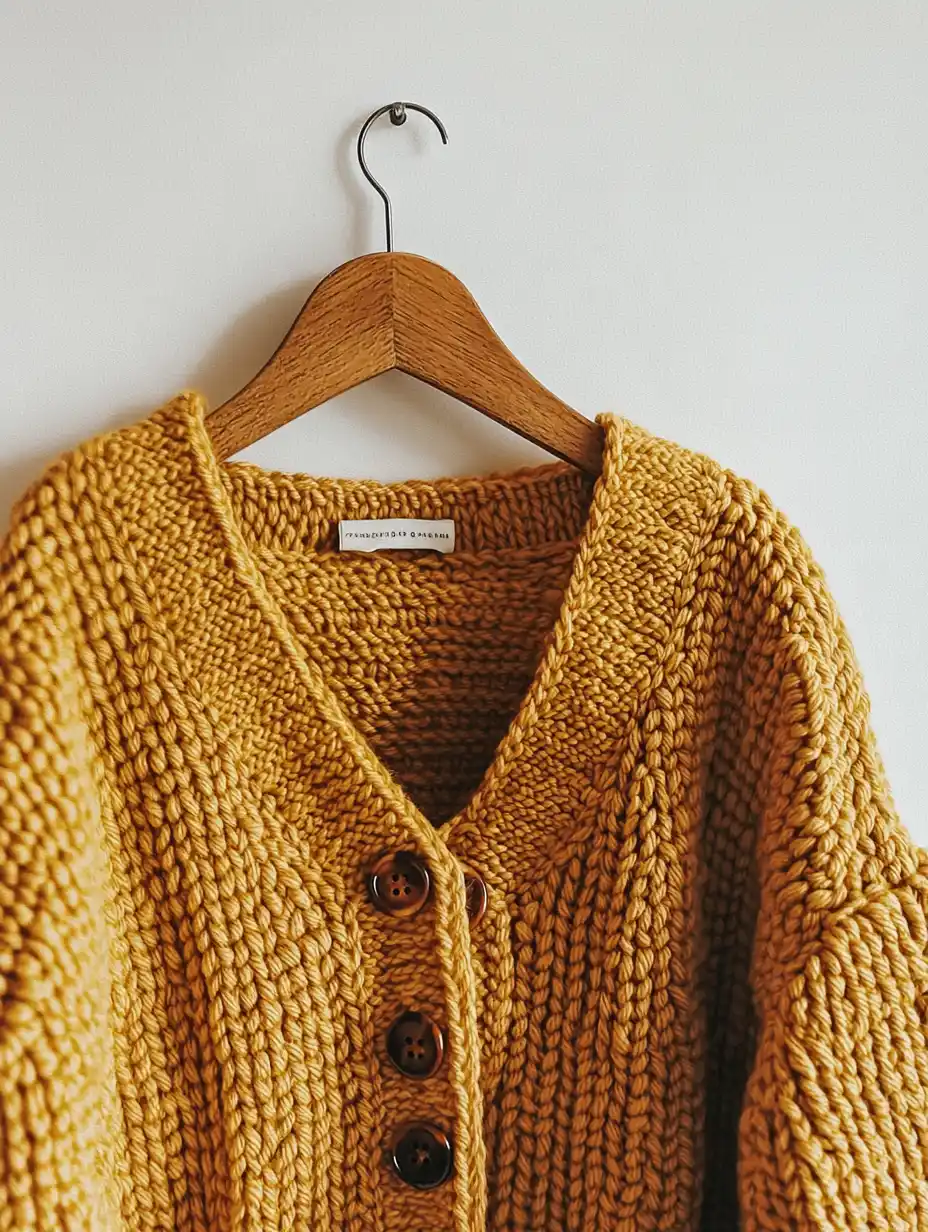
A cropped open-front cardigan of hip length or shorter, worked in a textured stitch and finished with three to five buttons at the center front. The crochet cardigan is the layering piece that converts every other top in the wardrobe into a different outfit, which gives it a higher per-wear value than any single garment on this list.
In a warm mustard yellow with tortoiseshell buttons the cropped cardigan reads as a warm-palette layering piece that works over everything already in a neutral wardrobe. In a vivid cobalt blue with gold buttons it reads as the statement layering piece that makes even a white t-shirt look like it was chosen. In a soft sage with natural wooden buttons it reads as the quiet, considered piece that does its work without announcing itself. The button choice is the detail that most determines the cardigan’s register: tortoiseshell for warmth, metal for precision, wood for naturalism, novelty shapes for maximalism.
Yarn: DK weight cotton or cotton-linen blend
Hook: 4 mm
Construction: Worked in rows from bottom up, front bands picked up along the opening edges, buttonholes worked into one band
Time: 14 to 20 hours
Skill level: Intermediate
Best color argument: The button color and the yarn color together determine the cardigan’s personality more than either element does alone: spend as much time choosing the button as choosing the yarn
16. Festival Fringe Top
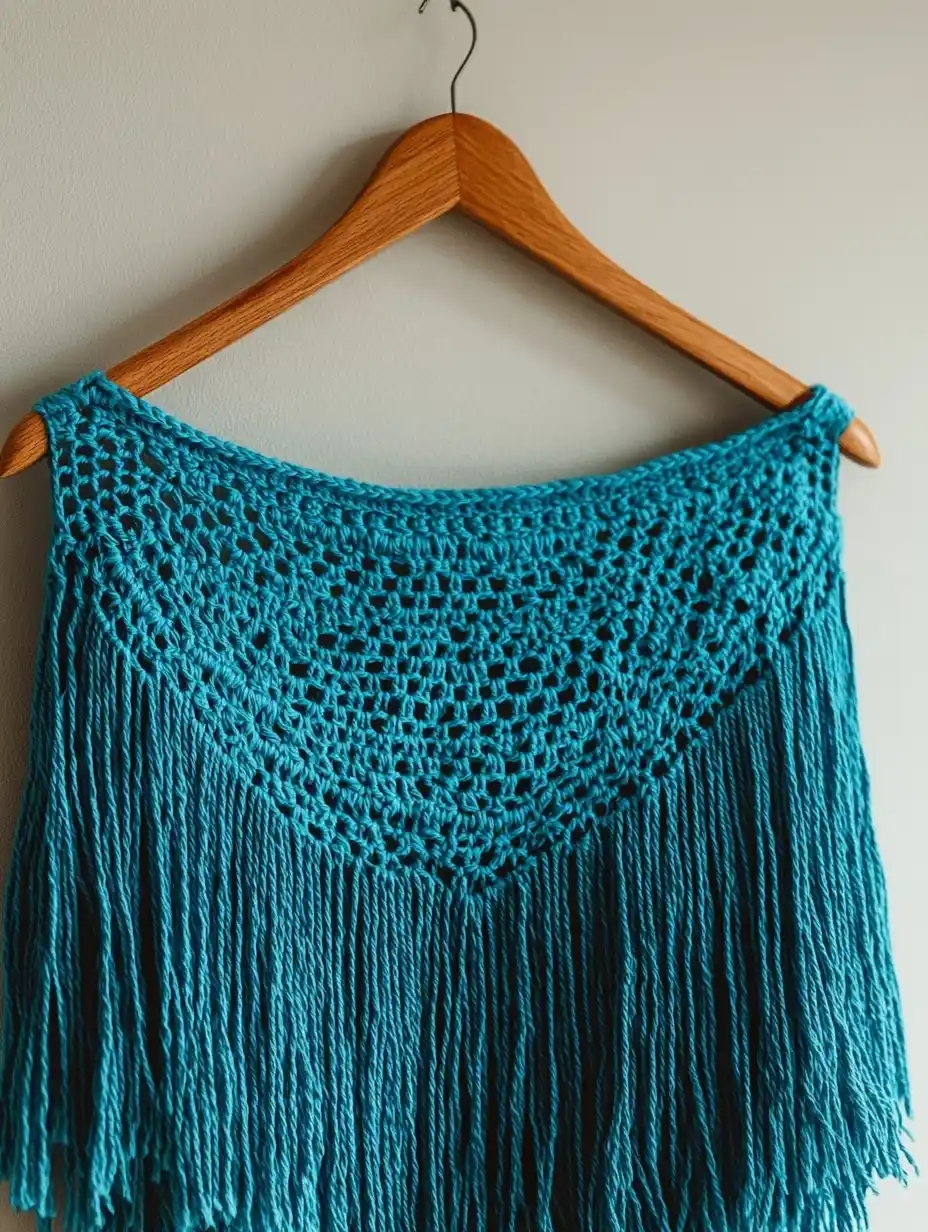
A crop top with fringe at the hem, fringe at both side seams, and optionally fringe at the sleeve edges, the entire garment maximum-fringed for the specific context of outdoor festivals, summer events, and any occasion where movement is part of the outfit’s function. The festival top is the most kinetic crochet garment on this list.
In a vivid electric blue with turquoise fringe, or a vivid orange with warm gold fringe, or a deep wine with vivid coral fringe the festival fringe top is the garment that looks best when moving, which is the specific quality that distinguishes it from every other top on this list. The fringe at side seams is the construction decision that produces the most movement: side fringe swings laterally with every step and arm movement, producing a kinetic quality that hem fringe alone does not achieve. Add fringe at both the hem and both side seams and the full fringe swings in response to every movement the wearer makes, which is the specific effect the festival context requires.
Yarn: DK weight cotton in one vivid body color, same or contrasting for fringe
Hook: 4 mm
Construction: Crop top body worked in the round, fringe added at hem and side seam positions after completion
Time: 8 to 12 hours plus fringe
Skill level: Beginner to intermediate
Best color argument: Vivid electric blue body with turquoise fringe and vivid orange body with warm gold fringe are two versions made for two different summers, and the first one will determine which summer gets which top
17. Lace Butterfly Sleeve Top

A top with wide, flowing butterfly sleeves of thirty to forty centimeters from shoulder to sleeve tip, the sleeves worked in a lace pattern that produces maximum drape and visual drama, the body in a denser stitch for contrast. The butterfly sleeve top is the most dramatic silhouette on this list and the one that produces the most visible effect from color choice.
In a vivid deep violet with a fine lace butterfly sleeve the lace butterfly sleeve top is the garment that enters a room before the person wearing it has fully arrived, which is the specific quality of a wide-sleeved lace garment in a vivid jewel tone. In a soft white or pale ivory the same sleeves read as ethereal and lighter than air. The lace pattern in the sleeves requires an open-chain mesh or a fine fan stitch pattern to produce the drape that the butterfly sleeve silhouette requires: a dense stitch in the sleeve produces a sleeve that does not flow, and a butterfly sleeve that does not flow has missed its single essential quality.
Yarn: Fingering weight or light DK for sleeves, DK for body
Hook: 3.5 mm for sleeves, 4 mm for body
Construction: Body worked first, sleeves picked up from armhole edges and worked outward
Time: 18 to 25 hours
Skill level: Intermediate to advanced
Best color argument: A vivid jewel tone butterfly sleeve top is the garment that most completely justifies the phrase every color, because every jewel tone produces a garment that could not be confused with any other version of itself
Choosing Yarn for Crochet Tops
Cotton Is the Default for a Reason
Cotton is the standard yarn for crochet tops because it breathes, drapes rather than stretching, washes easily, maintains color saturation through repeated laundering, and does not develop the pilling that acrylic develops in worn garments. A cotton top worn and washed fifty times looks like a cotton top. An acrylic top worn and washed fifty times has developed a surface texture that no amount of laundering corrects. Mercerized cotton has a slight sheen that reads as more polished in structured tops. A cotton-bamboo or cotton-linen blend has improved drape relative to pure cotton and suits the flowing tops, the butterfly sleeve, the off-shoulder ruffle, where drape is the primary quality required. The one situation where cotton is not the correct choice is a top requiring stretch, the bandeau, some fitted styles, where a cotton-elastic blend or a yarn with genuine stretch recovery is necessary.
Gauge and Sizing in Wearable Crochet
A gauge swatch is the difference between a crochet top that fits and a crochet top that fits approximately, which is a different garment. Work a gauge swatch of at least fifteen by fifteen centimeters in the pattern stitch, wash and dry it exactly as the finished garment will be cared for, and measure it after drying. Cotton garments can shrink by up to ten percent in the first wash if the swatch is not pre-washed before measuring. A swatch measured before washing that shrinks to a different gauge after washing produces a garment that is sized correctly for the pre-washed swatch and incorrectly for the person wearing it. Measure the body at the bust, waist, and hip, add the ease specified in the pattern or a minimum of five centimeters for a comfortable fit, and work to the appropriate size throughout. Changing hook size by half a millimeter produces a significant change in fabric density and finished dimensions in garments: go up half a millimeter for a more open fabric, down half a millimeter for a denser one.
The Every Color Argument
Making the same top pattern in multiple colors is not repetition. It is the natural consequence of finding a pattern whose construction produces a garment good enough to want in the full range of colors the wardrobe requires. A striped crop top in navy and white is a summer casual top. The same pattern in vivid coral and warm gold is a festival top. The same pattern in black and grey is a versatile layering top. Three patterns, three wardrobes, one construction to learn. The practical case for making a pattern more than once is that the second version takes significantly less time than the first because the construction logic is already understood and no row needs to be re-read three times before proceeding. The third version takes even less time. By the fourth version the pattern is worked from memory and the making is pure color enjoyment, which is the specific pleasure that a known construction worked in a new color produces and that no first-version pattern can provide.
Frequently Asked Questions
What hook size should I use for crochet tops?
Most crochet tops worked in DK weight cotton use a four millimeter hook as the starting point, producing a fabric of moderate density suitable for structured tops and a gauge of approximately eighteen to twenty stitches per ten centimeters. For tops requiring more drape, the off-shoulder ruffle, the butterfly sleeve, the lace shell, go up to four and a half or five millimeters with the same DK yarn to open the fabric and improve drape. For tops requiring more structure and density, the corset top, the bandeau, the cropped cardigan, go down to three and a half millimeters to produce a firmer fabric with less give. Always work a gauge swatch at the intended hook size before beginning a garment, because the hook size that produces correct gauge for one yarn does not reliably produce correct gauge for a different yarn of the same labeled weight. Yarn weight labels are not standardized across brands, and two DK yarns from different manufacturers may produce significantly different gauges at the same hook size.
How do I care for crochet cotton tops?
Most cotton crochet tops survive machine washing on a cold or cool gentle cycle and should be dried flat to maintain their shape and dimensions. A cotton top dried in a tumble dryer can shrink unevenly, losing length faster than width, which distorts the garment’s intended proportions. Flat drying on a clean towel or a mesh drying rack maintains the blocked dimensions established when the garment was first completed. For tops with fine lace sections, the butterfly sleeve top, the lace shell, the pineapple stitch blouse, hand washing in cool water with a gentle wool wash or a dedicated garment wash produces the best long-term result, as the agitation of a machine wash cycle can distort fine lace sections and stretch chain-space meshes beyond their intended dimensions. After hand washing, roll the garment in a clean towel to remove excess water before laying flat, never wring, which distorts the garment permanently in the direction of the wringing motion.
How long does a crochet top take to make?
The time range across the tops on this list is considerable: the halter neck tie-top takes four to six hours, the bandeau takes four to six hours, the simple mesh tank takes six to ten hours, and the pineapple stitch blouse and lace butterfly sleeve top take eighteen to twenty-five hours each. These times assume the maker has previous garment construction experience and does not need to rip back significant sections due to gauge or shaping errors. A first-time garment maker should add thirty to fifty percent to these estimates for the time spent re-reading pattern instructions, checking gauge, and correcting shaping errors that an experienced garment maker identifies and corrects immediately. The fastest tops on this list, the halter and the bandeau, are the correct starting points for a maker attempting their first crochet top, because a first attempt at a four-to-six-hour project produces a garment quickly enough to identify and apply the fit corrections on the second version before significant time has been invested.
Can I sell crochet tops?
Yes, and handmade crochet tops command premium prices in the handmade fashion market because they occupy a category that no mass production fills: a garment with visible hand construction, made from natural fiber, in a color and silhouette that the buyer has specifically chosen. The mesh tank, the granny square top, and the striped crop top sell at the most accessible price points to buyers who want a handmade summer piece. The pineapple stitch blouse, the floral yoke top, and the lace butterfly sleeve top sell at higher price points to buyers who understand and can articulate the skill involved in complex lace and motif construction. Price every top at materials cost plus making time at a fair hourly rate. For a top requiring twelve hours of making at a fair hourly rate plus ten to fifteen dollars in yarn, the correct price is significantly higher than the price of a comparable mass-produced top. A handmade top buyer is not comparing your price to a shop-produced equivalent; they are buying the specific thing that a shop-produced equivalent cannot be, which is a garment made by a specific person in a specific color at a specific skill level that will not appear on anyone else at the same gathering.PixForge