Renaissance faire accessories are the one context in which the question of whether something is too much is answered definitively and permanently in the negative. The faire is where the velvet and the lace and the braided cord and the flower crown and the pouch and the fingerless gloves all belong on the same person at the same time, because the faire is the event that was specifically designed to accommodate the full range of what handmade textile decoration can do when it is given permission to do everything it knows how to do. A crocheted Renaissance faire accessory in the correct palette and the correct construction is not a costume. It is a handmade textile object of genuine craft quality worn at an event that specifically understands and celebrates that quality. Make the velvet-tone flower crown. Make the braided cord belt. Make the fingerless gloves with the lace cuff. Wear all of them simultaneously. The faire is the one context where this is not too much. It is exactly the correct amount.
This list covers 18 crochet Renaissance faire accessories from the simplest lace hair accessory to the most elaborate multi-piece outfit complement, each with specific color guidance, construction notes, and the specific faire aesthetic each accessory most fully occupies.
1. Flower Crown
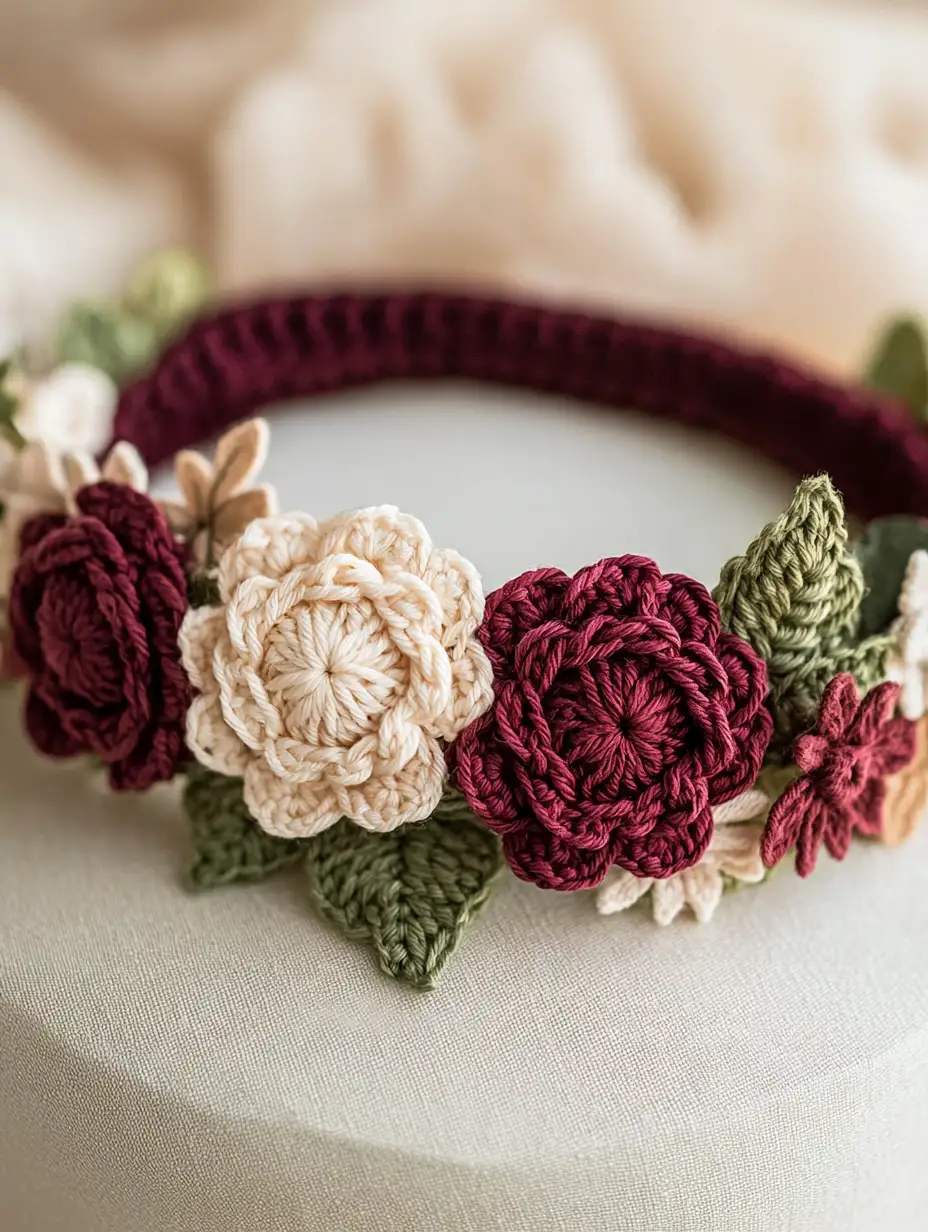
A flower crown worked as a firm crochet headband base with multiple crochet flowers attached along its full length, the flowers in a combination of large and small forms in a rich, layered color palette. The flower crown is the single most iconic Renaissance faire accessory and the one that reads from the greatest distance as a specific and considered faire choice.
In deep burgundy large roses and soft blush medium roses and tiny cream daisies and bright green leaves layered densely across a natural cream headband the flower crown reads as the faire crown of someone who has considered what their head should look like from twenty feet away and has answered the question correctly. The flowers must overlap rather than be evenly spaced: evenly spaced flowers read as a decorative headband. Overlapping flowers read as a crown of flowers, which is the specific object required. Three layers of flowers, large roses at the base, medium roses at the second layer, small flowers and leaves at the top, produce the density of a real flower crown. Two layers produce a decorated headband. Use the three layers.
Yarn: DK weight in deep burgundy, soft blush, cream, and bright green
Hook: 3.5 mm for flowers, 4 mm for headband
Color note: The burgundy, blush, and cream palette reads as specifically medieval romantic. Add a deep forest green to the palette if the wearer’s faire costume has green elements
Wearing note: Secure the crown at the back with two to three bobby pins through the headband. A flower crown that slides reads as poorly attached throughout the faire day
2. Fingerless Gloves with Lace Cuff

Fingerless gloves worked from the wrist upward with a long lace cuff extension of eight to ten centimeters that falls over the hand and can be worn up or folded down. The lace cuff is the detail that converts a standard fingerless glove into a faire accessory.
In a natural cream fine cotton with a lace cuff worked in a small mesh or a shell stitch pattern the fingerless gloves with lace cuff read as the hand accessory of a faire participant who has thought specifically about what their wrists and hands look like when they lift a goblet or handle a bow or gesture in conversation, which is what faire participants do think about. In a deep forest green with cream lace trim the same construction reads as a more dramatic forest-dweller aesthetic. In deep navy with gold-tone lace trim it reads as a specifically noble or courtly aesthetic. The lace cuff must be blocked flat before wearing to produce the correct fall of the lace over the hand. An unblocked lace cuff crumples rather than falls, and a crumpled lace cuff is the specific opposite of what a faire glove is supposed to do.
Yarn: Fine cotton DK in cream or forest green, fine cotton or size 10 thread for lace cuff
Hook: 3.5 mm for gloves, 2 mm for lace cuff
Color note: Match the lace cuff color to the costume’s lightest color for a unified look, or contrast it deliberately for a two-tone reading
Wearing note: Block the lace cuff before attaching to the glove. A pre-attached unblocked cuff cannot be blocked without blocking the full glove
3. Braided Belt with Tassel Ends

A belt worked as three thick cords braided together and finished with large tassels at each end, sized to wrap twice around the waist and tie in a simple knot with the tassels hanging at the front. The braided belt is the accessory that most directly references the medieval functional belt from which faire costume belts derive.
In deep warm burgundy and natural cream and deep forest green braided together with large matching tassels the braided belt with tassel ends reads as a functional textile accessory of the kind that appears in period portrait paintings and which no purchased costume belt replicates because the purchased version is always in a single color and never in the specific three-color braid that the period reference requires. Each cord is worked as a tight single crochet tube approximately one centimeter in diameter, and the three tubes are braided together before the tassels are attached. The tassel length should be at least fifteen centimeters so they are visible at the front when the belt is tied, which is the visual confirmation that the belt is a faire belt rather than a standard cord.
Yarn: DK weight in deep burgundy, natural cream, and deep forest green
Hook: 4 mm
Color note: The three-color braid reads as specifically period when the three colors are from the same warm-jewel family. Three colors from three different temperature ranges read as a craft project
Wearing note: Wear the belt high on the waist for a medieval silhouette, or lower on the hips for a more relaxed faire reading
4. Drawstring Coin Pouch
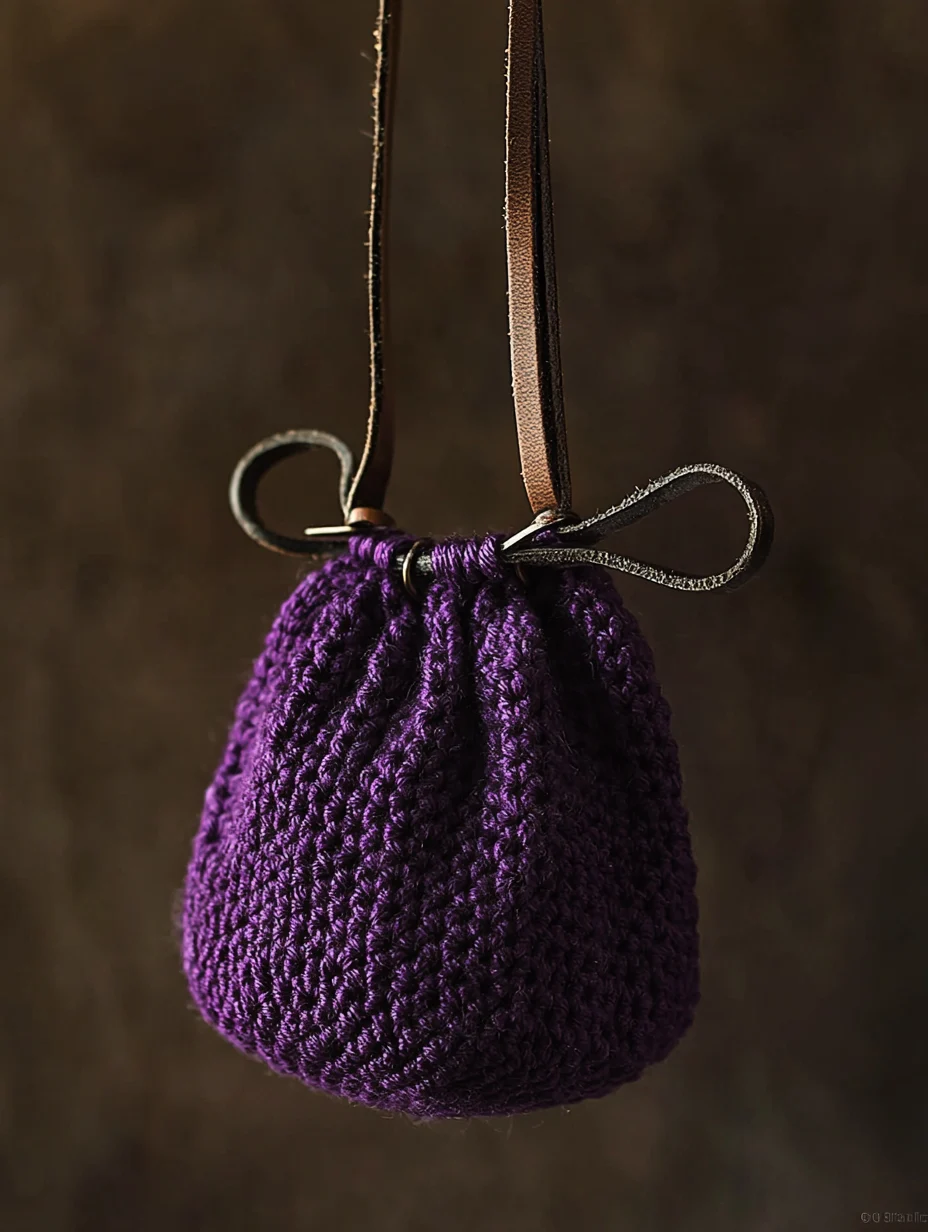
A small drawstring pouch of approximately twelve by ten centimeters worked in a firm cotton or a velvet-feel yarn, worn hanging from the belt on a cord or a chain. The coin pouch is the faire accessory with the most direct historical precedent, because pouches hung from belts were the primary portable storage of the medieval period.
In a deep jewel tone velvet-feel yarn, deep amethyst or vivid sapphire or rich emerald, the drawstring coin pouch reads as an object that belongs at the faire as a functional and beautiful historical reference simultaneously. The velvet-feel yarn produces a surface that reads as more luxurious than standard cotton at the same scale and the same making time, which is the specific quality the faire aesthetic requires of its small accessories: every small thing should look like it was made to be worn at a court. In a natural undyed cotton with embroidered surface design it reads as a working peasant’s pouch, which is a different but equally legitimate faire character choice.
Yarn: Velvet-feel DK or firm cotton DK in a deep jewel tone
Hook: 4 mm
Color note: The jewel tone color of the pouch should coordinate with the dominant color of the costume rather than contrast it. A pouch in the costume’s accent color reads as considered
Wearing note: Hang from the belt on a leather cord or a fine chain through the drawstring loop
5. Lace Choker Necklace

A lace choker worked in a fine cotton thread as a narrow strip of lace pattern approximately two to three centimeters wide and tied at the back of the neck with long ribbon ties. The lace choker is the faire neck accessory that reads as the most delicate and the most period-correct of all the faire jewelry options.
In a natural cream size-ten cotton thread with wide dusty rose velvet ribbon ties the lace choker necklace reads as the specific neckline finish of a period bodice costume whose neckline is already carefully considered and whose choker is the last detail that completes the neck-to-chest decorative logic. In a white thread with deep navy ribbon ties it reads as a more formal and courtly neck accessory. The lace strip must be blocked before the ribbon ties are attached, pinned flat to exactly the neck measurement plus two centimeters, and pressed gently with a damp cloth. An unblocked lace choker curls at the edges and does not lie flat at the neckline.
Yarn: Size 10 cotton crochet thread in natural cream or white
Hook: 1.5 mm
Extra materials: Wide velvet or satin ribbon in a coordinating color for ties
Color note: The ribbon tie color is the dominant color statement in this accessory. Choose it relative to the costume’s neckline color
Wearing note: Block before wearing. Tie the ribbon at the back with a generous bow whose trailing ends are themselves a decorative element at the back of the neck
6. Crochet Snood
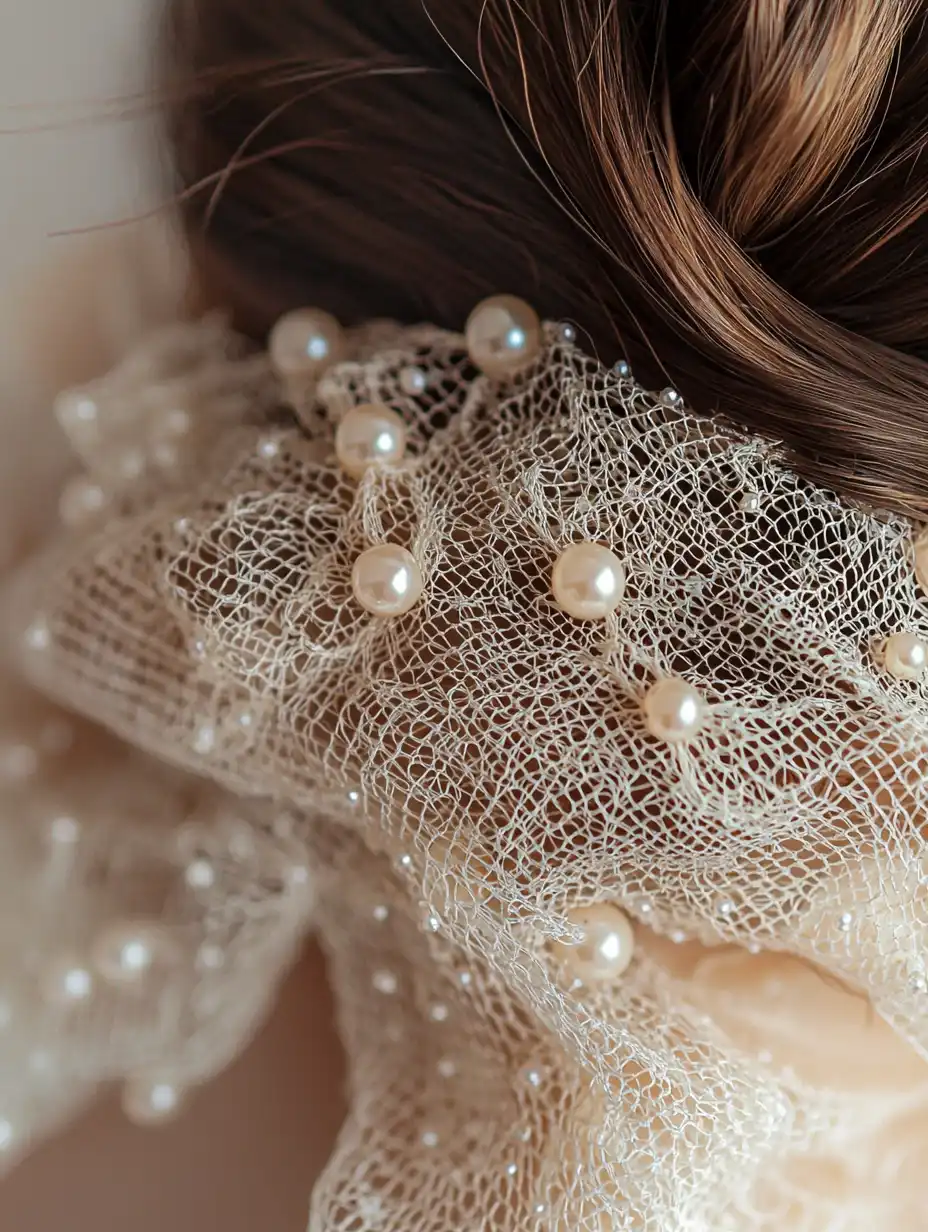
A hair snood worked as a large round net of fine cotton thread, sized to contain a pinned-up bun or a gathered tail of hair, decorated with small beads or pearl beads threaded through the mesh during construction. The snood is the most historically specific hair accessory on this list and the one that most directly identifies the wearer as a participant who has done their period research.
In a natural cream fine cotton mesh with small pearl beads threaded at regular intervals through the net structure the crochet snood reads as the hair accessory of a medieval noblewoman, which is a specific and entirely achievable faire identity for anyone willing to pin their hair up and attach a beaded net to the back of their head. The mesh must be worked at a slightly loose tension relative to the thread weight so the snood has enough give to expand around the hair it contains without pulling at the hairpins that secure it. A snood worked too tightly is a snood that defeats the hair arrangement it was meant to preserve.
Yarn: Size 10 cotton thread in natural cream or gold
Hook: 1.5 to 2 mm
Extra materials: Small pearl beads or gold-tone seed beads, hairpins
Color note: A gold-tone thread snood reads as specifically regal. A cream thread snood reads as more romantic and courtly. Both are period-correct
Wearing note: Pin the hair into a bun first, then pull the snood over the bun and secure with additional hairpins at the snood’s outer edge
7. Arm Bracers

Wide crochet arm bracers worked as a firm flat rectangle that wraps around the forearm and laces closed at the back with a cord, approximately fifteen centimeters long by twelve centimeters wide when flat. The arm bracer is the faire accessory that reads most directly as a functional piece of medieval dress rather than as a decoration.
In a deep forest green firm cotton with a warm brown lacing cord the arm bracers read as the specific accessory of a faire participant who is not entirely certain whether they are a forester, an archer, or a tavern keeper, but who has committed to looking like they have something specific to do at all times. In a deep warm brown the bracers read as leather without using leather, which is the specific quality that a firmly worked cotton bracer in the correct color achieves. In a deep burgundy with gold embroidery they read as court rather than forest. The lacing holes are worked as chain spaces at regular intervals along each long edge of the rectangle during construction so the lacing cord threads through them cleanly rather than through slits cut into the finished fabric.
Yarn: Firm DK cotton in deep forest green or deep warm brown
Hook: 3.5 mm at firm tension
Extra materials: A warm brown or natural leather cord for lacing
Color note: Deep forest green reads as outdoors faire character. Deep warm brown reads as leather-equivalent. Deep burgundy reads as courtly. Choose relative to the costume’s identity
Wearing note: The bracer fits correctly when it is snug but allows a full range of wrist movement. Too tight and it restricts. Too loose and it slides
8. Capelet with Hood

A short capelet of approximately forty centimeters length from shoulder to hem, worked with an attached hood and a simple front clasp closure, in a rich wool or a wool-blend. The capelet is the faire garment accessory, the piece that transforms any basic faire outfit into a costume with a specific and considered silhouette.
In a deep forest green chunky wool with a natural cream lace edge border at the hood and hem the capelet with hood reads as the specific faire garment that makes everyone in the wearer’s vicinity ask where they got it, which is the correct response to a well-made faire capelet. In a deep burgundy with a gold-tone edging it reads as more regal and less forest-dweller. The hood is the element that most completely produces the faire reading: a capelet without a hood is a decorative shawl. A capelet with a hood is a cape, and a cape is a medieval garment. The hood must be generous enough to pull up over a flower crown without displacing it, which means the hood opening must be wider than a standard crochet hood pattern by at least five centimeters.
Yarn: Chunky weight wool or wool-blend in deep forest green or deep burgundy
Hook: 6 to 7 mm
Color note: The deep forest green capelet is the faire garment for an outdoors or forest character. The deep burgundy capelet is the faire garment for a courtly or noble character. Both are correct for their respective faire identities
Wearing note: Size the hood opening five centimeters wider than standard to accommodate a flower crown worn underneath
9. Floral Hair Pins
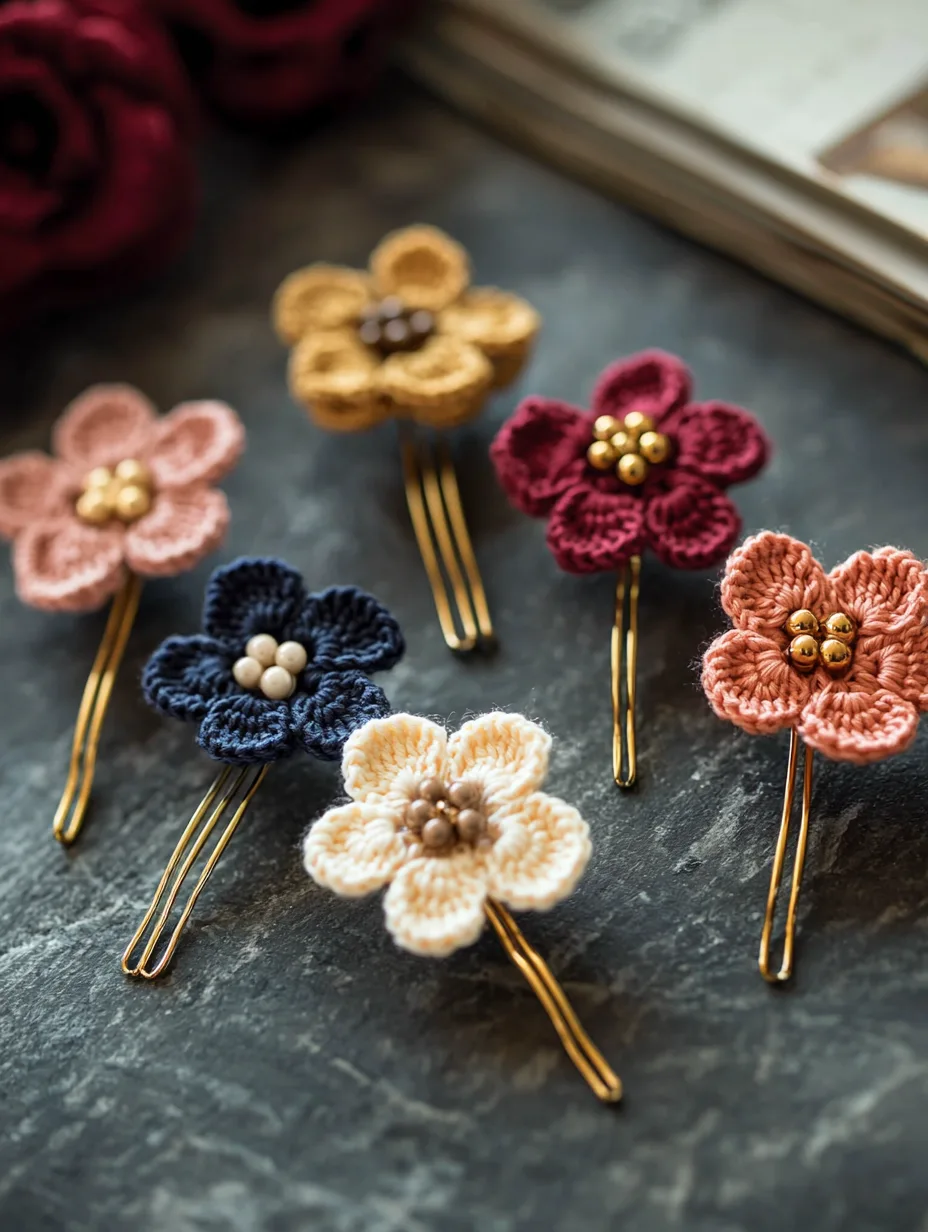
A set of six to eight small crochet flower motifs attached to bobby pins or flat hairpins, each flower in a different color from the faire costume’s palette, worn scattered through pinned-up or braided hair. The floral hair pins are the fastest and most adaptable of all the hair accessories on this list.
In a mix of deep rose, soft peach, pale cream, and vivid gold small flower forms attached to gold-tone bobby pins the floral hair pins read as the scattered blooms in an elaborate pinned hairstyle that suggests both deliberate arrangement and the specific beautiful disorder of a person who has been outside all day at a faire. Each flower is worked as a simple five-petal flat motif with a button or a bead at the center, glued to the flat surface of a bobby pin with a strong craft adhesive. The gold-tone pin reads as more period-correct than a black pin at most faire costumes. Make at least six. Three flowers in a hairstyle look considered. Eight flowers look like a forest grew there, which is the specific reading required.
Yarn: Fine cotton in four to five faire palette colors
Hook: 2 mm
Extra materials: Gold-tone bobby pins, strong craft adhesive, small buttons or beads for centers
Color note: The flower colors should match the flower crown colors if one is being worn, so the scattered pins read as flowers that escaped from the crown
Wearing note: Set with hairspray after placing. Crochet flower pins that are not set tend to rotate to face downward during the faire day
10. Peasant Apron with Crochet Trim

A simple fabric apron finished with a wide crochet lace trim along the hem and pocket edges, the crochet trim worked as a separate strip and hand-sewn to the finished fabric apron. The trim converts a standard sewn apron into a specifically faire garment accessory.
In a natural cream cotton lace trim on a warm ivory or light brown linen apron the peasant apron with crochet trim reads as the specific garment of a faire participant who is comfortable with the peasant, tavern keeper, or herbalist character identity rather than the noble or courtly one, which is an identity that requires the most textile credibility and the most specific construction to achieve. The crochet lace trim on a fabric apron is the historic construction of the period: lace was applied to fabric, not crocheted into it, because lace makers specialized and fabric makers specialized and the two were assembled. The separate crochet trim sewn to the apron replicates this construction logic at a faire-correct level of detail.
Yarn: Fine cotton or size 10 thread in natural cream
Hook: 2 mm for lace trim
Extra materials: Natural linen or heavy cotton fabric for the apron base
Color note: Natural cream lace on warm ivory or light brown fabric reads as period-correct. White lace on bright white fabric reads as contemporary
Wearing note: Hand-sew the trim to the apron with a matching thread in a slip stitch that does not show from the right side
11. Ruffled Collar
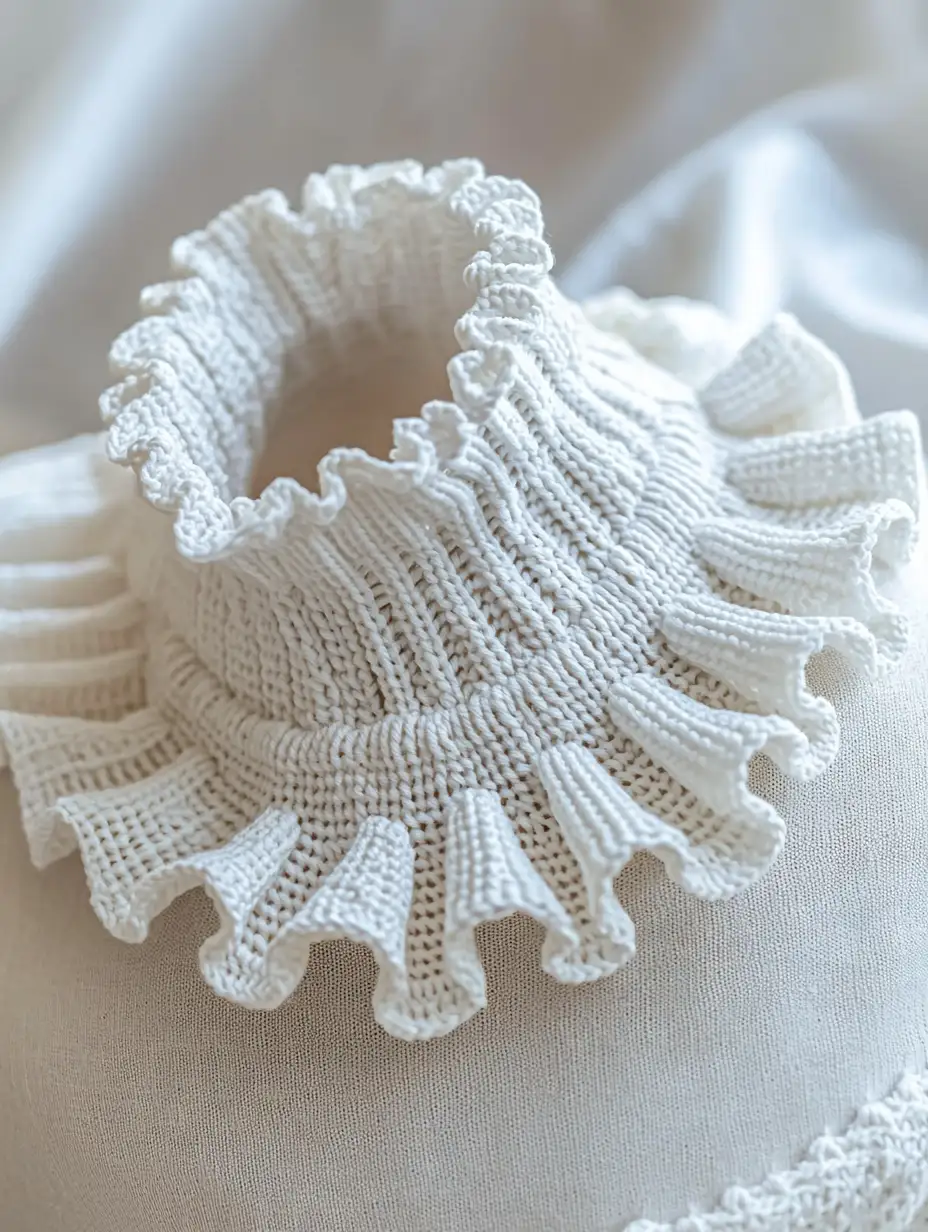
A detachable ruffled collar worked as a deep frill of three to four ruffle rounds in a fine white or cream cotton, sized to sit at the neckline of any shirt or bodice and tied at the front with ribbon. The ruffled collar is the faire accessory that most directly references Elizabethan period dress and most immediately converts a plain shirt into a period costume.
In a bright white fine cotton with three frill rounds the ruffled collar reads as the collar of a faire participant who has decided that the Elizabethan period aesthetic, the ruff, the frill, the deliberate and architecturally specific use of fabric at the neckline, is the correct aesthetic for their faire identity. The three ruffle rounds must each be worked at a significantly larger hook size than the main collar band and with progressively more extra stitches per round to produce increasing ruffle fullness from the inner round to the outer. A collar with identical frill fullness in all three rounds reads as a series of frills. A collar with increasing fullness from inner to outer reads as a ruff.
Yarn: Fine cotton in bright white or natural cream
Hook: 2 mm for collar band, 3.5 mm and 5 mm for progressive ruffle rounds
Extra materials: White or cream satin ribbon for front ties
Color note: Bright white reads as Elizabethan period at maximum crispness. Natural cream reads as earlier medieval period and softer
Wearing note: Starch lightly before wearing to maintain the ruffle volume through the faire day
12. Tassel Earrings
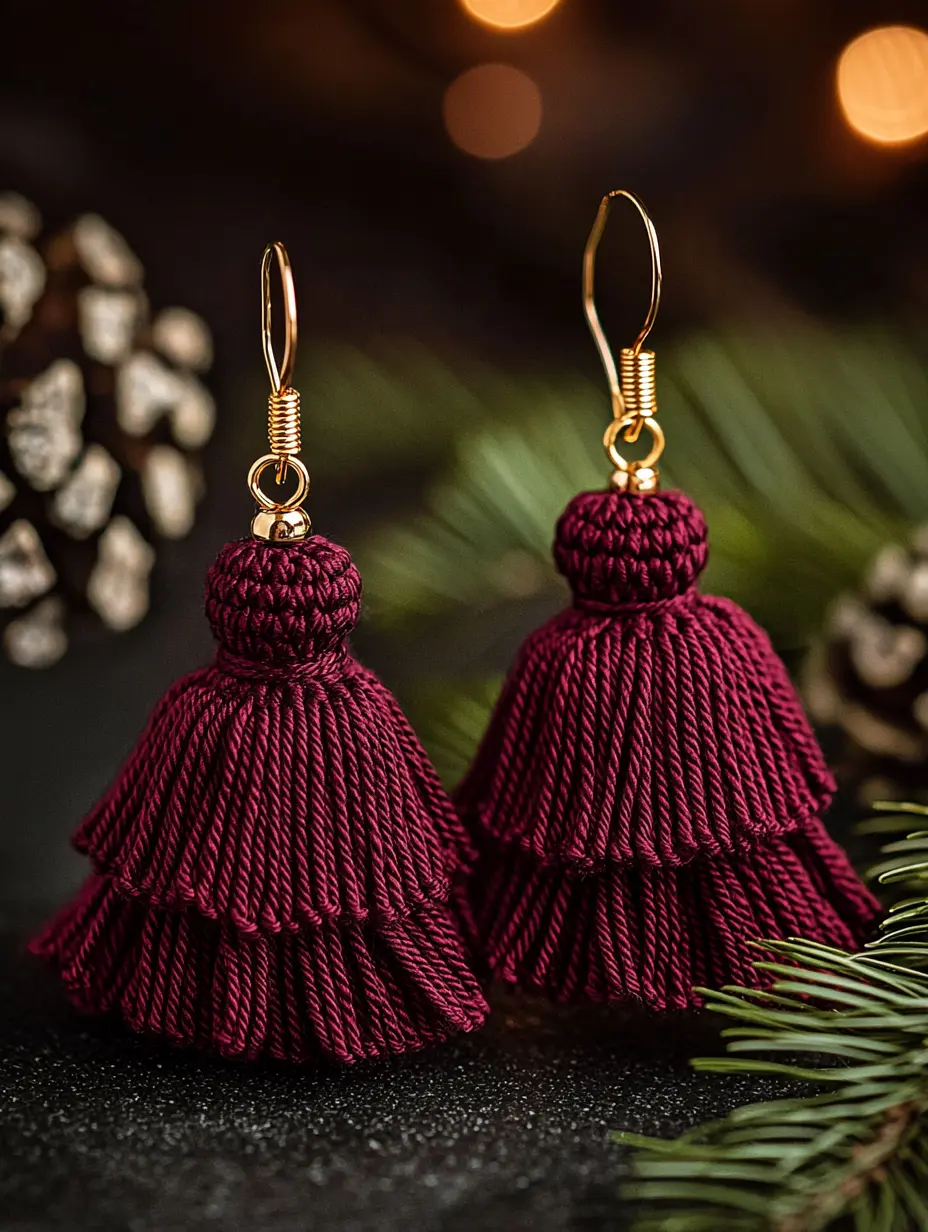
Long tassel earrings worked as dense bundles of yarn in a rich color, attached to small crochet ring tops and finished with metal earring hooks. The tassel earring is the fastest faire accessory on this list and the one that adds the most color impact per making minute.
In deep burgundy or vivid emerald or rich amethyst yarn bundles of eight to ten centimeters the tassel earrings read as the bold jewelry of a faire participant who understands that ears at a faire are another surface for color and texture and have decorated them accordingly. Each tassel is made from approximately thirty to forty lengths of the chosen yarn folded and bound at the fold with a tight wrap of the same yarn, then attached through a small crochet ring to a standard metal earring hook. At eight centimeters the tassel reaches to the collarbone when worn, which is the length that produces the full faire jewelry reading. A five-centimeter tassel is a large earring. An eight-centimeter tassel is a statement.
Yarn: DK weight in a rich jewel tone
Hook: Not required for the tassel itself, 3.5 mm for the ring top
Extra materials: Standard metal earring hooks in gold or bronze tone
Color note: Match the tassel color to the coin pouch or the braided belt for a coordinated faire jewelry reading
Wearing note: The earring hook attaches through the crochet ring at the tassel top. Ensure the crochet ring is small enough that the hook sits snugly without the tassel spinning freely
13. Wrist Cuff with Celtic Knotwork
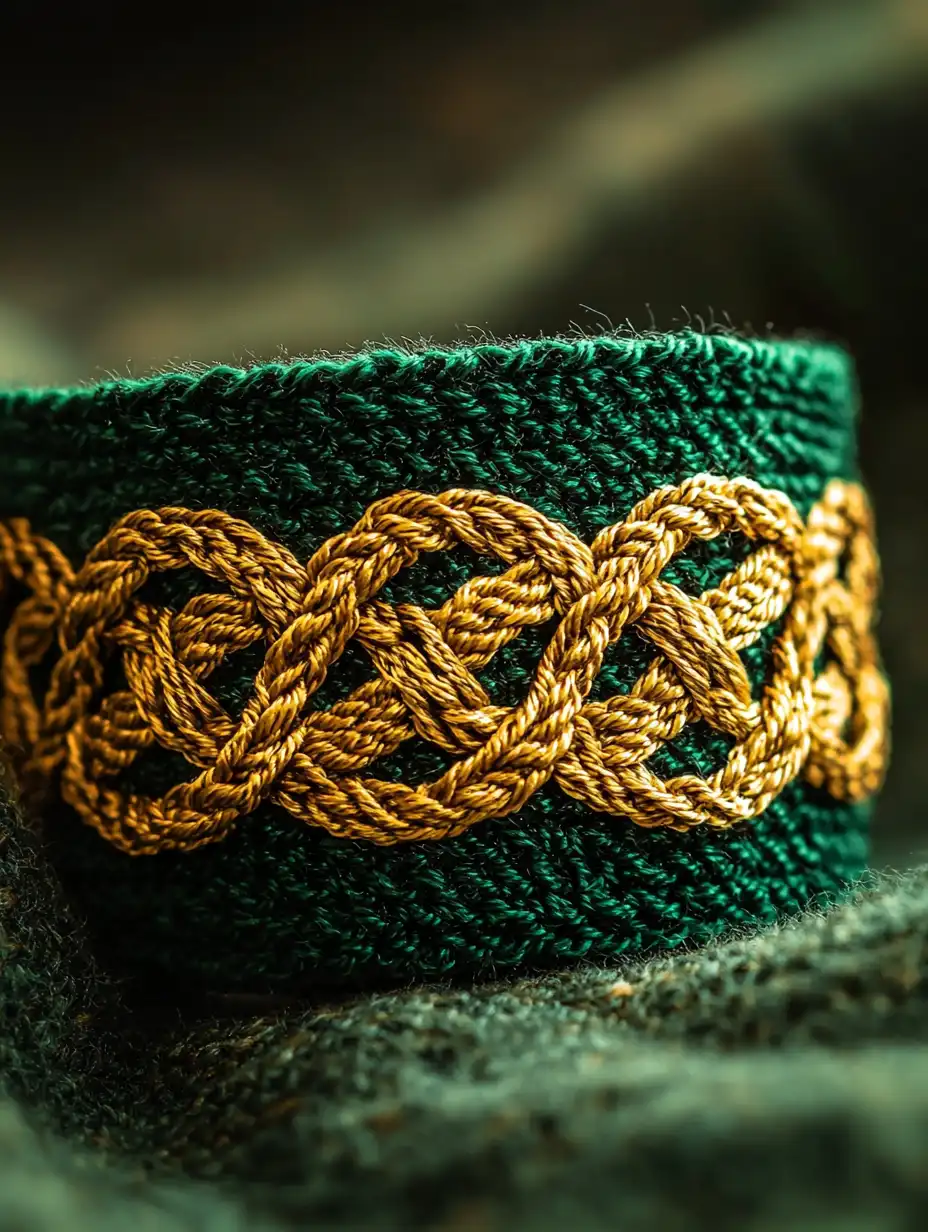
A wide wrist cuff worked in a firm cotton with a Celtic knotwork-inspired surface pattern created through surface chain stitch embroidery worked over the blocked cuff fabric, producing an interlaced geometric pattern that reads as specifically Celtic or early medieval at faire distance. The embroidery approach produces a knotwork reading that crochet stitches alone cannot achieve.
In a deep forest green firm cotton cuff with warm gold surface chain embroidery in an interlaced knotwork pattern the wrist cuff with Celtic knotwork reads as the faire accessory for the participant whose costume identity is specifically Celtic, Scottish Highlands, or early medieval rather than Renaissance-period, and who wants the textile credibility that a surface-embroidered knotwork pattern provides. Work the full knotwork pattern on paper before transferring to the blocked cuff with tailor’s chalk, because a knotwork pattern that is not planned before execution produces a tangle rather than an interlace.
Yarn: Firm DK cotton in deep forest green, warm gold for embroidery
Hook: 3.5 mm, tapestry needle for embroidery
Extra materials: Tailor’s chalk for pattern transfer, snap fastener for closure
Color note: Deep green and gold reads as specifically Celtic noble. Deep brown and cream reads as more rustic Celtic. Deep navy and silver reads as Norse rather than Celtic
Wearing note: Plan the knotwork pattern on paper first. An unplanned knotwork embroidery produces a tangle, not an interlace
14. Elven Ear Cuffs
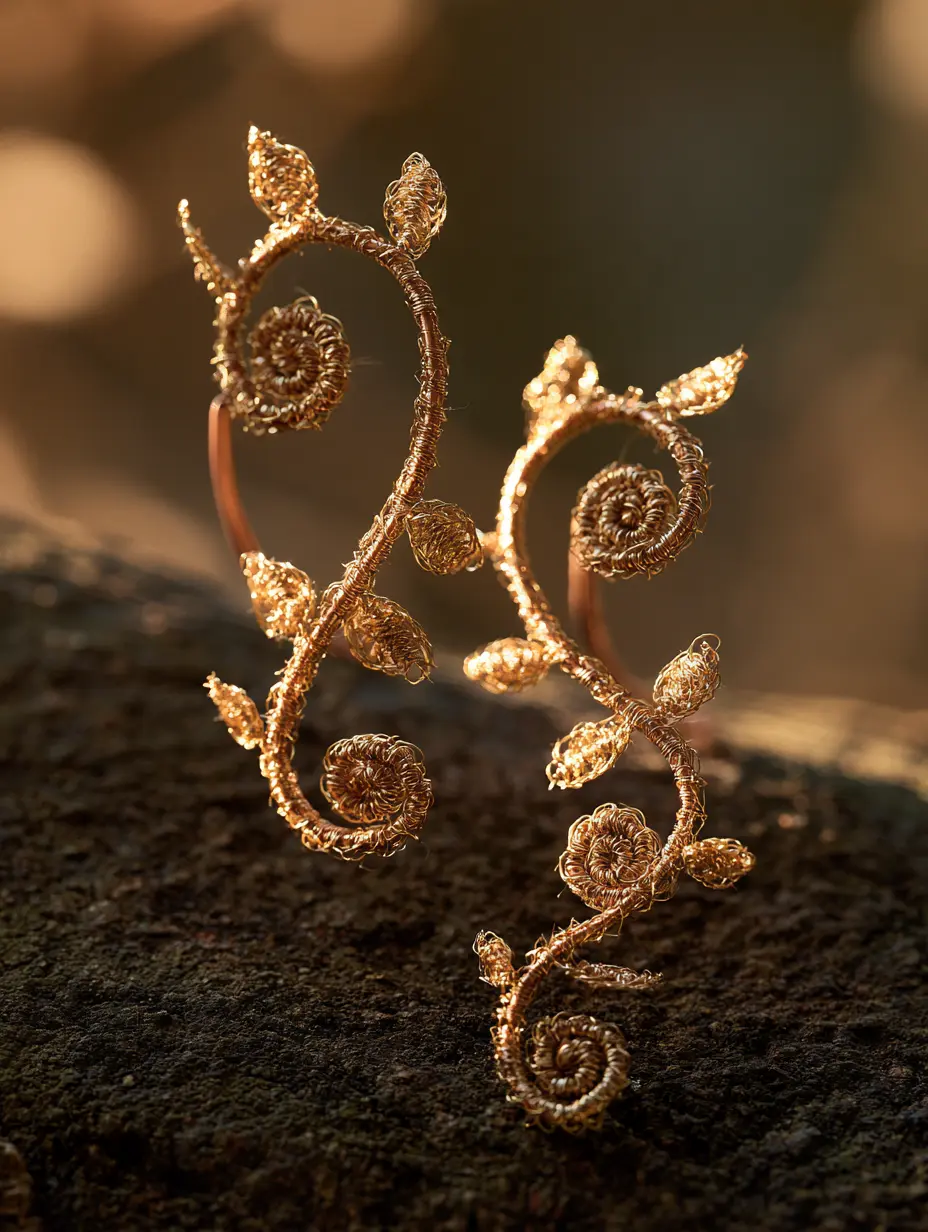
Delicate crochet ear cuffs worked in a fine metallic or gold-effect thread as small coiling vine or leaf structures that wrap around the ear’s upper cartilage without piercing, suggesting elf or woodland fae character accessories. The ear cuff is the faire accessory for the participant whose character identity is specifically fantastical rather than historical.
In a fine gold-effect or silver-effect thread worked as small spiral coils and tiny leaf forms that wrap around the ear cartilage the elven ear cuffs read as the faire accessory of a woodland elf, a forest fae, a character whose visual vocabulary draws from Tolkien and traditional folklore equally and who has decided that their ears are a surface deserving of the same decorative attention as their hair and their wrists. The ear cuff wire form is crocheted over a thin copper wire that holds its coiling shape around the ear cartilage. The crochet thread covers the wire completely so the finished cuff reads as a textile vine rather than as a wire with thread on it.
Yarn: Fine metallic or gold-effect crochet thread
Hook: 1.5 mm
Extra materials: Thin copper wire for the ear cuff’s structural form
Color note: Gold thread reads as woodland fae or high elf. Silver thread reads as winter fae or moon elf. Green thread with gold reads as forest elf specifically
Wearing note: Shape the copper wire to the specific ear before covering with crochet. Every ear cartilage is different and a one-size ear cuff fits no one correctly
15. Medieval Headband with Veil

A firm crochet headband in a rich color with a long piece of lightweight fabric or fine crochet lace attached at the back that falls as a veil, the headband and veil together producing the specific silhouette of a medieval headwear style seen in period artwork. The veil converts the headband from a decorative accessory into a historically referenced garment piece.
In a deep burgundy firm cotton headband with a natural cream lightweight linen veil attached at the back the medieval headband with veil reads as the faire headwear for the participant who wants a specifically medieval rather than a broadly Renaissance or fantastical visual reference. The veil fabric should be the lightest weight available: heavy fabric does not move with air currents and hangs stiffly rather than flowing, which is the reading that most quickly converts a veil from a historical reference into a piece of fabric tied to a headband. Silk chiffon, fine voile, or a very lightweight cotton lawn all move correctly at the lightest air currents of a faire day.
Yarn: Firm DK cotton in deep burgundy or deep forest green
Hook: 3.5 mm at firm tension
Extra materials: Silk chiffon or fine voile in natural cream for the veil
Color note: The burgundy headband and cream veil reads as court medieval. A forest green headband with cream veil reads as a more forest-dwelling character
Wearing note: The veil attaches to the back of the headband by sewing its top edge along the headband’s full length. The veil’s weight holds the headband in position
16. Gathered Skirt Trim
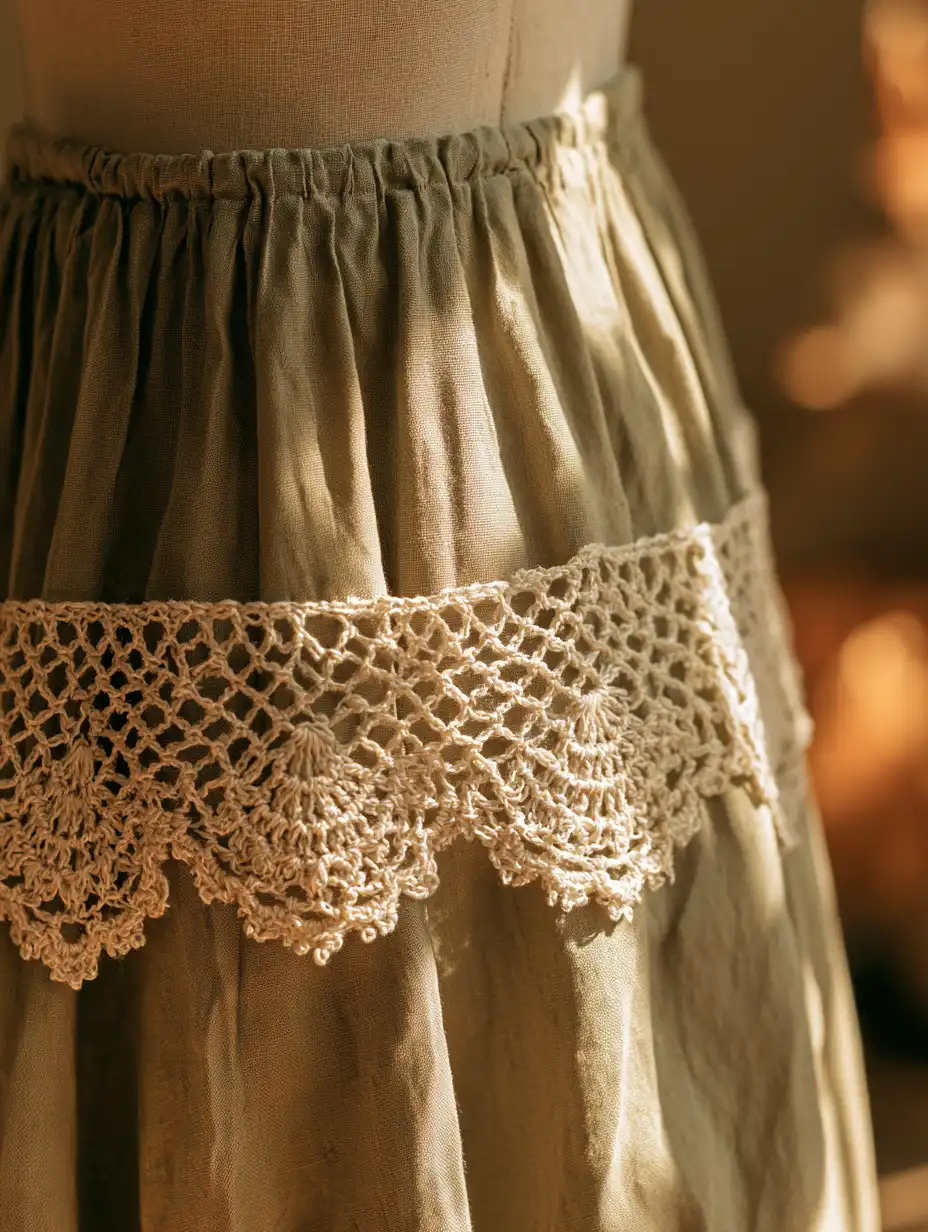
A long strip of crochet lace trim worked to the circumference of a gathered skirt’s hem, attached by hand to a basic fabric skirt to produce the specific decorative hem finish of a period peasant or noble costume. The trim is worked as a continuous strip rather than assembled from motifs, so it maintains a consistent appearance around the full skirt circumference.
In a natural cream cotton worked as a shell stitch or a picot-edge strip of eight to ten centimeters width attached to a warm brown or deep forest green gathered fabric skirt the gathered skirt trim reads as the hem decoration of a faire costume whose maker has paid the same attention to the lower edge of the skirt as to the upper body, which is the attention level that distinguishes a faire costume from a faire outfit. The trim requires measuring the full skirt hem circumference before starting and planning the stitch count to complete the strip in one piece without joining or restarting. A joined strip has a visible seam in the finished hem. A continuously worked strip has no seam.
Yarn: Fine cotton or size 10 thread in natural cream
Hook: 2 to 2.5 mm
Extra materials: Fabric skirt base in a warm period-appropriate color
Color note: Natural cream lace on warm brown fabric reads as peasant. Natural cream lace on deep forest green reads as forest character. Gold-tone lace on deep burgundy reads as noble
Wearing note: Measure the hem circumference before starting the strip. Plan the stitch count to work the trim as one continuous piece
17. Dragon Scale Bag
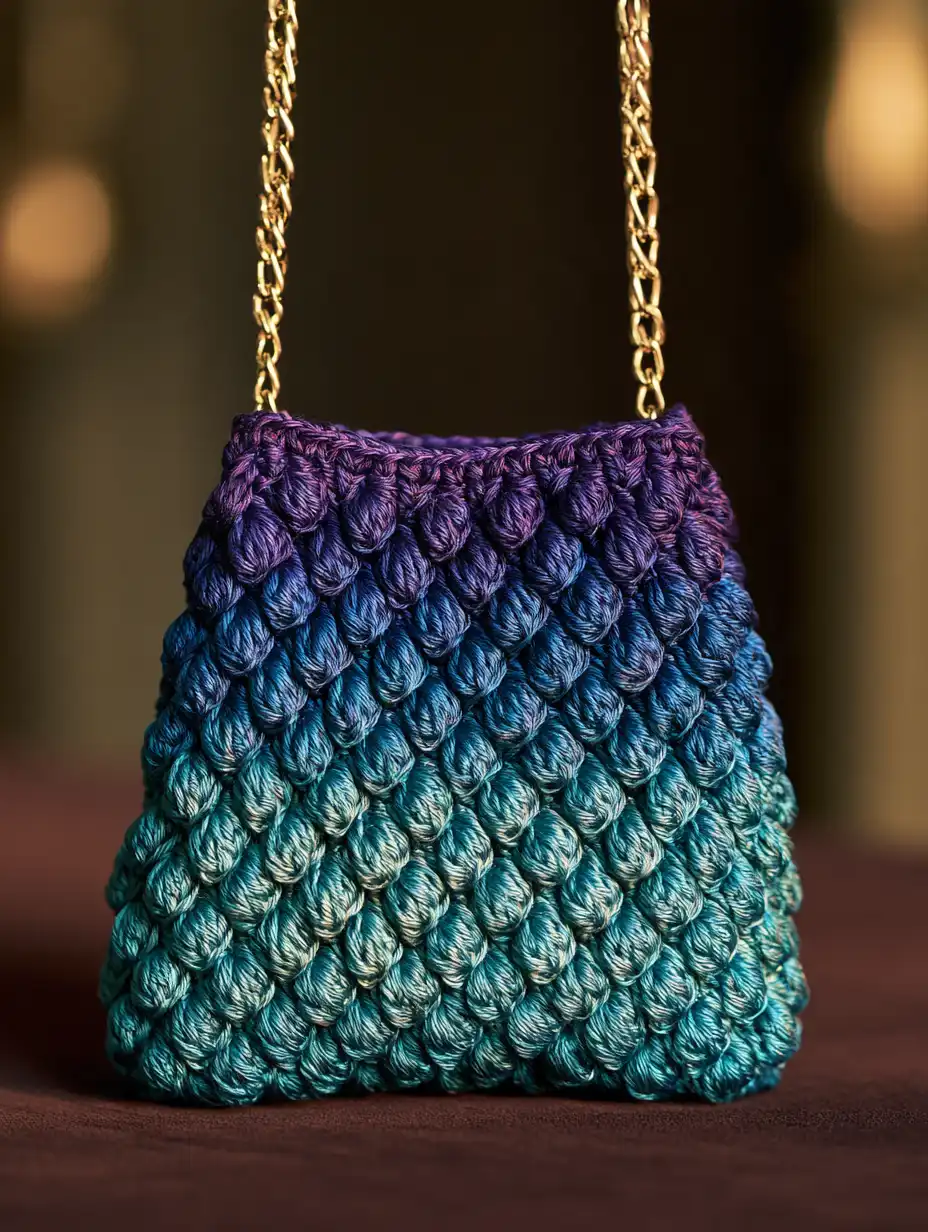
A small structured bag worked in a dragon scale crochet stitch pattern, the overlapping scale stitches worked in a gradient of deep jewel tones from teal through deep blue to deep purple, producing a bag that reads as the accessory of a person who associates specifically with dragons at their faire. The dragon scale stitch produces overlapping petals of fabric that read unmistakably as scales.
In a gradient of vivid teal through deep ocean blue through deep royal purple in the dragon scale stitch the dragon scale bag reads as the faire bag for the participant who has committed to the dragon aesthetic at every level of their costume, which is the type of faire participant who wins costume contests and who always knows who their character is and what that character would be carrying. The dragon scale stitch requires working a series of elongated slip stitches in a specific sequence that produces the characteristic overlapping teardrop scale pattern. The gradient across the full bag surface produces the iridescent color-shift quality of real dragon scale in every fantasy illustration that has ever tried to depict it.
Yarn: DK weight in vivid teal, deep ocean blue, and deep royal purple
Hook: 4 mm
Color note: The teal to blue to purple gradient reads as the classic fantasy dragon scale iridescence. A red to orange to gold gradient reads as fire dragon scales. Both are correct for their respective dragon identities
Wearing note: Add a gold-tone chain strap for wearing crossbody or add a belt attachment for wearing at the hip
18. Full Faire Accessory Set
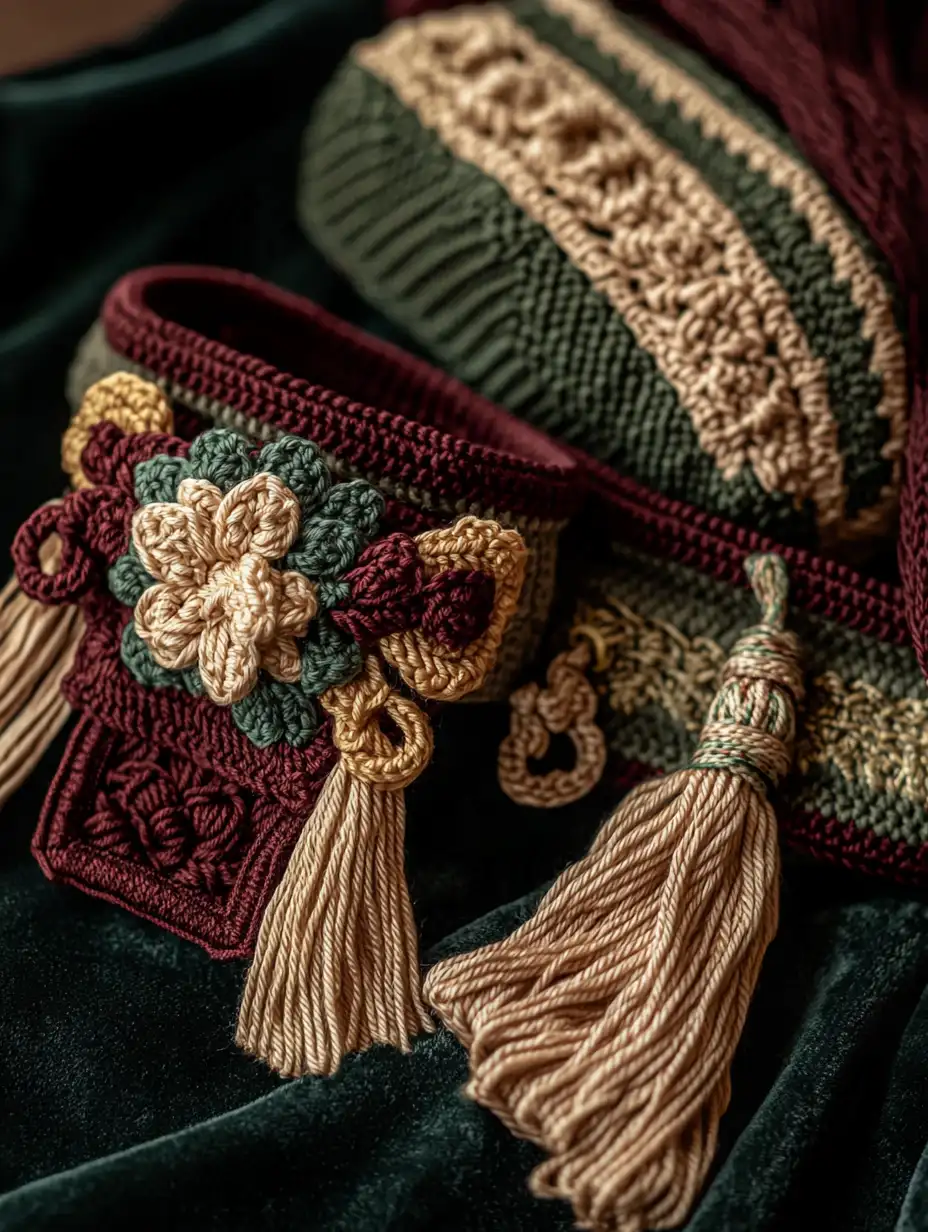
The complete faire accessory collection worked as a coordinated set: flower crown, fingerless gloves with lace cuff, braided belt, coin pouch, and arm bracers, all in the same three-color palette, so every accessory reads as belonging to the same considered costume rather than to five separate accessory projects that happened to end up on the same person.
In a coordinated palette of deep burgundy, forest green, and natural cream the full faire accessory set reads as the faire costume of someone who planned their entire ensemble as a single designed object rather than as an accumulation of individual accessory choices. The flower crown uses all three colors in its flowers and leaves. The fingerless gloves use the cream for the lace cuff. The braided belt uses all three colors in the braid. The coin pouch is in the deepest burgundy. The arm bracers are in the forest green with cream lacing. Every piece uses the same three colors in different proportions, and the result is a person who reads from twenty feet away as someone in a complete, intentional, handmade costume rather than a person wearing a collection of things from different sources. Plan all five pieces before starting any of them. The coordination is the design, and the design is decided before the first stitch.
Yarn: DK weight in deep burgundy, forest green, and natural cream throughout all five pieces
Hook: 2 mm to 4 mm depending on the specific piece
Color note: All five pieces use the same three colors in different proportions. The flower crown is the most color-saturated piece. The arm bracers are the most color-restrained piece. The variation in proportion across the five pieces is what makes the set read as designed rather than matched
Making note: Make all five pieces before the faire rather than adding them one at a time. A partial set reads as incomplete. A complete set reads as a costume
Choosing Your Faire Color Palette
The Three-Color Rule
A Renaissance faire costume in three coordinated colors reads as a designed costume. A faire costume in seven different colors from seven different accessory projects reads as a person who likes making things and has brought them all to the faire simultaneously. The three-color rule is the single most effective technique for converting a collection of handmade accessories into a coherent costume: choose one dark jewel tone as the dominant color, one medium warm or cool natural as the secondary color, and one light neutral as the accent. Every accessory is made from these three colors in varying proportions. The dominant color appears in the largest pieces. The secondary color appears in the medium pieces. The accent color appears as trim, lace, and detail. Three colors. One costume. The rule is simple and produces a result that no amount of additional colors improves.
Period-Accurate Color Choices
The colors most associated with the genuine medieval and Renaissance periods are the colors produced by plant and mineral dyes that were available before synthetic dye processes: deep madder red and burgundy, weld yellow and warm gold, woad blue and deep indigo, weld-and-woad green which reads as a specific forest green, undyed natural wools in cream and warm grey, and oak gall black. These colors are specific and warm and slightly muted compared to the full synthetic saturation of modern yarn ranges. A faire costume in the plant-dye palette reads as more period-specific than one in bright synthetic shades. This does not mean the bright versions are wrong. It means they read differently: bright synthetic red reads as vivid and bold. Deep madder red reads as period. Both are legitimate faire choices for different character identities.
Layering Accessories for the Full Faire Reading
The layering sequence for a full faire accessory ensemble is: start with the garment base, the shirt, the bodice, the skirt. Add the large structural accessories: the belt, the capelet. Add the wrist and hand accessories: the bracers, the fingerless gloves. Add the neck accessories: the choker, the collar. Add the hair: the flower crown, the snood, the scattered pins. Add the carried accessories: the coin pouch, the bag. The sequence matters because each layer’s visibility depends on the layers below it being in position first. A coin pouch hung from a belt that is not yet worn is a coin pouch placed at the wrong height. A flower crown placed before the capelet hood is a flower crown removed and replaced after the capelet is added. Dress in the sequence the accessories were designed to be worn, and the full faire reading assembles itself in the correct order.
Frequently Asked Questions
What yarn works best for Renaissance faire accessories?
The yarn choice for a faire accessory depends on the specific accessory and what it is being asked to do. For structural pieces, bracers, belts, cuffs, a firm cotton DK or a cotton-linen blend at a tight tension produces the rigidity the piece needs. For draping pieces, capelets, trim, veils, a soft wool or a wool-blend DK produces the drape that makes the piece move correctly when worn. For lace pieces, chokers, snoods, ruffled collars, a smooth fine cotton thread in size 10 produces the stitch definition that lace patterns require. For decorative pieces, flower crowns, hair pins, earrings, any smooth DK in the correct color works because these pieces need color and shape rather than structural properties. Velvet-feel yarn adds a luxurious surface reading to coin pouches and small bags that standard cotton cannot achieve at the same scale and making time.
Can I wear crochet faire accessories in rain?
Cotton crochet accessories survive light rain and dry without significant damage when laid flat. Wool accessories should be protected from rain because wool felts when agitated when wet, which converts a structured bracer into a smaller stiff version of itself that fits no one. Pack a lightweight waterproof cover for wool pieces and remove them at the first sign of significant rain. The practical faire solution is to make structural pieces, bracers and belts, from cotton and decorative draping pieces, capelets, from a superwash wool or a wool-acrylic blend that can survive light moisture without felting. Superwash wool is the correct fiber for any faire accessory that needs wool’s warmth and drape without the rain vulnerability of standard wool.
How do I keep faire accessories looking good through a long faire day?
Three practices keep crochet faire accessories in good condition through a full day of outdoor wearing. First, block and starch any lace or ruffle elements the night before the faire rather than the morning of, so they have fully dried and set before being worn. Second, carry a small kit of bobby pins, a needle and coordinating thread, and a few spare flowers or beads for any repairs that the faire day produces. Third, at the end of the faire day, remove all accessories before packing and lay them flat in a bag rather than folding them, because folded lace and ruffle accessories retain the fold as a crease that requires blocking again before the next wearing. A flat packed accessory is a flat accessory at the next faire. A folded one requires thirty minutes of re-blocking to recover its original form.
Can I sell Renaissance faire crochet accessories?
Yes, and the faire accessories market is one of the most receptive markets for handmade crochet objects because the faire audience already understands and specifically values handmade textile work as part of the aesthetic they are participating in. The flower crown and the fingerless gloves sell at the most accessible price points. The coordinated full faire set sells at a premium to buyers who want a complete and considered costume rather than individual pieces. The more technically specific pieces, the ruffled collar, the Celtic knotwork cuff, the dragon scale bag, sell to buyers who have identified a specific character identity and need the specific accessory that completes it. Set up at faire vendor markets where possible: the faire setting is the correct context for displaying and selling faire accessories because the buyer is already in the mindset of the costume they are completing or planning.PixForge