I will be honest with you. The first time I saw a whale shark crochet pattern I immediately bought three shades of deep ocean blue-grey yarn before I even read the instructions. That is just how I operate. Whale sharks are basically nature’s most dramatic color story: that magnificent blue-grey body, the grid of white spots, the pale belly contrast: and I could not wait to recreate it in fiber. What surprised me, and what will probably surprise you too, is how beginner-friendly most of these patterns turn out to be. The iconic markings do the heavy lifting visually, so even a simple shape looks instantly recognizable. Whether you want a tiny keychain or a full pillow-sized plush, these twenty patterns cover the whole ocean floor of possibilities.
1. Classic Amigurumi Whale Shark
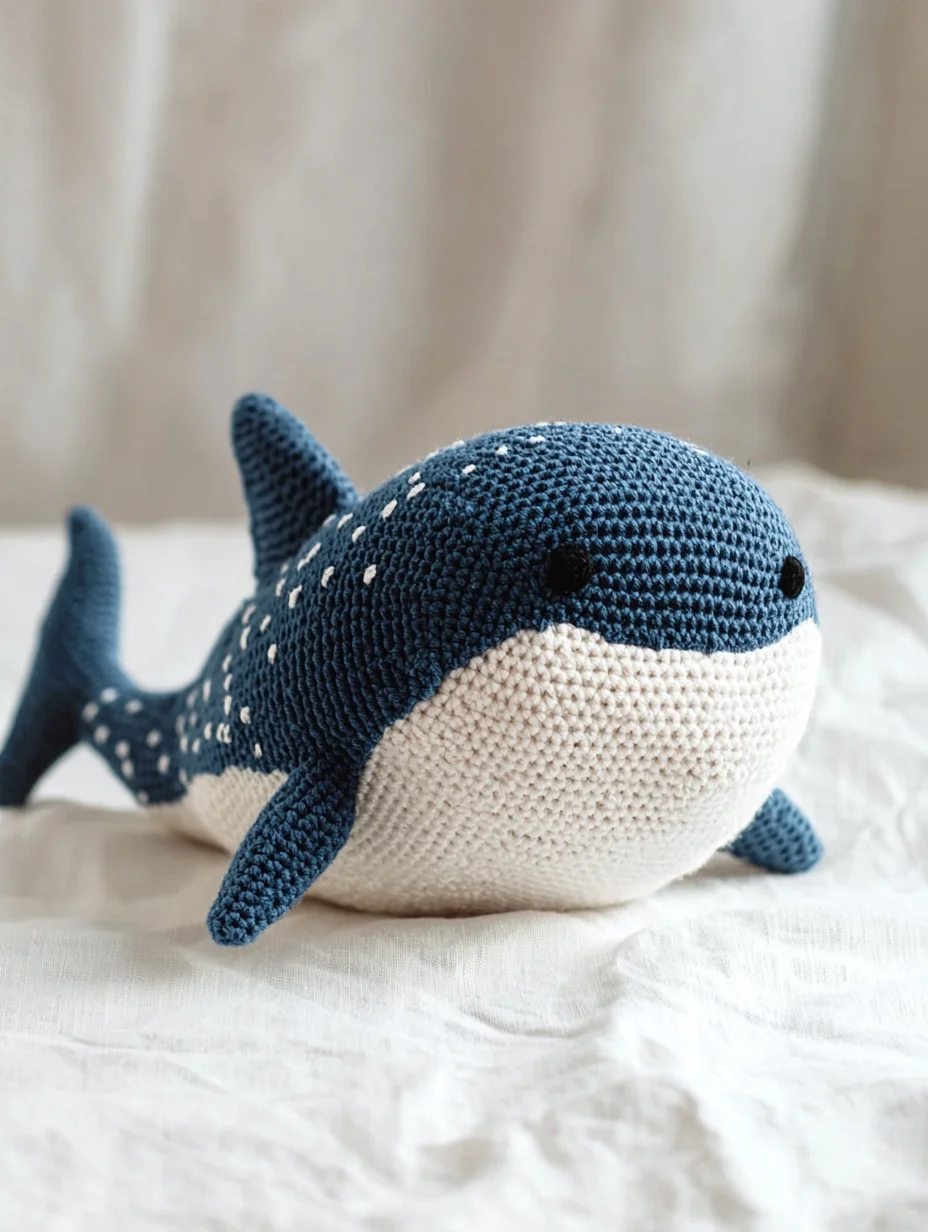
This is the foundational whale shark pattern that launched a thousand fiber fish. You work the body in continuous rounds of single crochet, shaping the wide flat head and tapering tail that make a whale shark instantly identifiable. The belly is worked separately in a contrasting color and seamed on, giving you that clean white underside. Fins are crocheted flat and attached at the end. Most versions of this pattern include the five fins: two pectorals, a dorsal, and two smaller pelvic fins: which is what makes it read as a whale shark rather than a generic fish.
Yarn: Worsted weight, 2 skeins ocean blue-grey main color, 1 skein white for belly
Hook: 3.5 mm or 4 mm
Time: 6–10 hours
Skill level: Beginner
Color note: Deep ocean blue-grey for the body, white for the belly panel, and French knots or satin stitch embroidery in white thread for the classic spot grid. The contrast between the dark body and bright white belly is the whole color drama of this creature: do not underestimate it.
2. Kawaii Chibi Whale Shark
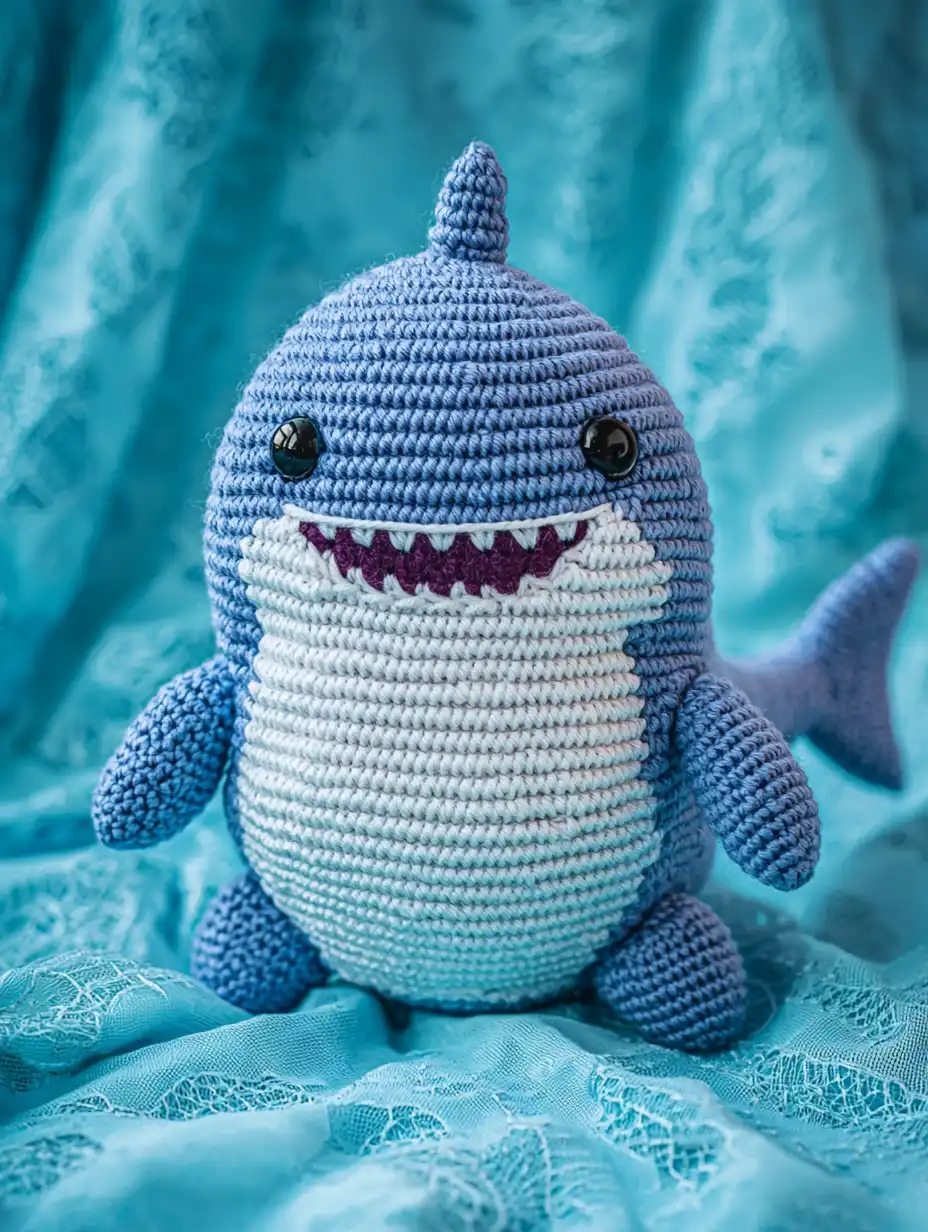
The chibi version takes everything lovable about the classic amigurumi and exaggerates it in the best possible way. The head is enormous relative to the body, the eyes are oversized safety eyes, and the tail is almost an afterthought. This proportional distortion is exactly what makes amigurumi feel like characters rather than models, and the whale shark translates beautifully into this style. The wide, flat head with its gentle downward-curving mouth already has a naturally happy expression built into it. Add chunky safety eyes at the corners of the mouth and the result is relentlessly cute.
Yarn: DK or worsted weight, blue-grey main, white contrast
Hook: 3 mm or 3.5 mm
Time: 4–6 hours
Skill level: Beginner
Color note: Soft pastel blue-grey for the body rather than deep ocean blue gives the chibi version a gentler, more toy-like feeling. A blush pink or pale lavender belly instead of stark white pushes it even further into the adorable zone. Pastel spots embroidered in cream rather than white soften the graphic quality of the pattern beautifully.
3. Large Cuddle Plush Whale Shark
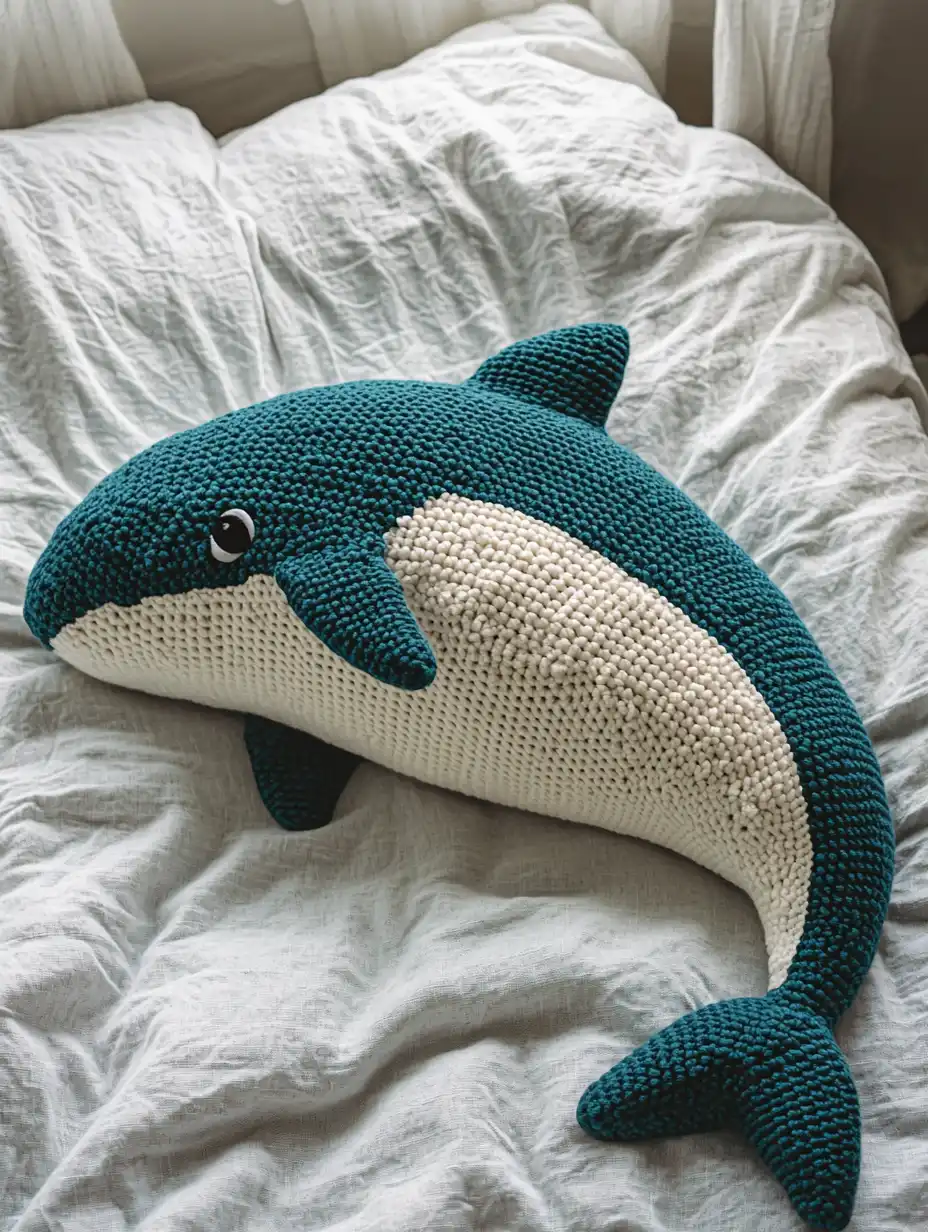
This is the whale shark for people who do not do things halfway. A large cuddle plush version runs fifteen to twenty-four inches long and is honestly the perfect size for a child’s bed companion or a spectacular statement piece for a nautical nursery. Chunky yarn in this pattern means it works up faster than you would expect for such an impressive finished size. The scale also lets you add surface detail that disappears on smaller versions: individual spot embroidery, textured fin edges, a more carefully shaped gill region. More yarn, more drama, more impact.
Yarn: Bulky or super bulky weight, 3–4 skeins main color, 1 skein white
Hook: 6 mm or 8 mm
Time: 8–14 hours
Skill level: Beginner to intermediate
Color note: Deep teal in a chunky yarn has a richness that photographs magnificently and reads even more dramatically than standard blue-grey at large scale. A crisp white belly panel in the same chunky weight creates strong color contrast that your eye can read from across the room. The size earns a bold color choice.
4. Miniature Whale Shark Keychain
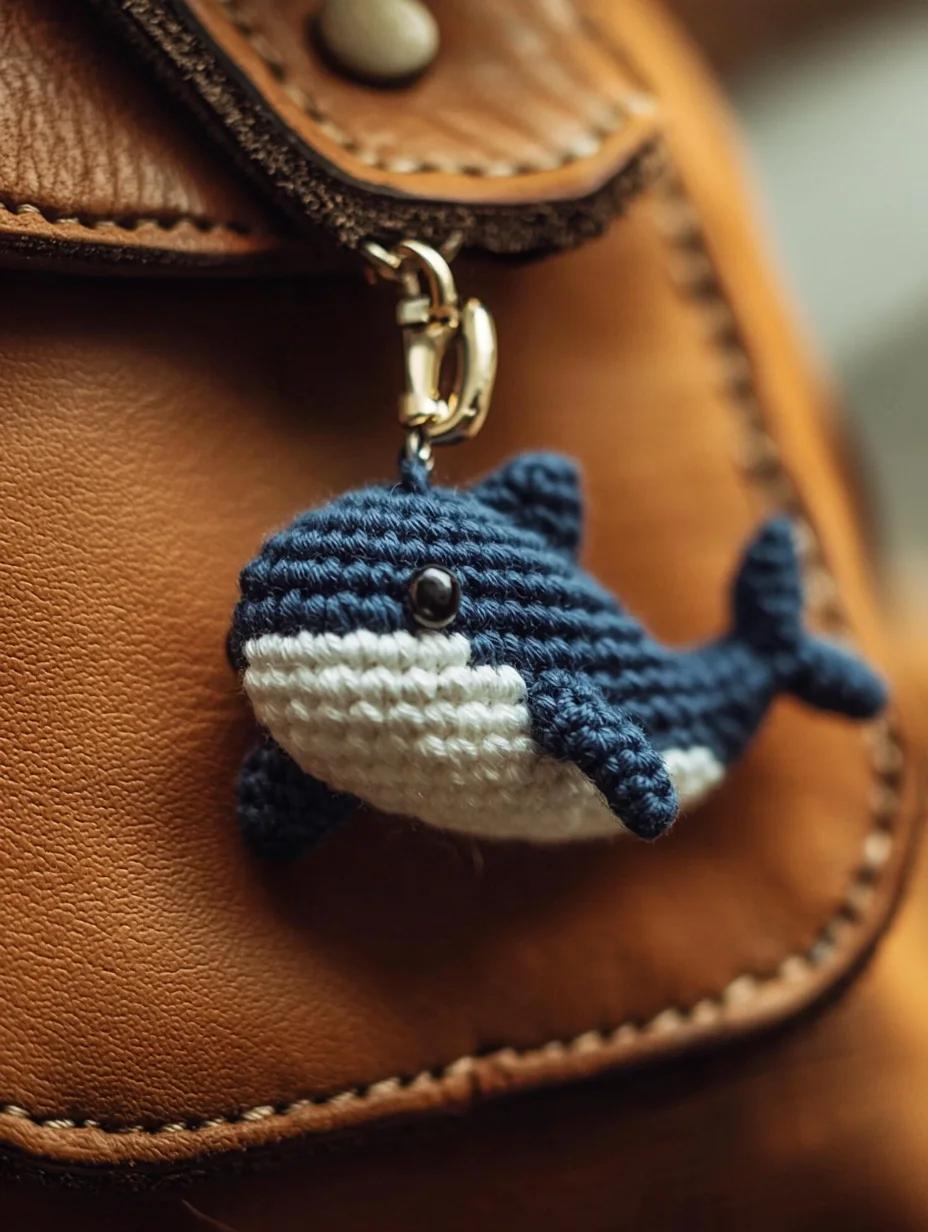
Miniature amigurumi are a whole separate skill set and an endlessly satisfying one. Getting a recognizable whale shark into a three to four inch body requires working very tightly in fingering or lace weight yarn with a small hook. The key is simplifying the shape without losing the identifying features: you need the wide flat head, the downturned mouth, and at least the dorsal fin. Spots at this scale are almost always painted with a fabric marker or left off entirely in favor of letting the shape do the work. The result clips onto a bag or keys and sparks conversation constantly.
Yarn: Fingering or lace weight, small amounts of navy and white
Hook: 1.5 mm or 2 mm
Time: 2–3 hours
Skill level: Intermediate (fine motor challenge at small scale)
Color note: Deep navy fingering weight with white belly reads with surprising clarity at miniature scale because the high contrast does the work the lost detail cannot. Navy is a better choice here than blue-grey because it photographs crisper. A single small white belly panel without spots keeps the look clean and readable when the whole creature fits in your palm.
5. Whale Shark with Spotted Surface Texture
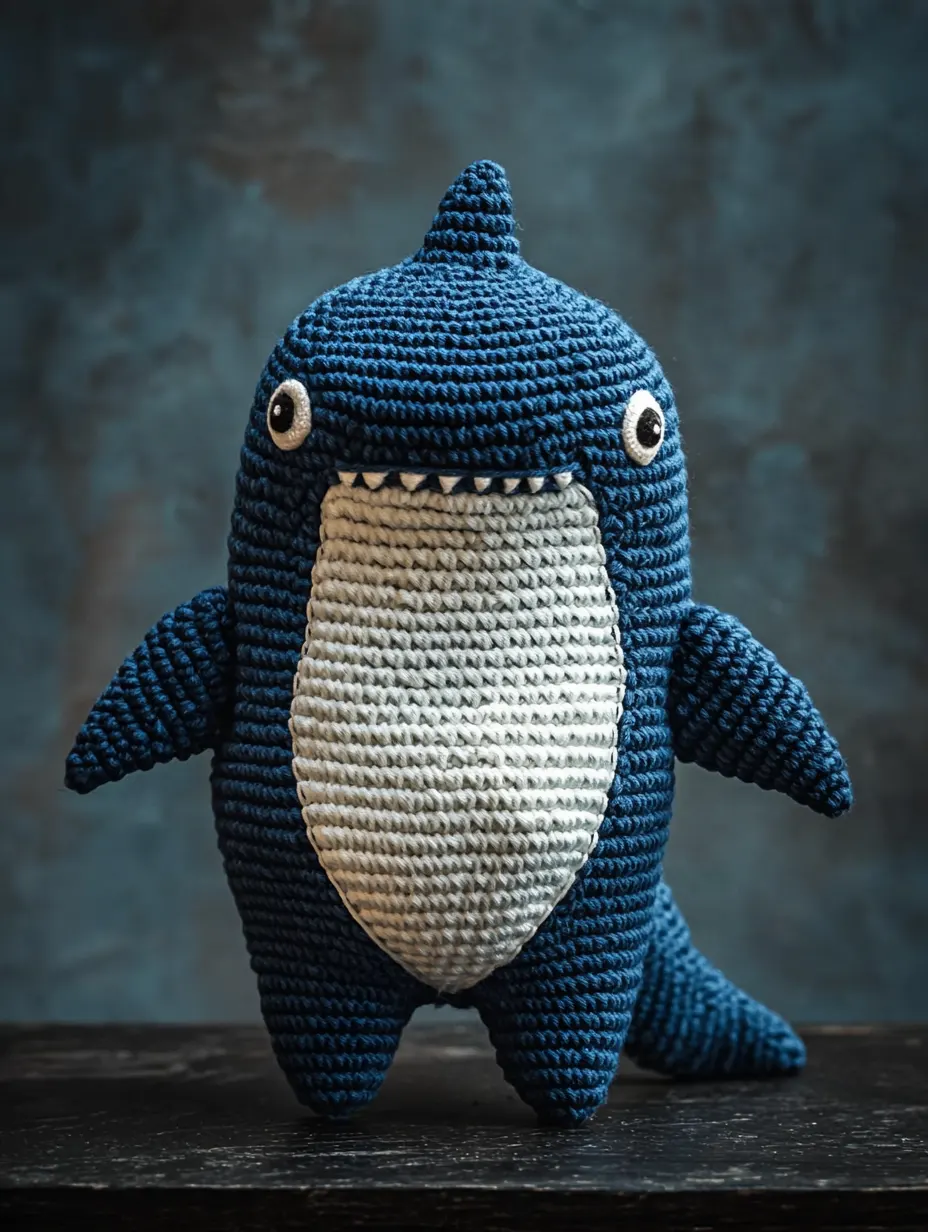
Most whale shark patterns add spots after the fact with embroidery or paint. This pattern builds the spots directly into the crochet fabric using bobble stitches or surface slip stitches in the contrasting white yarn. The result is a textured surface that you can feel when you run your hand over the plush, not just see. The technique requires a bit more color changing than a standard single-color body, but the effect is worth every extra yarn tail you have to weave in. It looks like someone sculpted the spots into the creature rather than drawing them on afterward.
Yarn: Worsted weight, 2 skeins main color, 1 skein white for bobble spots
Hook: 3.5 mm or 4 mm
Time: 8–12 hours (bobble color work adds time)
Skill level: Intermediate
Color note: Rich indigo as the body color makes the white bobble spots pop with maximum drama. Indigo reads as a deeper, more saturated version of the classic blue-grey and gives the finished piece an almost jewel-toned quality. The textured white spots against deep indigo is one of the most visually striking color combinations in the whole whale shark pattern catalog.
6. Flat Whale Shark Softie
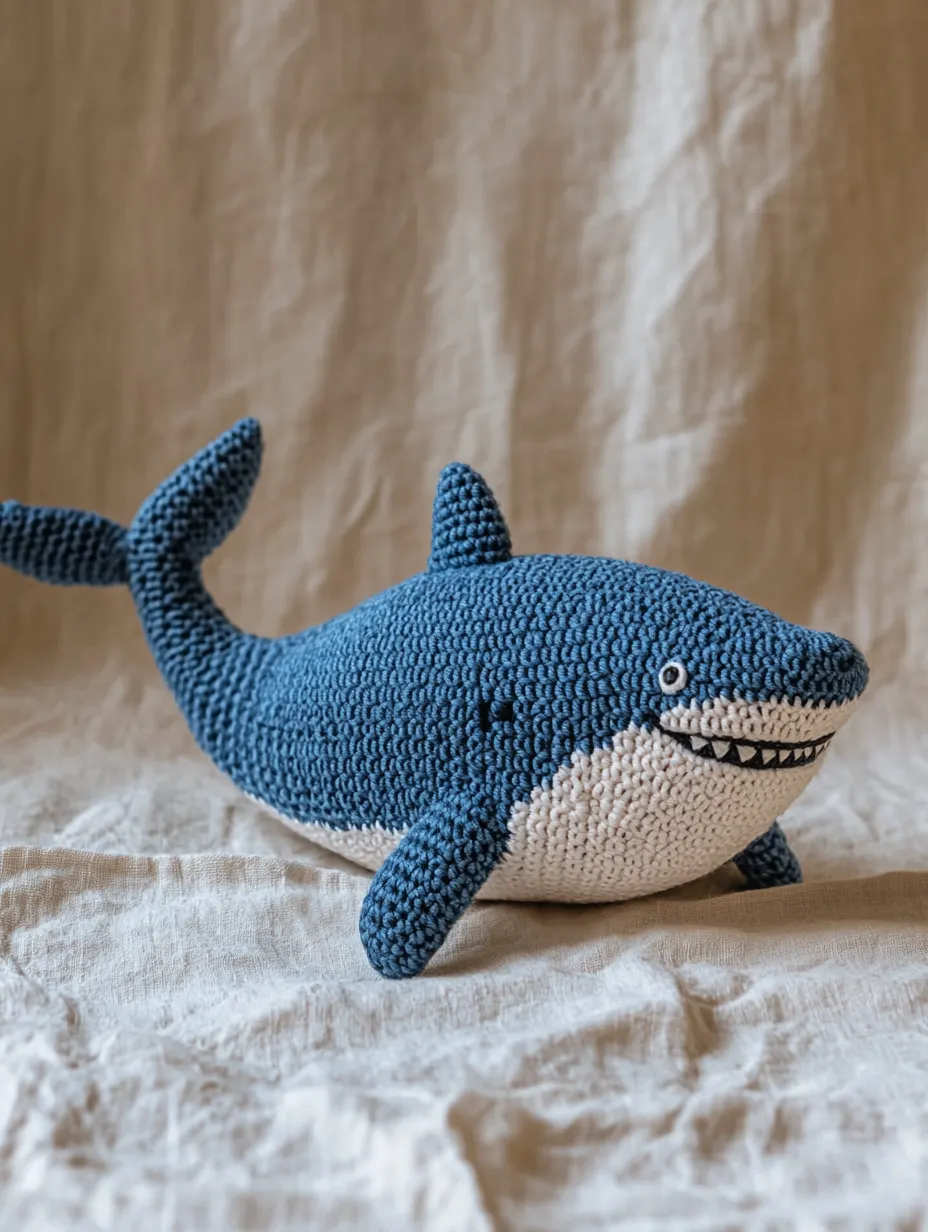
Not every crochet plush has to be fully three-dimensional. A flat softie is worked as two matching pieces sewn together around a stuffing layer: essentially a very thick applique with volume. The flat format makes the whale shark’s naturally wide, flattened body shape even easier to capture because you are working from the side profile. These are great for babies because there are no small parts to worry about and the shape is easy to grab and hold. They also make beautiful nursery decorations hung on a wall. Simple, fast, and absolutely charming.
Yarn: Worsted weight, 1–2 skeins main color, small amount white
Hook: 4 mm or 4.5 mm
Time: 3–5 hours
Skill level: Beginner
Color note: Medium ocean blue for the body with a white belly stripe that runs the full underside length gives this flat version a graphic, almost illustrative quality. The profile view lets you see the color division between back and belly clearly, making the color story even more readable than on a 3D version viewed from above.
7. Whale Shark Baby Mobile Element
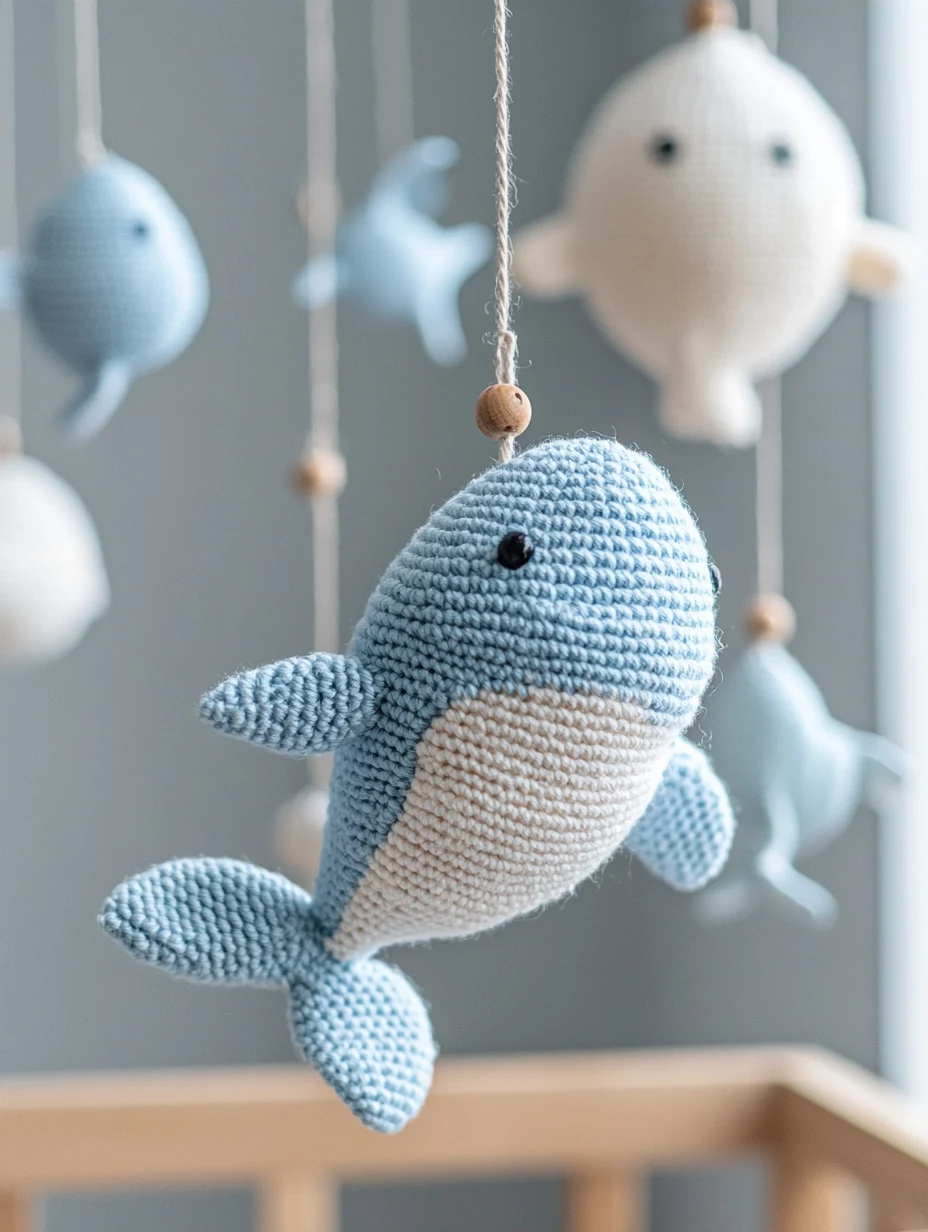
A whale shark hanging from a nursery mobile is one of those ideas that sounds whimsical and ends up looking absolutely magical. Most mobile patterns use smaller, lighter amigurumi so the mobile moves easily in air currents: you want the whale sharks around four to six inches, light enough to drift. This pattern is often combined with smaller ocean creatures like sea turtles, fish, or jellyfish to build out a full mobile. The key is keeping the stuffing light and the finishing secure so the pieces hang cleanly and can be washed when needed.
Yarn: DK weight, soft baby-safe yarn, light blue-grey and pale cream
Hook: 2.5 mm or 3 mm
Time: 3–4 hours per whale shark
Skill level: Beginner
Color note: Soft powder blue and pale cream belly for a mobile version keeps the color palette gentle and nursery-appropriate without losing the whale shark’s essential visual identity. Avoid dark saturated colors in baby items: the soft version is just as charming and far more appropriate for the context.
8. Realistic Detail Whale Shark
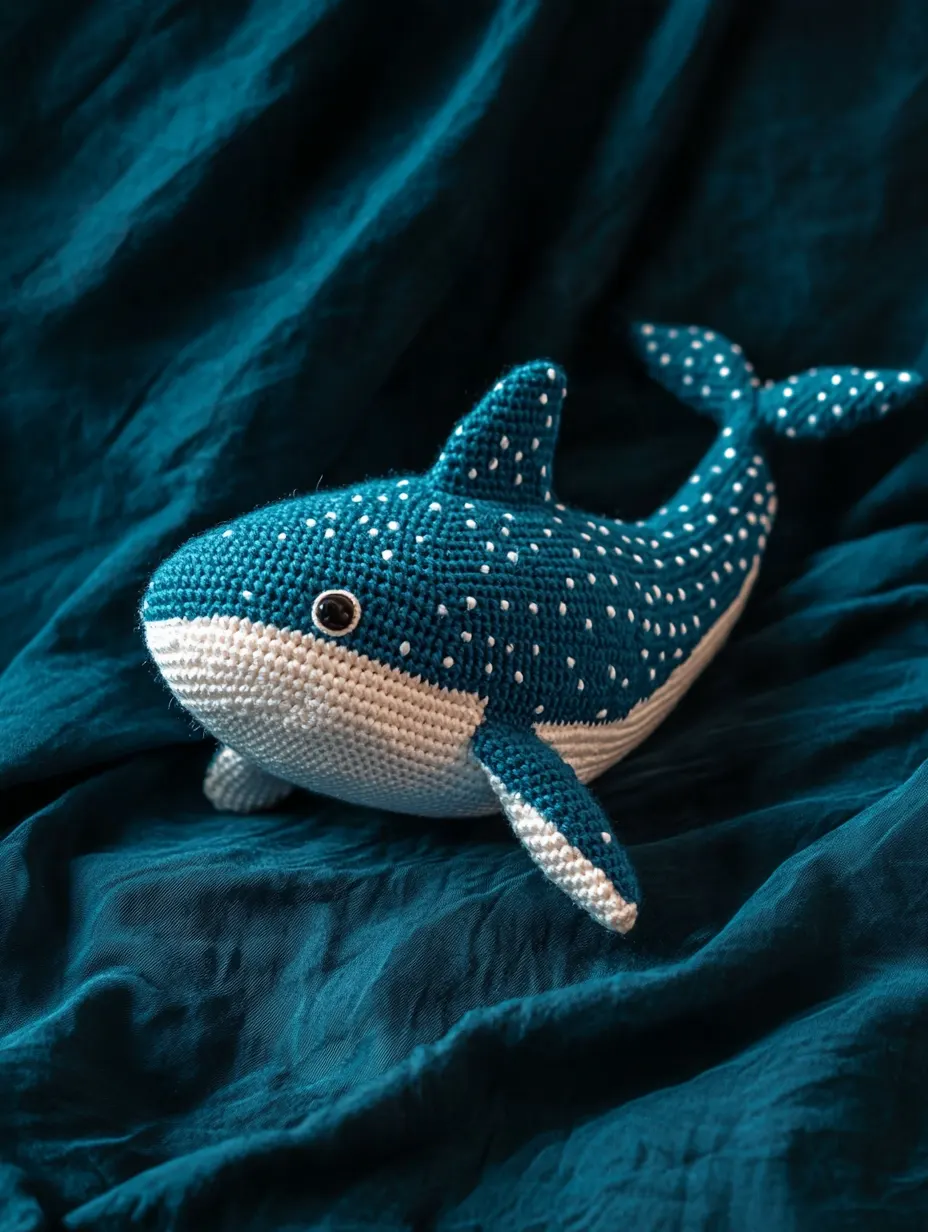
For crocheters who want to push their skills rather than take the easy road, a realistic detail pattern is deeply satisfying. These patterns use multiple yarn colors, shaping rows, and careful placement of features to capture the actual proportions and markings of a real whale shark as closely as a fiber medium allows. You might use three shades of blue-grey for gradient body color, carefully count and place each spot following the actual spot pattern on real whale sharks, and shape the distinctive cephalofoil head with precision increases. The result is genuinely impressive and does not look like a toy at all.
Yarn: Worsted weight, 3 shades of blue-grey, white for belly and spots
Hook: 3.5 mm or 4 mm
Time: 12–20 hours
Skill level: Advanced
Color note: A three-color gradient from deep blue-grey at the dorsal surface through mid-grey along the sides to white on the belly is what separates a realistic render from a simplified toy version. This gradient is the defining color feature of real whale sharks and it is completely achievable in yarn with careful color placement and blending joins.
9. Whale Shark Pillow
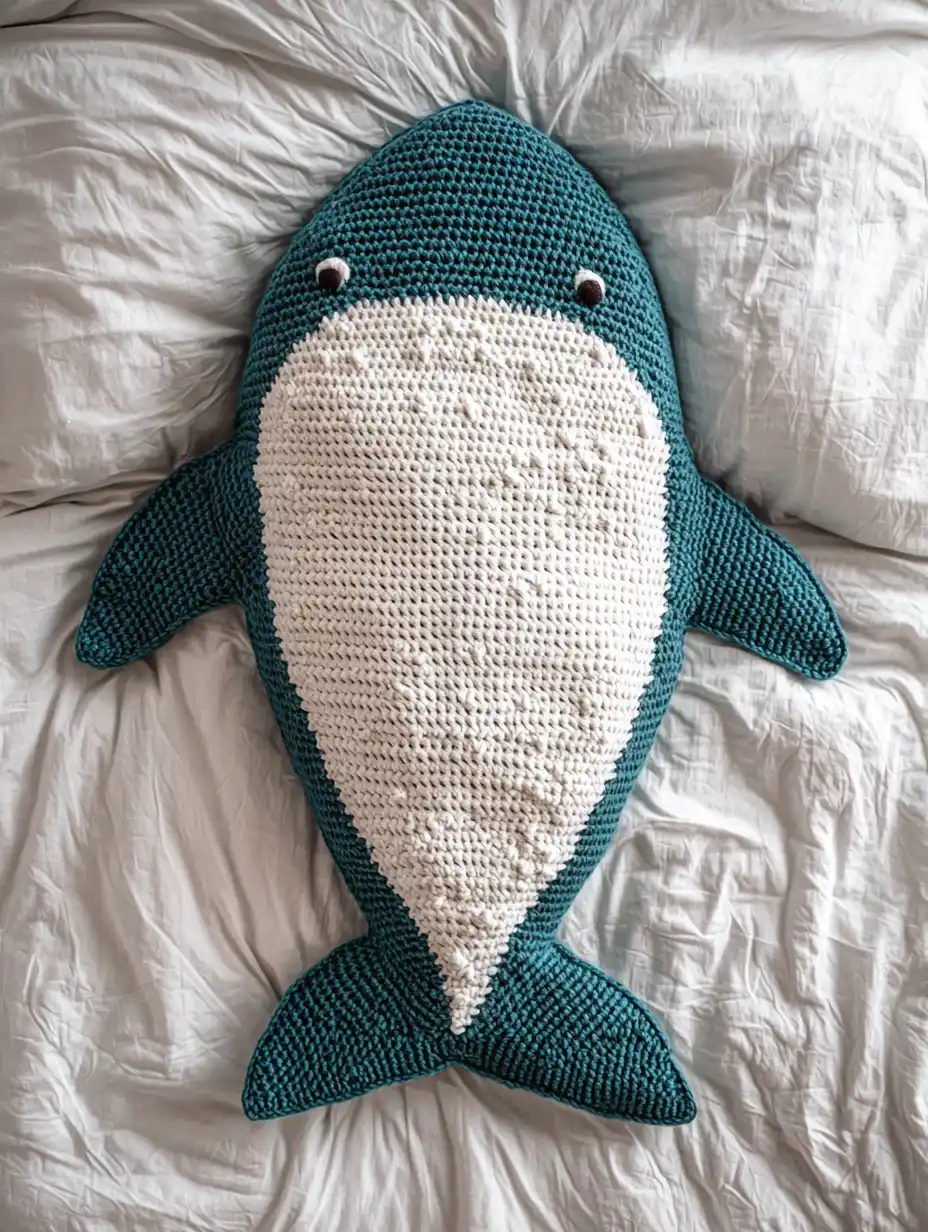
A whale shark shaped pillow sits in that wonderful space between functional object and art piece. You work the body in two flat pieces shaped like the fish silhouette viewed from above, seam them together, and stuff firmly. The flat-from-above shape captures the whale shark’s distinctive wide head and torpedo body perfectly. Most patterns in this category end up around sixteen to twenty-four inches across the widest point, making them a real statement piece for a couch or bed. The pillow format also makes embroidering spots much easier because you are working on a flat surface.
Yarn: Bulky weight, 2–3 skeins main color, 1 skein white
Hook: 6 mm or 6.5 mm
Time: 6–10 hours
Skill level: Beginner to intermediate
Color note: Deep ocean teal for the top panel with a white belly panel sewn onto the underside gives this pillow its graphic impact. At pillow scale, you have room to embroider a full grid of spots in white or pale grey: ten rows of spots is not excessive when the canvas is this large, and the result looks spectacular against deep teal.
10. Whale Shark with Diver Friends
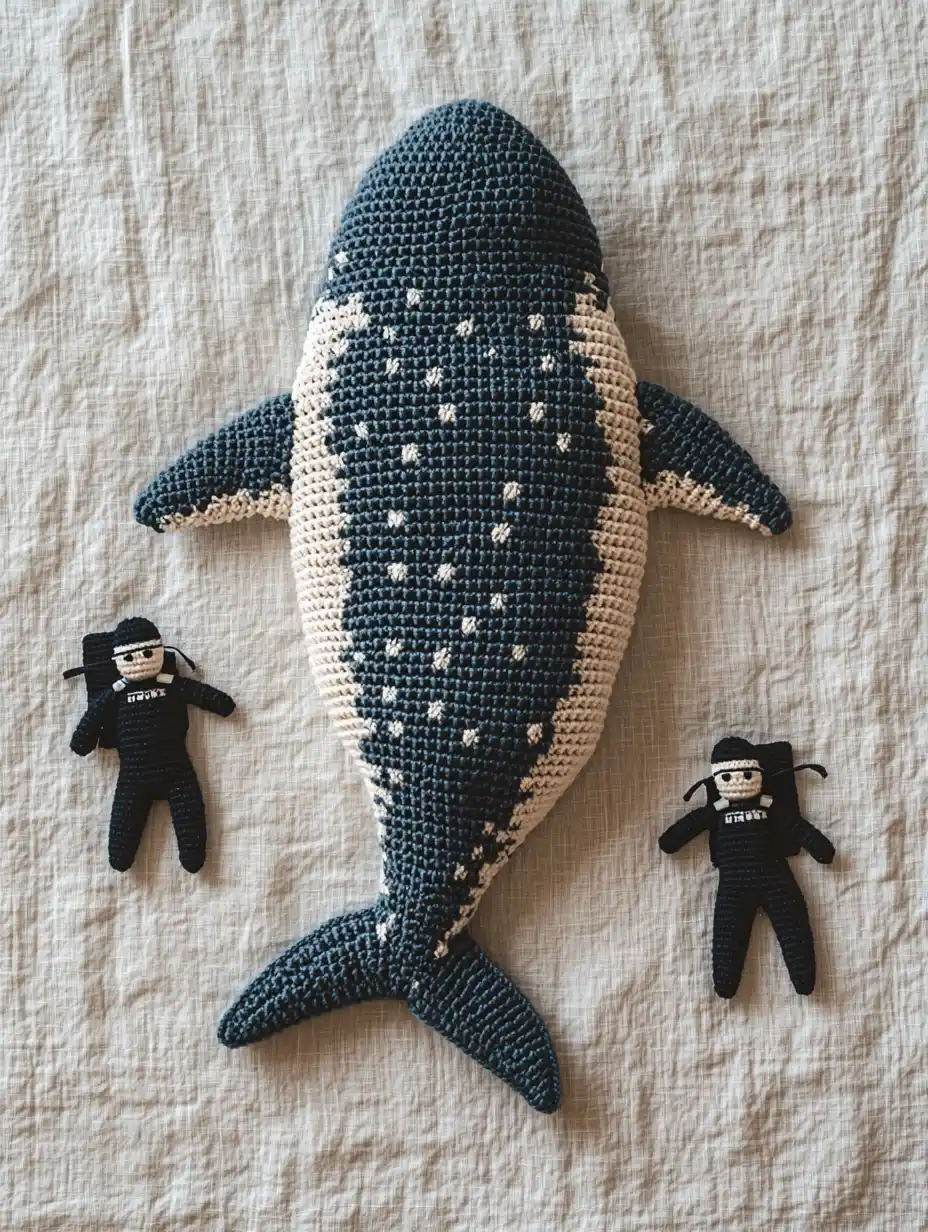
One of the most iconic images in ocean photography is the tiny diver silhouetted against a massive whale shark. Translating this into amigurumi means making one large whale shark and several tiny human figures in diving gear: the scale contrast is the whole point and it is absolutely delightful. The divers are simple enough that they work up quickly, and the contrast in size makes both the whale shark and the divers read more dramatically than either would alone. This is a wonderful gift set for anyone who loves scuba diving or marine biology.
Yarn: Worsted weight for shark, fingering weight for divers, blue-grey, white, black
Hook: 4 mm for shark, 1.75 mm for divers
Time: 12–18 hours total
Skill level: Intermediate
Color note: Deep indigo for the shark and black yarn for the diver wetsuits creates maximum drama in the color relationship between the two figures. The tiny flash of skin tone on diver faces and the white of the shark’s belly are the only light accents in an otherwise very dark, very moody color palette: and it is magnificent.
11. Whale Shark Finger Puppet
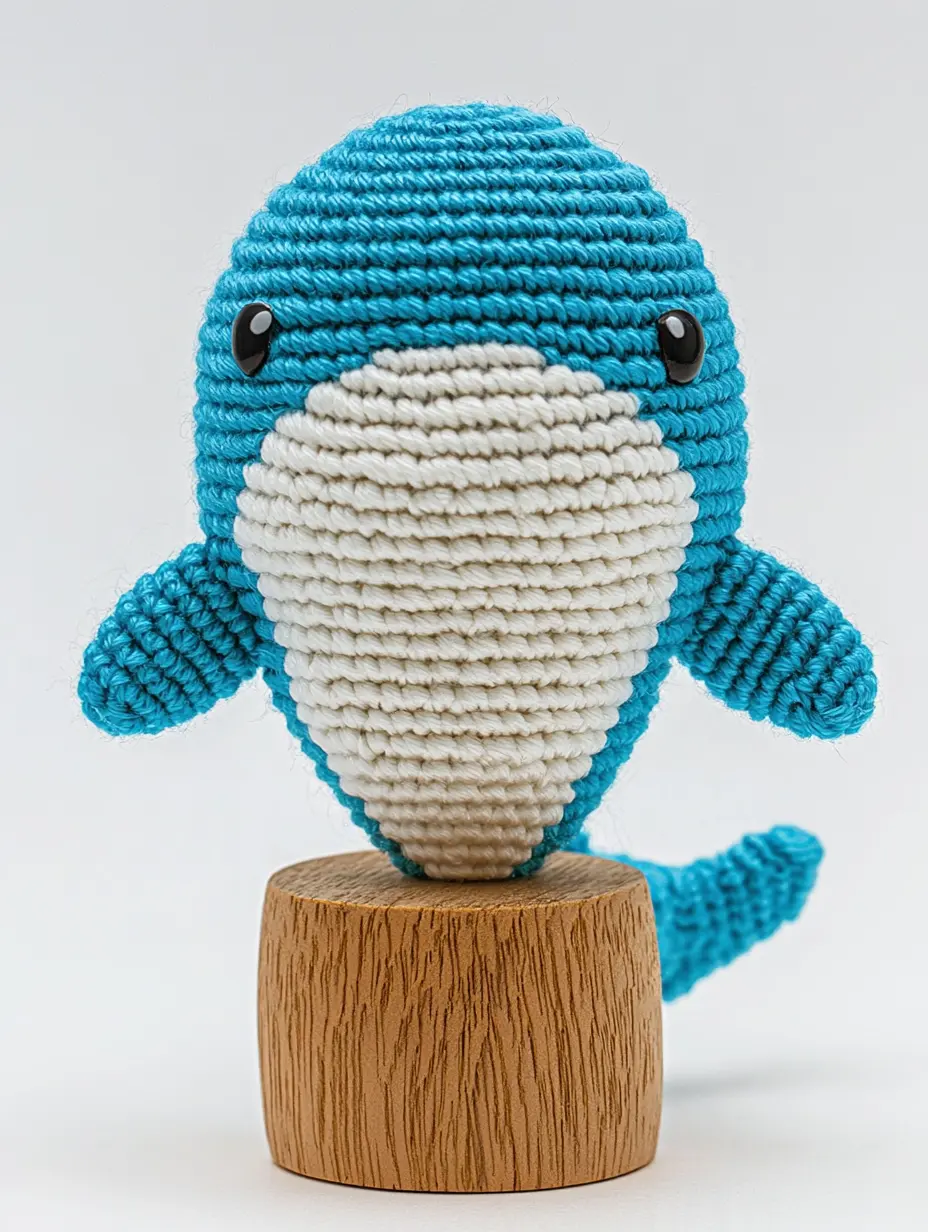
A finger puppet whale shark is the fastest way to get a recognizable whale shark into a child’s hands. The basic form is a small tube that fits over one finger, shaped at one end into the characteristic flat-nosed whale shark head. Two small fins, a pair of safety eyes, and a few embroidered spots later and you have an ocean adventure in miniature. These work up in under two hours for most crocheters and are excellent craft fair items or party favors. Make a set of ocean creatures and you have an entire puppet theater worth of characters.
Yarn: DK weight, small amounts blue and white
Hook: 2.5 mm or 3 mm
Time: 1–2 hours
Skill level: Beginner
Color note: Bright medium blue rather than grey-blue reads more clearly and cheerfully at finger puppet scale. Children’s items benefit from slightly more saturated, primary-adjacent colors because they read better in play contexts and photograph better against the inevitable colorful backgrounds of children’s spaces.
12. Gradient Blue Whale Shark
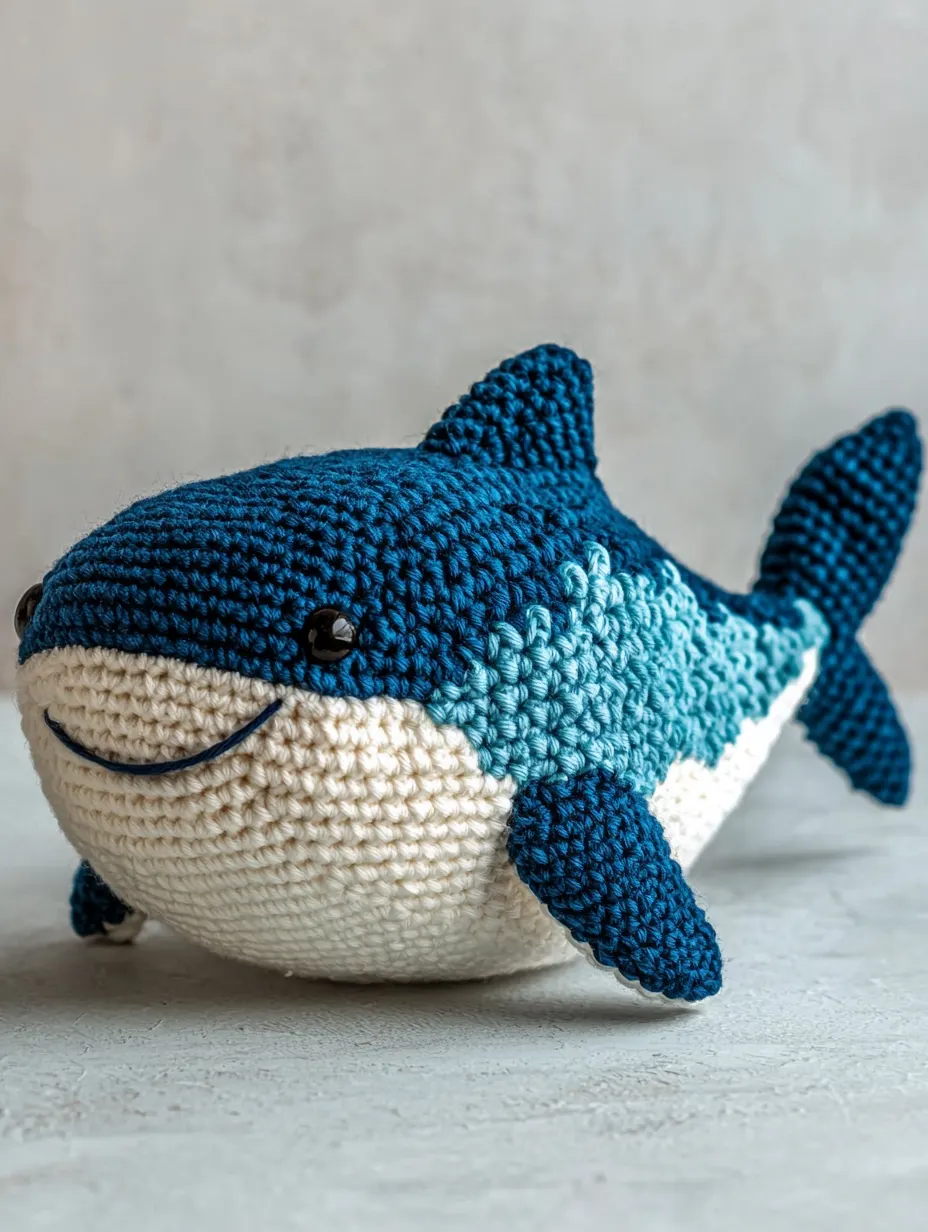
A gradient yarn whale shark takes advantage of one of modern yarn’s greatest innovations: the ombre or gradient colorway where one skein transitions through several shades automatically as you crochet. Using a navy-to-teal gradient yarn for the body means the back of the whale shark comes out in deep navy and the sides gradually lighten toward a brighter teal, approximating the natural color variation of the real animal without any deliberate color changes on your part. It is advanced-looking with beginner-level effort. Pair it with a solid white belly for the contrast you need.
Yarn: Worsted gradient yarn navy-to-teal, 1 skein white for belly
Hook: 4 mm
Time: 6–9 hours
Skill level: Beginner
Color note: The gradient from deep navy to bright teal is what makes this version special: it looks like a sophisticated color technique but requires no extra skill. The white belly panel provides the anchor that keeps the gradient from becoming confusing. Do not skip the belly contrast or the gradient gets lost.
13. Whale Shark Applique Blanket Square
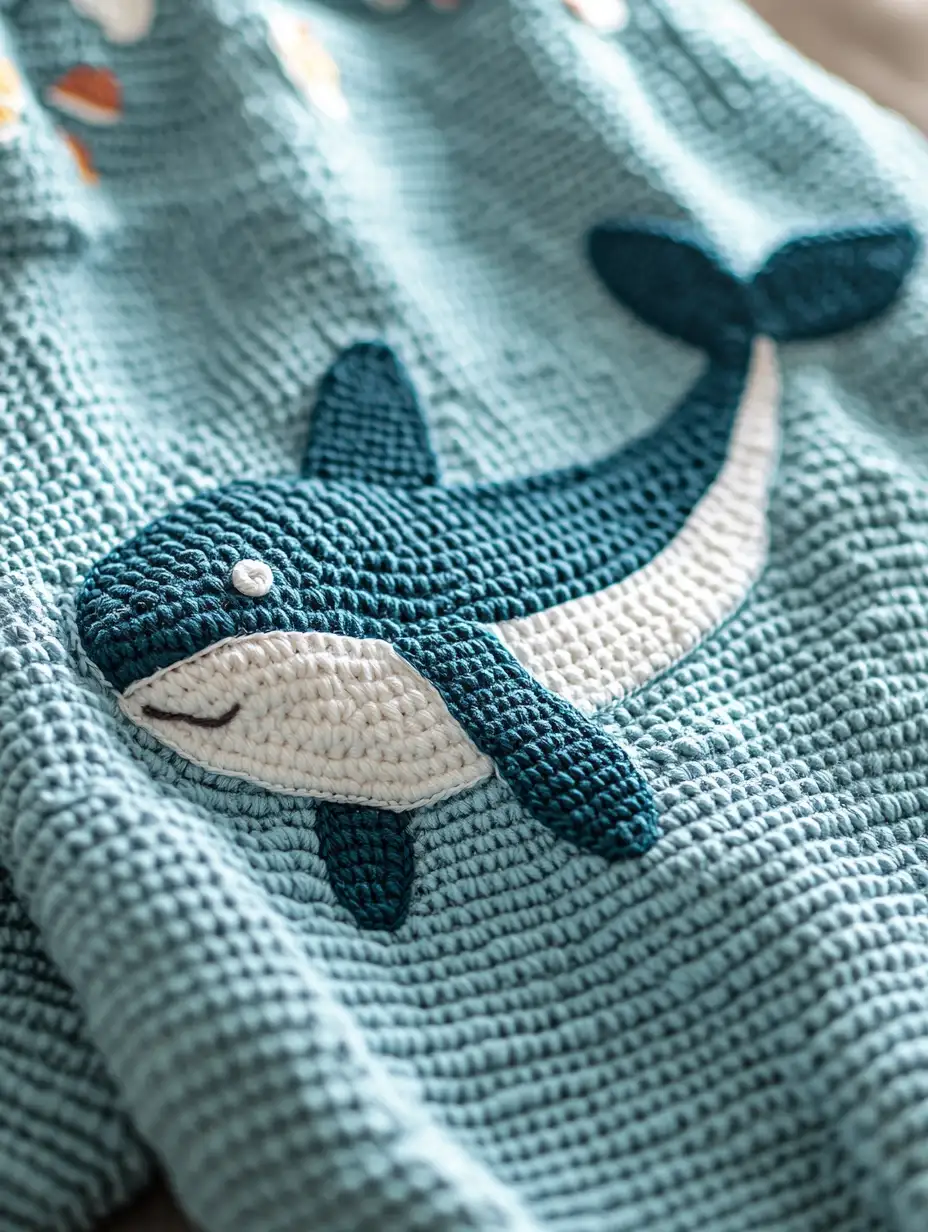
An applique whale shark worked onto a blanket square is the perfect way to incorporate the creature into a larger project. The whale shark is crocheted separately as a flat piece: essentially the side profile silhouette: and then sewn onto a finished background square. This technique works beautifully in an ocean-themed baby blanket where you might have a whale shark square, a sea turtle square, a jellyfish square, and so on. The applique method lets you get a detailed, realistic silhouette without needing to integrate it into a complex colorwork pattern in the blanket itself.
Yarn: DK or worsted weight, small amounts deep teal and white
Hook: 3.5 mm
Time: 2–3 hours for the applique
Skill level: Beginner
Color note: Deep teal applique on a pale blue or light grey background square creates ocean depth and contrast simultaneously. A white belly stripe on the applique and white French knot spots give the figure its recognizable markings even at blanket square scale. The background color choice matters as much as the applique colors here.
14. Whale Shark Crochet Bag Charm
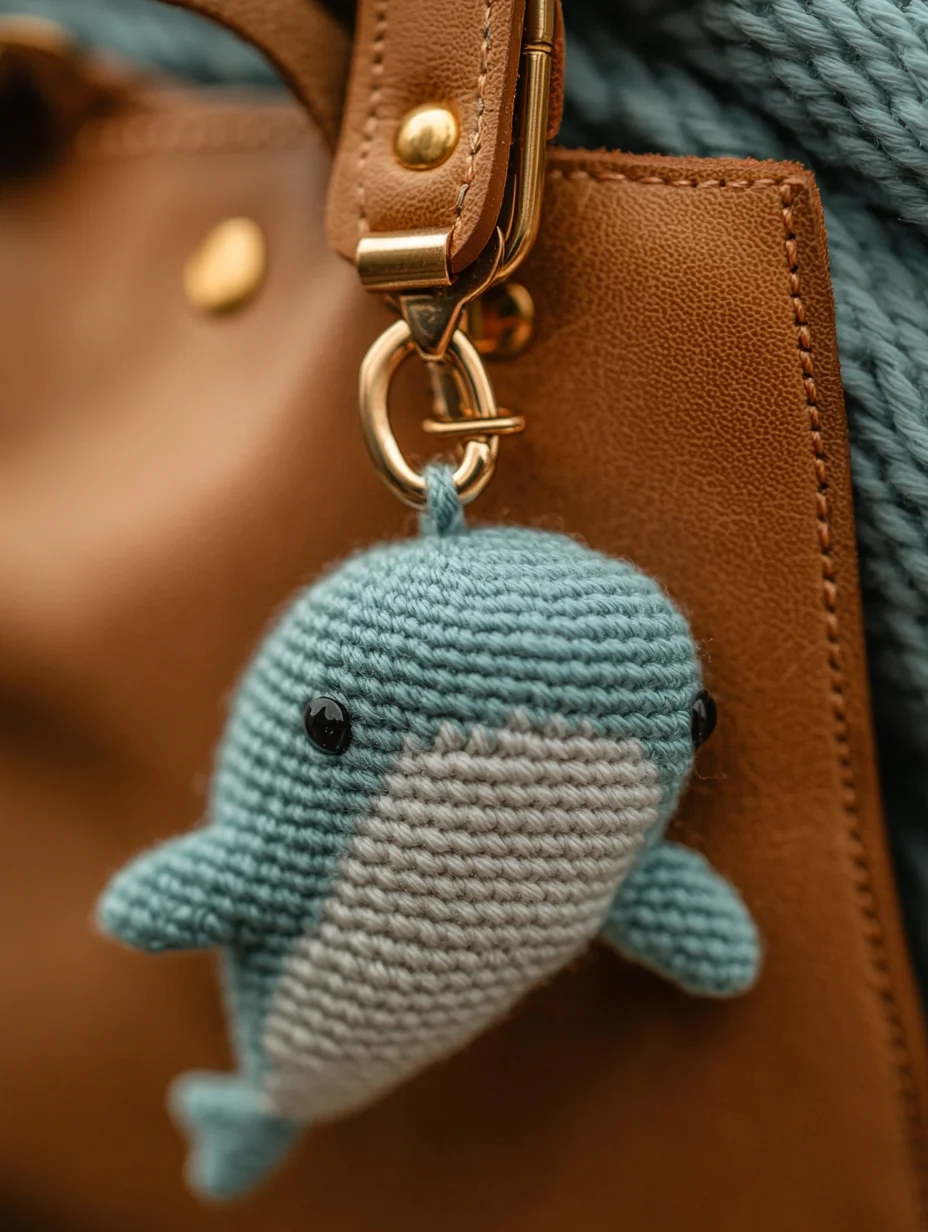
A bag charm version sits between a keychain and a small plush in size: typically four to six inches: and is designed to dangle decoratively from a bag strap or zipper pull rather than get heavy use. The slightly larger size compared to a keychain lets you include more detail: proper fin shapes, a visible belly divide, maybe even a few embroidered spots. These are popular accessories and they sell well at craft markets alongside the keychains. Make several in slightly different poses or sizes for variety without having to learn multiple patterns.
Yarn: DK or fingering weight, small amounts blue-grey and white
Hook: 2 mm or 2.5 mm
Time: 2–4 hours
Skill level: Intermediate
Color note: Deep blue-grey in a slightly dusty or muted tone gives a bag charm an elegant, accessory-level quality rather than a toy quality. The color choice signals that this is a grown-up accessory rather than a children’s toy, which expands the market considerably. A subtle belly in pale grey rather than stark white reinforces this more sophisticated feeling.
15. Whale Shark Rattle for Babies
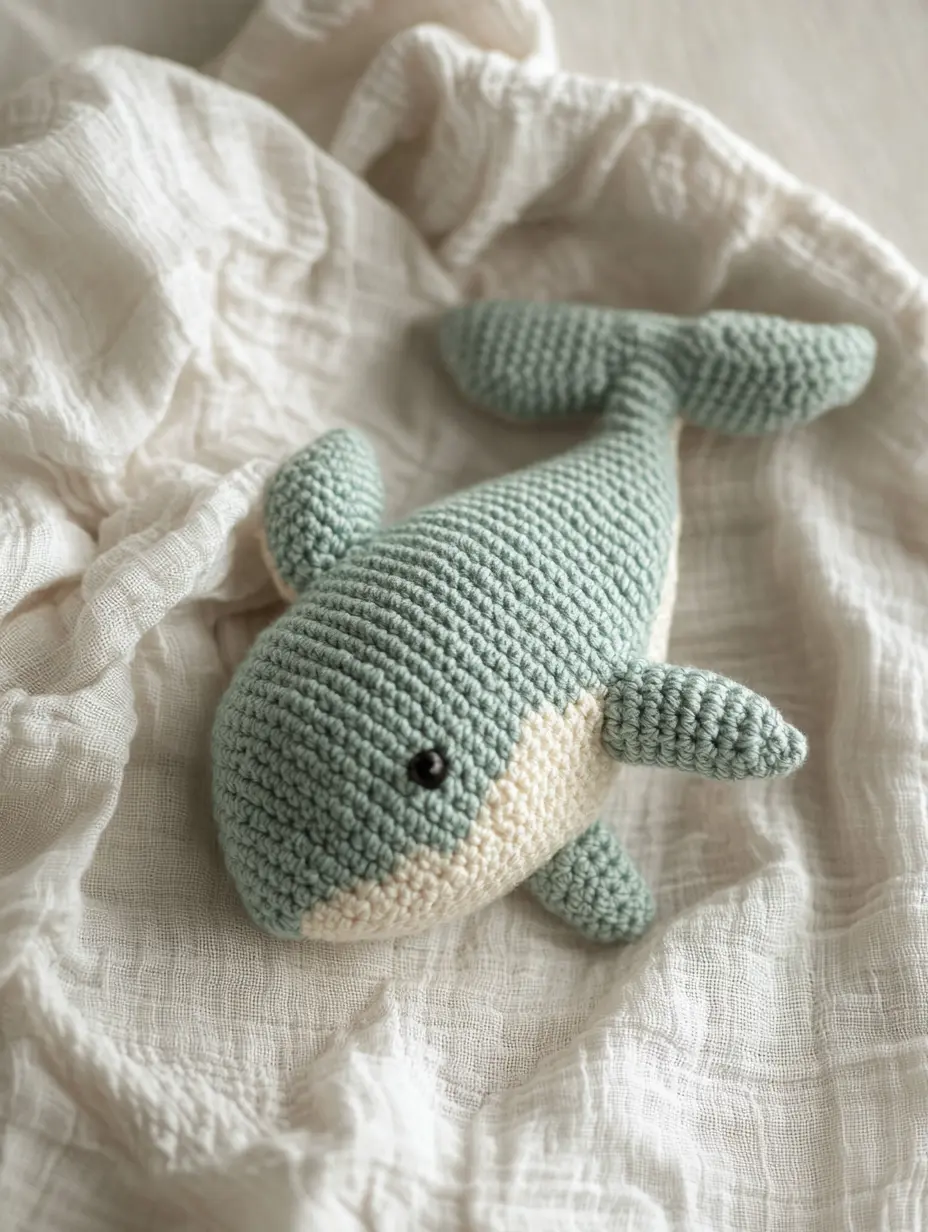
A crocheted rattle is one of those projects that requires a bit more planning than a standard plush because you need to integrate a rattle insert safely inside the stuffed body. Most makers use a small plastic rattle insert placed inside a mesh inner bag, which is then surrounded by stuffing before you close the seam. The result is a crochet whale shark that makes a gentle rattling sound when shaken. Safety is paramount here: use only baby-safe yarns with no small detachable parts, and test the seams thoroughly before giving it to a child.
Yarn: DK weight baby-safe yarn, soft seafoam green and pale cream
Hook: 3 mm
Time: 4–6 hours
Skill level: Beginner
Color note: Soft seafoam and pale cream belly gives a baby rattle whale shark a gentle, dreamy quality that suits infant items perfectly. Seafoam is a slightly warm, slightly green take on aqua that feels fresh without being overwhelming: the ideal color for something a baby will hold and look at for hours.
16. Whale Shark Coin Purse
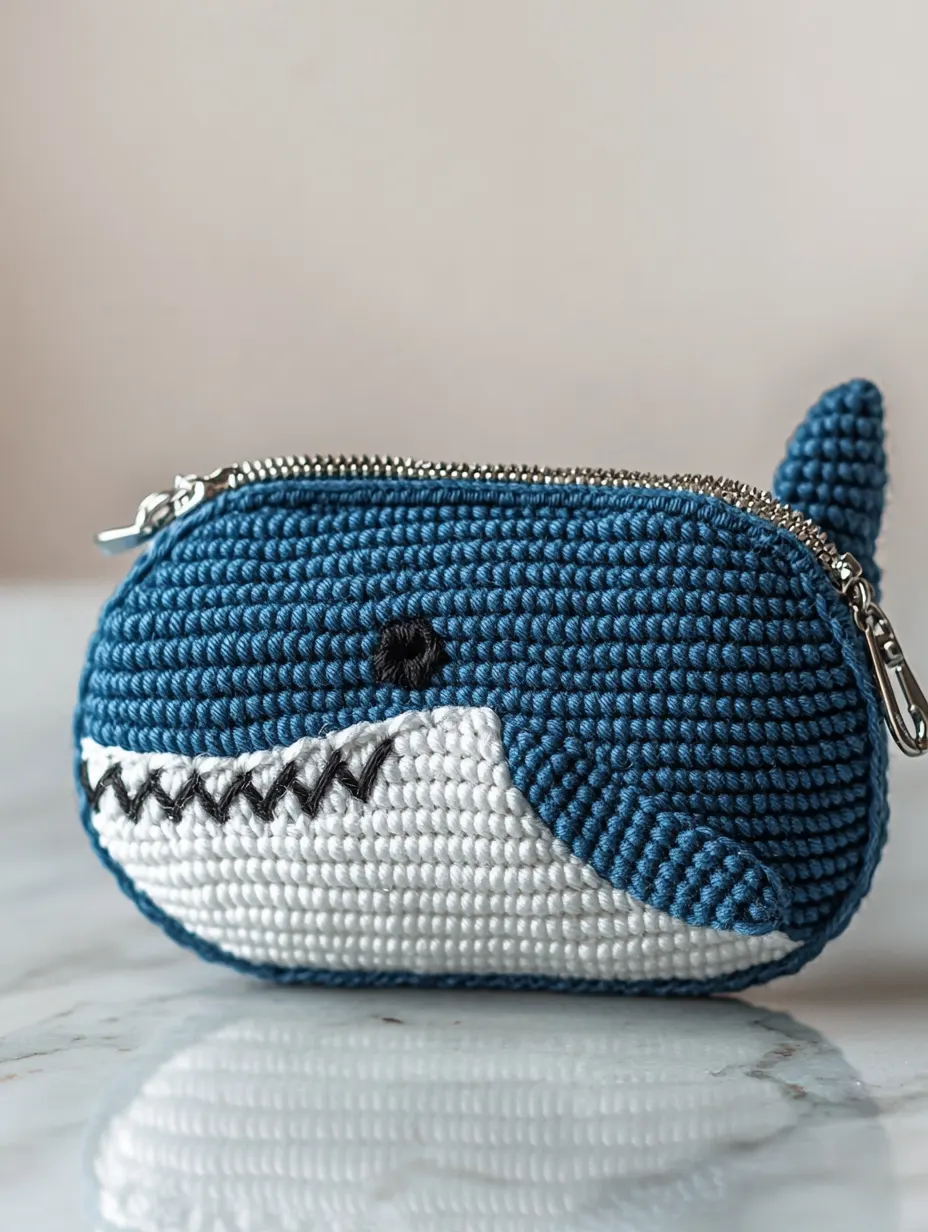
A crocheted coin purse in whale shark form is part functional object and part conversation piece, which is exactly the right energy for an accessory. The basic construction is a small zippered pouch worked in the round, with the whale shark’s body shape formed by the outer fabric. The head end is the zippered opening, which makes the wide flat whale shark mouth the most logical place for the zip. You end up essentially opening the whale shark’s mouth to get to your coins, which is both practical and delightful. These require sewing in a zipper, which is the only non-crochet skill involved.
Yarn: Fingering or DK weight, blue-grey and white
Hook: 2 mm or 2.5 mm
Time: 4–6 hours
Skill level: Intermediate
Color note: Deep ocean blue body with a silver zip is an elegant color pairing that makes the coin purse feel like a quality accessory rather than a novelty item. The silver zip reads as a design detail rather than just a closure. A white belly lining visible when the zip is open adds a surprise of color contrast on the interior.
17. Crochet Whale Shark Bookmark
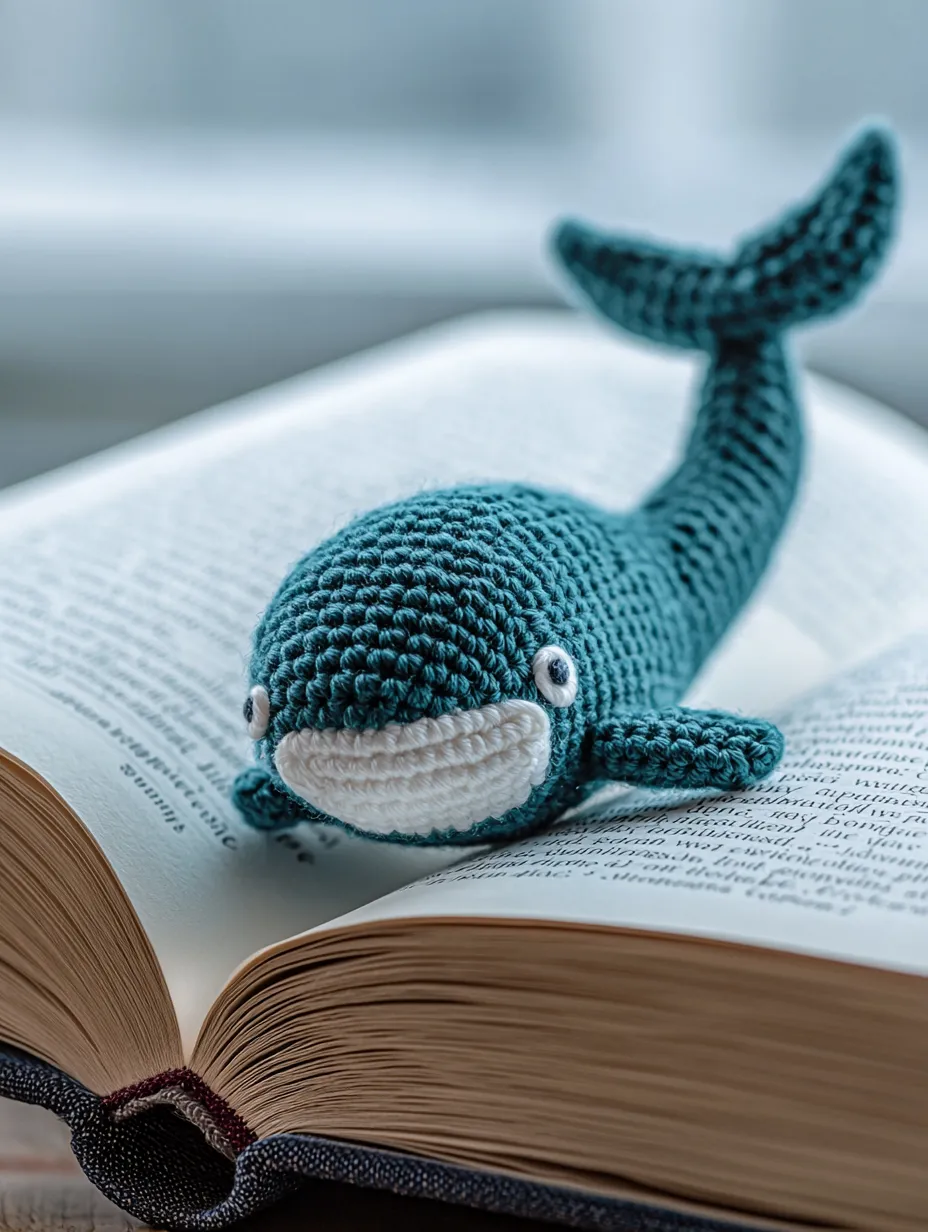
A whale shark bookmark is a flat, skinny, functional object that doubles as a tiny piece of art. The basic format is a narrow crocheted strip in the body color with a whale shark head shape crocheted at one end: the tail end hangs out of the book while the head dives into the pages, which is a very satisfying visual joke. These work up in under an hour and are perfect stash-buster projects or last-minute gifts for readers you know. Stiffen them slightly with starch or a thin coating of fabric stiffener so they hold their shape in use.
Yarn: Fingering or lace weight, deep blue or teal, small amount white
Hook: 1.75 mm or 2 mm
Time: 45 minutes to 1.5 hours
Skill level: Beginner
Color note: A single deep blue or teal body color without a belly stripe works perfectly at bookmark scale because the narrow form does not give you enough surface area for the belly contrast to read clearly. A single dramatic color with a few embroidered spots in white thread is all this item needs to be unmistakably a whale shark.
18. Whale Shark Wall Hanging
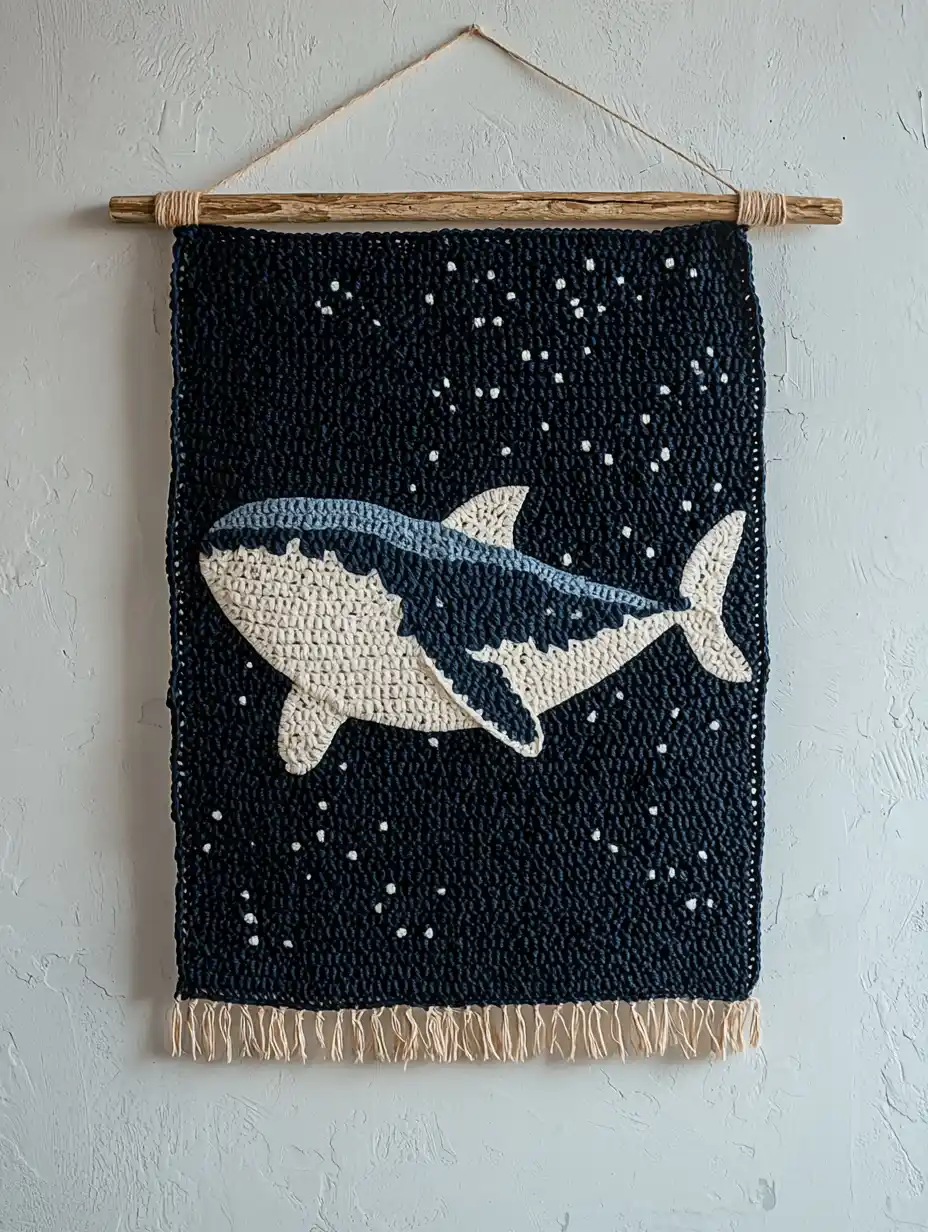
A tapestry crochet wall hanging in a whale shark motif is genuinely stunning and genuinely impressive. You work the piece flat, reading from a colorwork chart that builds the whale shark silhouette and spot pattern across the fabric using tapestry technique: the unused color is carried across the back of the work, creating a dense, reversible-quality fabric. The finished piece is mounted on a dowel and hung on the wall like fiber art, because that is exactly what it is. This is a weekend-consuming project but the result looks like something from a boutique gift shop.
Yarn: DK or fingering weight cotton, deep navy and white
Hook: 2.5 mm or 3 mm
Time: 15–25 hours
Skill level: Advanced
Color note: Deep navy and white in tapestry crochet is the classic graphic combination for this technique: high contrast, bold, and striking at distance. The whale shark’s grid of white spots on dark background is practically made for tapestry colorwork. Cotton yarn gives the piece a clean, flat surface that shows the color pattern with crisp edges.
19. Amigurumi Whale Shark Family Set
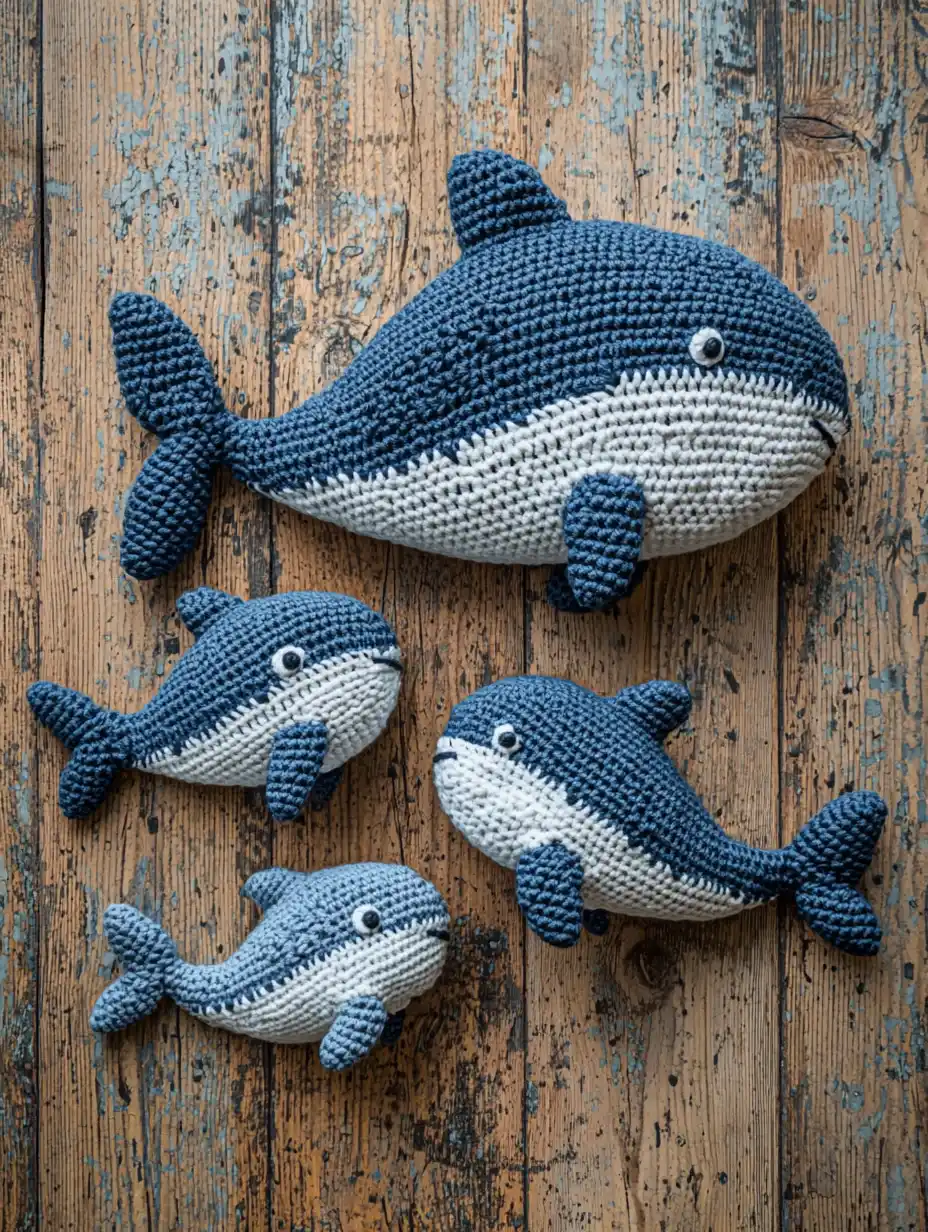
Making the same pattern in three sizes using the same colorway is one of the most satisfying things you can do in amigurumi. A whale shark family of three: a large parent, a medium juvenile, and a tiny baby: all in matching deep blue-grey with white bellies creates a cohesive set that looks wonderful displayed together and makes a spectacular gift. The trick is using the same pattern but in three different yarn weights: bulky for the parent, worsted for the juvenile, and DK for the baby. Same hook-to-yarn ratio, different scales, all from one pattern.
Yarn: Bulky, worsted, and DK weight in the same blue-grey and white colorway
Hook: 6 mm, 4 mm, and 3 mm respectively
Time: 15–20 hours total for the full set
Skill level: Beginner
Color note: Using the exact same deep blue-grey and white across all three sizes is what makes this a family rather than three separate creatures. Color consistency across scale is the visual signal that these belong together. The size variation does all the work of creating visual interest: the color relationship unifies them.
20. Fully Spotted Show-Piece Whale Shark
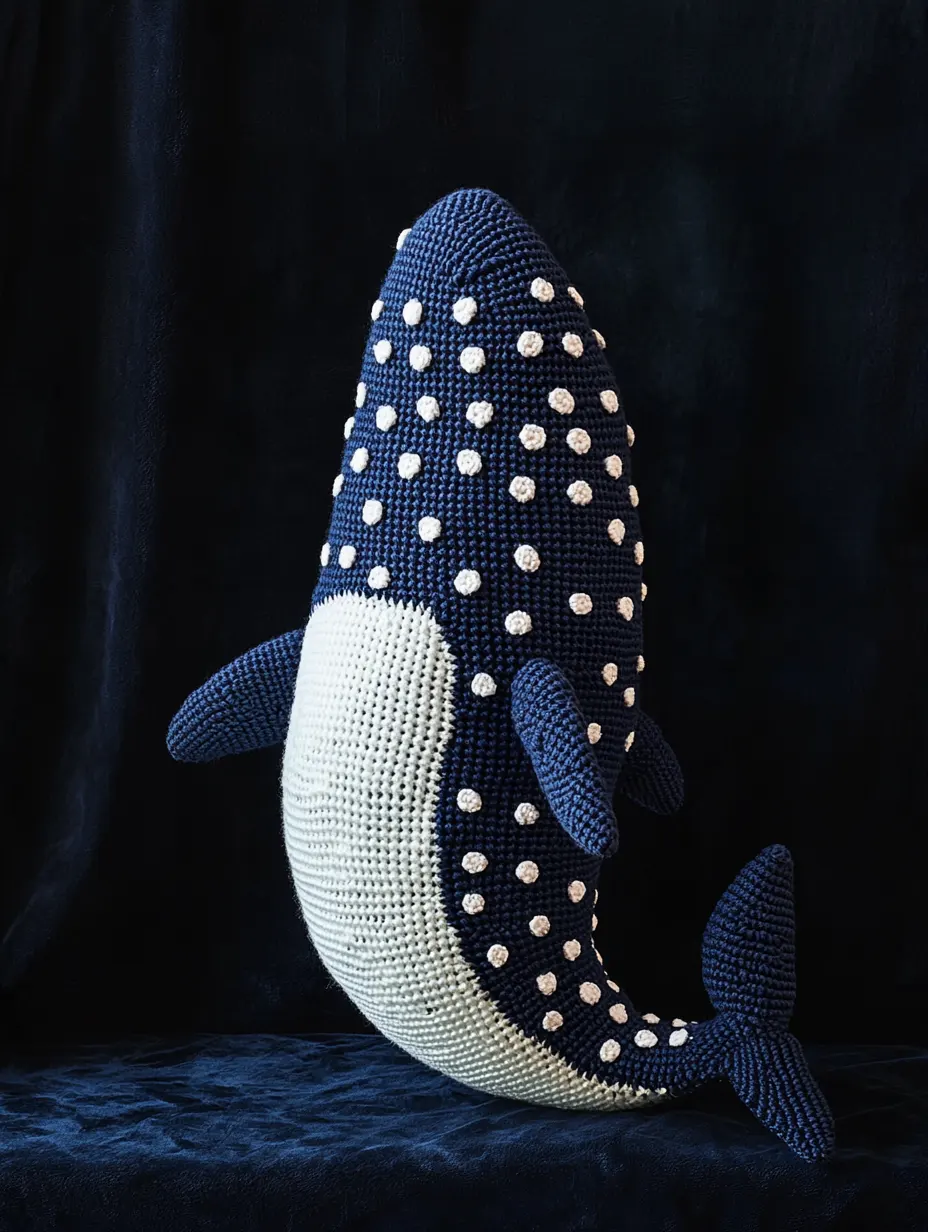
This is the one you make when you want to show everyone what crochet is actually capable of. A show-piece whale shark is a large, carefully constructed amigurumi: twelve to eighteen inches: with every single spot individually made and sewn on. Not embroidered. Not painted. Individually crocheted white circles, each one worked in the round to a tiny finished diameter, and then carefully placed following the actual spot pattern of real whale sharks. We are talking sixty to eighty spots on a full-sized version. It is meticulous, time-consuming work and the result is genuinely breathtaking. Nobody walks past this without stopping.
Yarn: Worsted weight, deepest available ocean blue-grey, white for spots and belly
Hook: 3.5 mm for body, 2 mm for spots
Time: 25–40 hours
Skill level: Advanced
Color note: The deepest available ocean blue-grey: think almost-charcoal with a blue undertone: makes the sixty to eighty individually sewn white circles read with maximum impact. This is the version where the color contrast is not just a design choice but the entire point of the project. Every white circle is a statement. Every dark stitch between them is a frame. Go as dark as you can find in the blue-grey family and let the white spots be the dramatic light in the piece.
Getting the Whale Shark Right: Color, Spots, and Fins
Before you start crocheting, it helps to understand a few things about whale shark anatomy that will make your finished piece more convincing and more satisfying. These are not rigid rules: crochet is a folk art and stylization is entirely valid: but knowing why real whale sharks look the way they do helps you make intentional choices about where to simplify and where to stay accurate.
Choosing the Right Blue-Grey
Real whale sharks are a distinctive blue-grey that reads as darker in photos and lighter in person. The color has a slight cool undertone: neither warm grey nor pure blue, but something in between. When you are yarn shopping, hold the skein under natural light and look for a grey that leans slightly cool and slightly blue without going fully navy or fully steel grey. Muted tones work better than saturated ones here. A slightly dusty, slightly grey version of ocean blue is almost always a better choice than a bright clear blue. Bernat Blanket yarn in “Soft Navy” and Lion Brand Heartland in “Glacier Bay” are popular choices in the community for this reason.
Placing the Spots Correctly
Whale shark spots are not random. They appear in a rough grid pattern on the upper body: rows of spots spaced fairly evenly across the back and sides, not present on the belly. The spots are roughly equal in size to each other (not varying wildly), approximately circular, and white or very pale cream. When embroidering spots on a plush, start from the dorsal midline and work outward symmetrically toward the sides rather than placing spots randomly. Five to seven rows of spots from head to tail, four to six spots per row per side, gets you in the right visual territory. On very small plushies, three rows of four spots reads as convincingly spotted without getting crowded.
Making the Fins Read Correctly
A whale shark has five fins: one tall dorsal fin on top, two large pectoral fins on the sides (the ones that look like wings), and two smaller pelvic fins further back on the underside. In amigurumi, you almost always need all five for the piece to read as a whale shark rather than a generic fish. The pectoral fins are the most important: they should be noticeably large and angled backward, not pointing straight out to the sides. The dorsal fin should be positioned about two-thirds back from the nose, not in the middle of the body. If you are simplifying, drop the pelvic fins before you drop any of the others: losing those two small fins is barely noticeable, but losing a pectoral fin or misplacing the dorsal reads as wrong immediately.
Frequently Asked Questions
What is the best yarn for a whale shark amigurumi?
Worsted weight acrylic in a matte or semi-matte finish works best for most whale shark patterns. The matte surface photographs better and the spots show up more clearly against a non-shiny background. Paintbox Simply DK, Lion Brand Vanna’s Choice, and Drops Paris are all popular choices in the whale shark amigurumi community. Avoid very fuzzy or textured yarns because they hide stitch definition and make it hard to embroider clean spots on top. For the white belly and spots, a smooth, bright white acrylic without a yellowish tint gives the crispest contrast.
How do I make spots on a crochet whale shark?
You have four main options and each has its place. Embroidery with white yarn using satin stitch circles is the most common method: accessible, no extra materials needed, works at any scale. Surface slip stitch in white yarn gives a slightly raised, visible spot but requires working on top of the finished fabric. Separately crocheted small circles sewn on individually is the most time-consuming but gives the most three-dimensional, realistic result: used for show pieces. Fabric paint in white applied with a thin brush or stamp is the fastest option and works well on tightly crocheted fabric that will not absorb the paint unevenly. Most beginners start with embroidery and graduate to applique circles once they want to level up.
Can I sell whale shark crochet toys I make from a pattern?
This depends entirely on the pattern’s license, which varies by designer. Many independent crochet designers allow you to sell a limited number of finished items made from their patterns, often with a credit requirement or a small license fee. Some patterns sold on Ravelry or Etsy explicitly state that you can sell finished items without restriction. A few do not allow commercial sale of finished objects at all. Always read the license terms attached to each specific pattern before selling anything you make from it. When in doubt, contact the designer directly: most are friendly and responsive and will tell you exactly what their terms are.
Which whale shark pattern is easiest for a complete beginner?
The flat softie version is the easiest entry point: it uses basic single crochet rows, requires no shaping in the round, and eliminates the challenge of working in continuous rounds that trips up most new amigurumi makers. The kawaii chibi amigurumi is the easiest fully three-dimensional option because the exaggerated proportions are more forgiving of slight shaping inconsistencies than a realistic version. The finger puppet is the fastest if you want to finish something today and feel the success of a completed whale shark before committing to a bigger project. Start small, learn the shape, and scale up once the form feels familiar in your hands.PixForge