Crochet is having a sustained moment: not a flash of trend but a genuine, deepening return to handmade. These 21 ideas sit at the intersection of what’s genuinely popular right now and what’s worth the time and focus it takes to make something well. Work through them slowly. Each one has something to teach.
1. Coastal Grandma Tote Bag
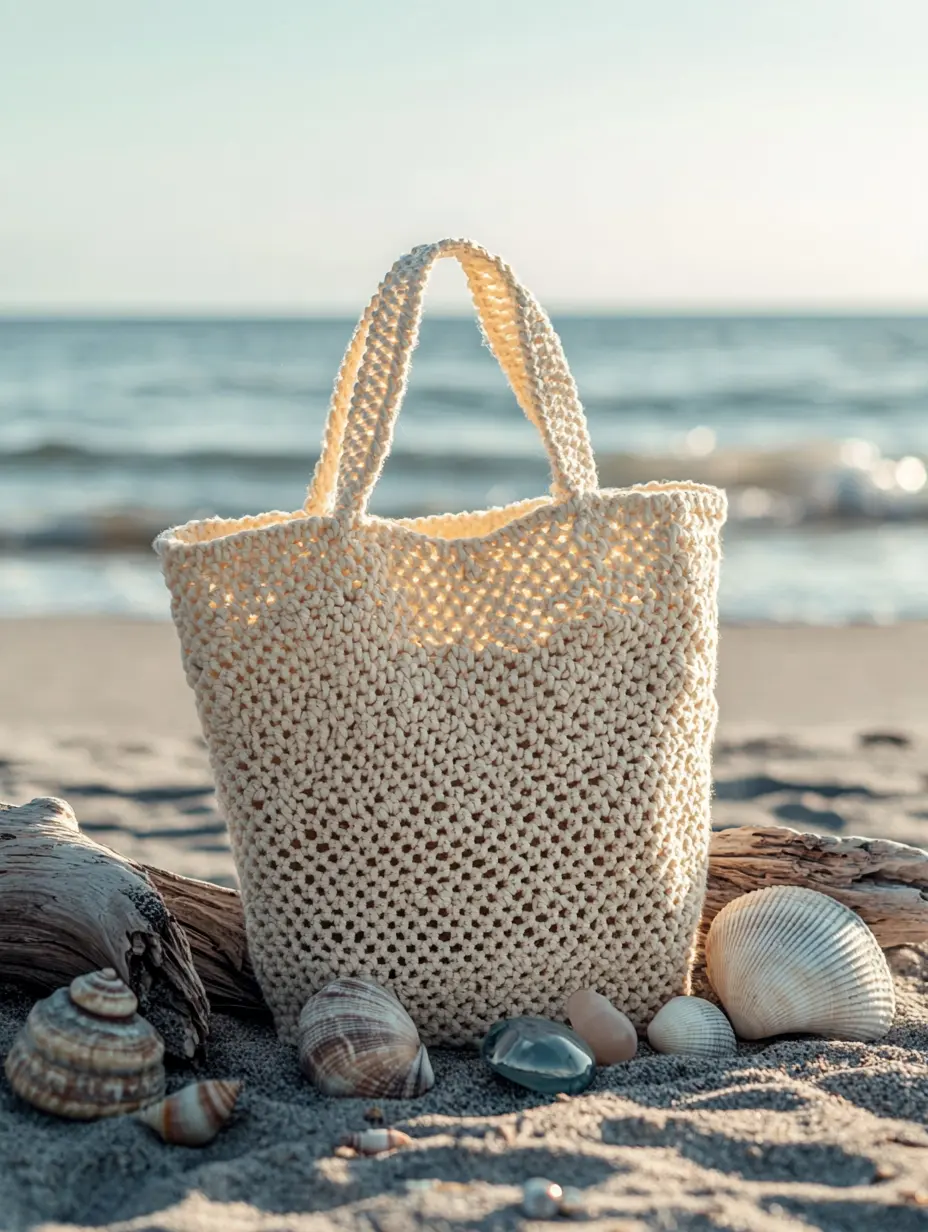
The coastal grandma aesthetic has moved from a Pinterest mood board into a genuine design direction, and the crochet tote sits at its center. Worked in natural cotton twine or undyed linen yarn with an open lattice or simple mesh stitch, the bag has the unhurried quality of something found rather than made: the kind of object that seems to belong on a bleached-wood shelf beside shells and sea glass. The construction is straightforward: a flat rectangular base, sides worked upward in the round, handles of twisted cord or braided yarn. What makes it trend-specific is restraint: natural fiber, neutral color, no embellishment beyond good stitch definition.
Yarn: Natural cotton twine or undyed linen in ecru or warm white
Hook: 5.0mm (H) or 6.0mm (J)
Time: 5–8 hours
Skill level: Beginner to intermediate
Trend note: Woven texture stitches like the linen stitch give it that tactile, artisanal quality the aesthetic demands
2. Cottagecore Floral Blanket

The cottagecore floral blanket is a larger commitment than most projects on this list, but it rewards patience in a way that few things do. Each motif: a simple daisy or rose worked flat: is made individually and joined as you go into a soft, irregular patchwork that looks deliberately imperfect. The beauty of working motif by motif is that the blanket grows visibly and variably: some days you add three flowers, some days you add ten, and the whole thing accumulates like a garden. Choose a palette of faded florals: dusty rose, sage, lavender, cream, pale yellow: and the finished piece will look like fabric that has been washed a hundred times in the best possible way.
Yarn: DK weight cotton in 6–8 faded floral colors
Hook: 4.0mm (G)
Time: 20–40 hours depending on size
Skill level: Intermediate
Trend note: Irregular motif sizes and subtle color variance read as genuinely handmade rather than crafted
3. Y2K Bead and Crochet Necklace
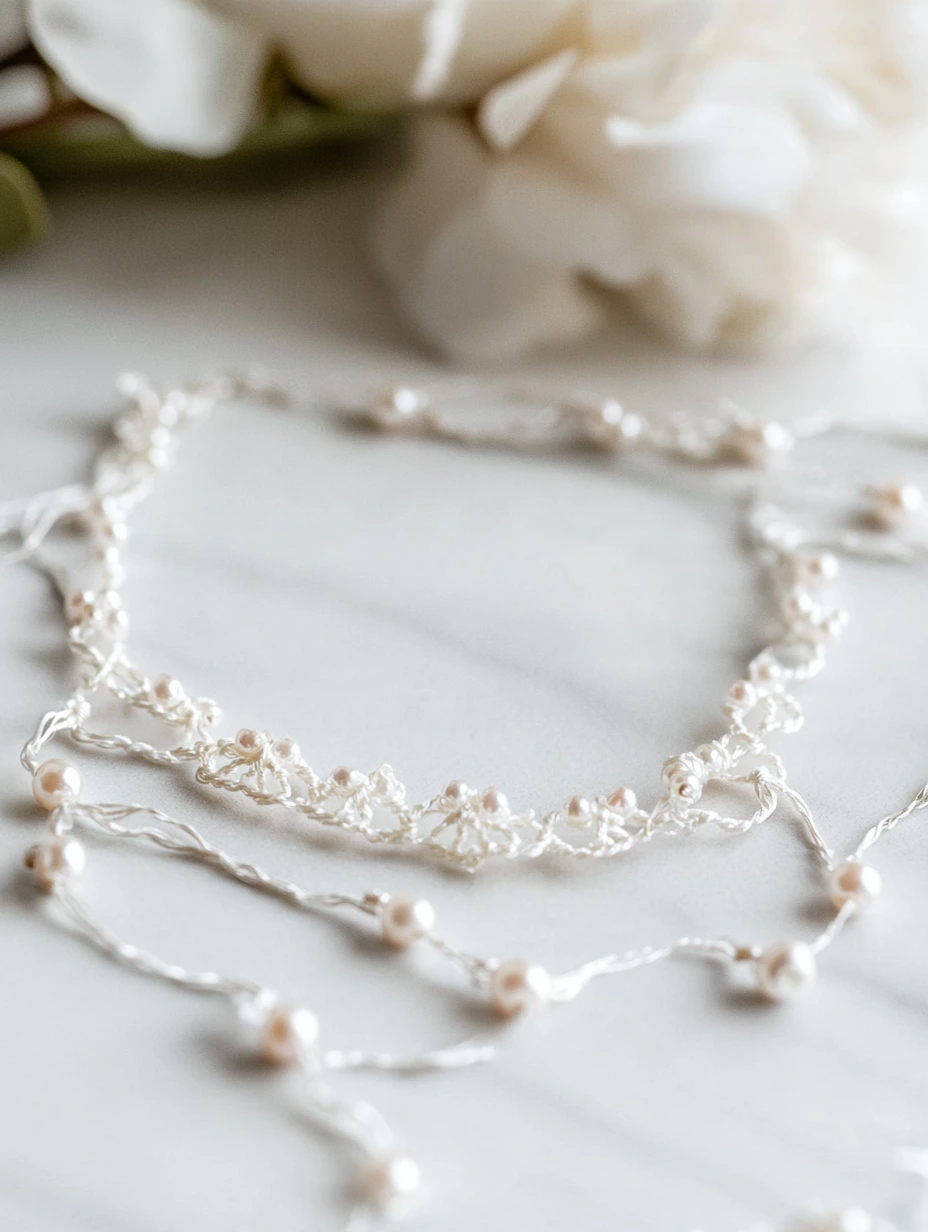
The Y2K revival has brought seed beads back into crochet in the most pleasing way. A beaded crochet necklace uses pre-strung beads slid onto the working yarn before crocheting, so each bead is locked into a stitch as you work. The technique is slower than regular crochet: the beads require attention and positioning: but that slowness is part of what makes it meditative. A simple single-strand necklace with alternating bead colors takes two to three focused hours and produces something delicate and genuinely wearable. Use size 6 or 8 seed beads in pearl, clear, or pastel tones with fine crochet thread for results that look nothing like typical craft jewelry.
Yarn: Size 10 crochet thread in white or cream, plus size 6 or 8 seed beads
Hook: 1.5mm steel hook
Time: 2–3 hours
Skill level: Intermediate
Trend note: Pearl or iridescent beads in a single color strand reads elevated rather than crafty
4. Neutral Granny Square Cardigan
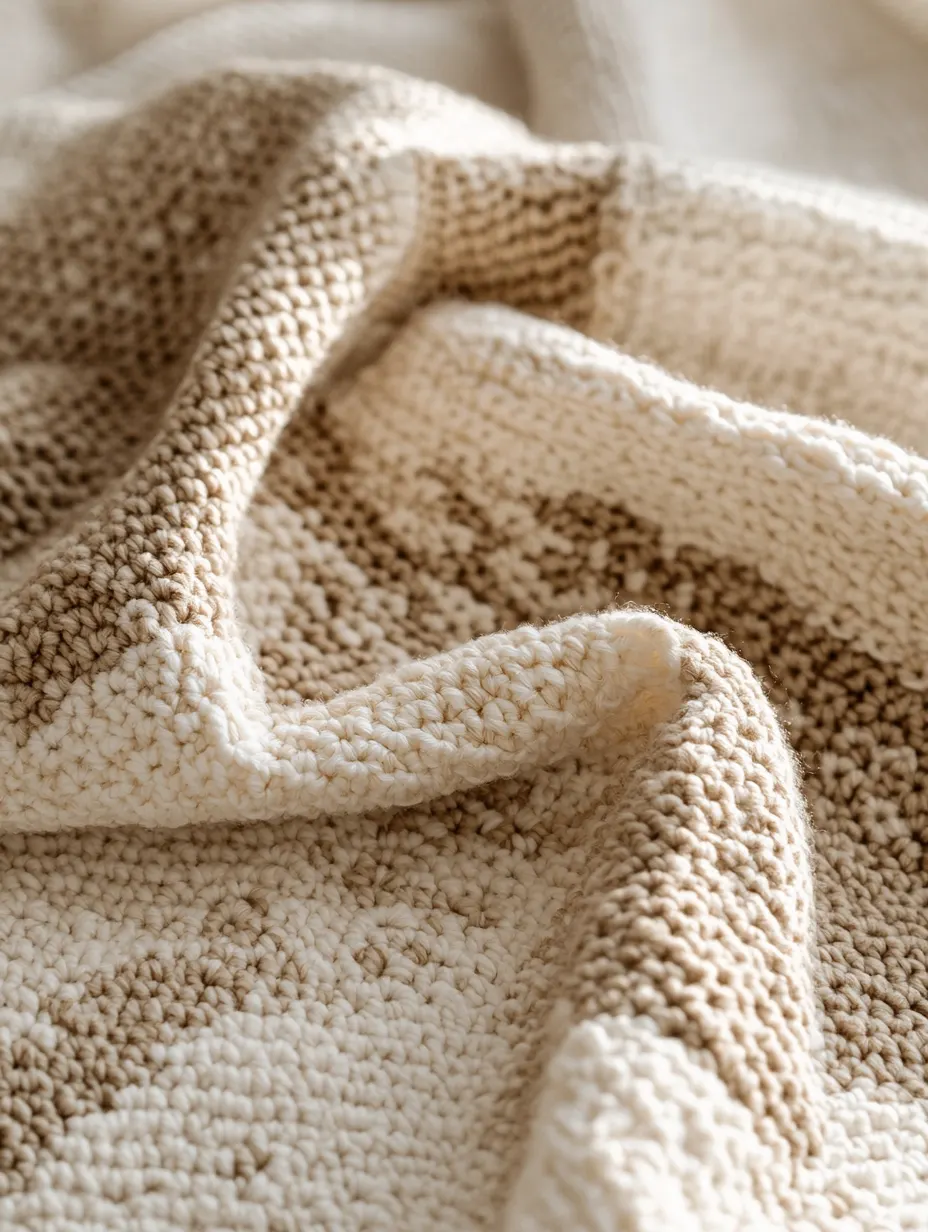
The granny square cardigan has moved far beyond its 1970s origins into something genuinely contemporary when worked in a tonal neutral palette. The construction joins individual squares: all the same size, all in the same color family: into a boxy, oversized silhouette that drapes easily and works in any season in a lightweight yarn. The key trend decision is color: where previous granny cardigans used every color at once, the current version works in two or three tones of the same hue: warm beige, oatmeal, and cream, or three shades of soft grey. The result reads as intentional and modern rather than nostalgic. This is a longer project but built from the same small, repeatable unit you already know how to make.
Yarn: DK weight cotton or wool blend in 2–3 tonal neutrals
Hook: 4.0mm (G)
Time: 30–50 hours
Skill level: Intermediate
Trend note: Tonal neutrals are the single change that makes this feel current rather than vintage
5. Boho Fringe Wall Hanging
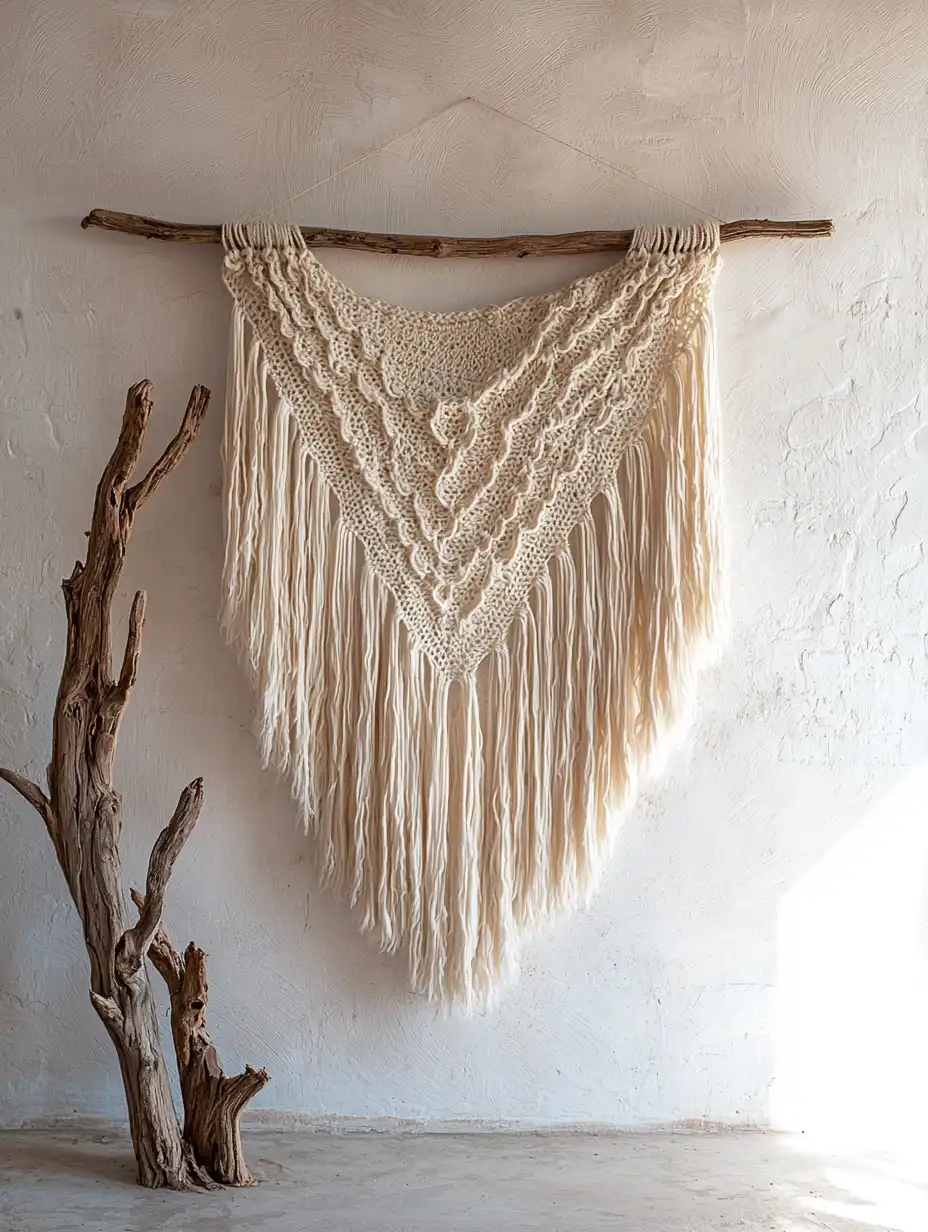
Macrame-adjacent crochet wall hangings have been building quietly and are now a fixture in interior design content everywhere. The appeal is texture: thick yarns, long fringe, layered shapes that catch light differently across the day. A boho wall hanging typically combines a crocheted top panel: worked in simple rows of single or double crochet: with cut yarn fringe looped through the bottom edge and trimmed to a chevron or irregular hem. The whole piece hangs from a wooden dowel or driftwood branch. Work in a chunky natural fiber, add beads or shells to the fringe ends if the space calls for it, and you have a piece that takes a Saturday and changes a wall entirely.
Yarn: Bulky or super bulky in natural fiber or undyed wool
Hook: 9.0mm (M) or 10.0mm (N)
Time: 4–6 hours
Skill level: Beginner
Trend note: Undyed or minimally processed fiber in a natural cream or warm grey reads as intentionally slow and handmade
6. Textured Throw Pillow Cover
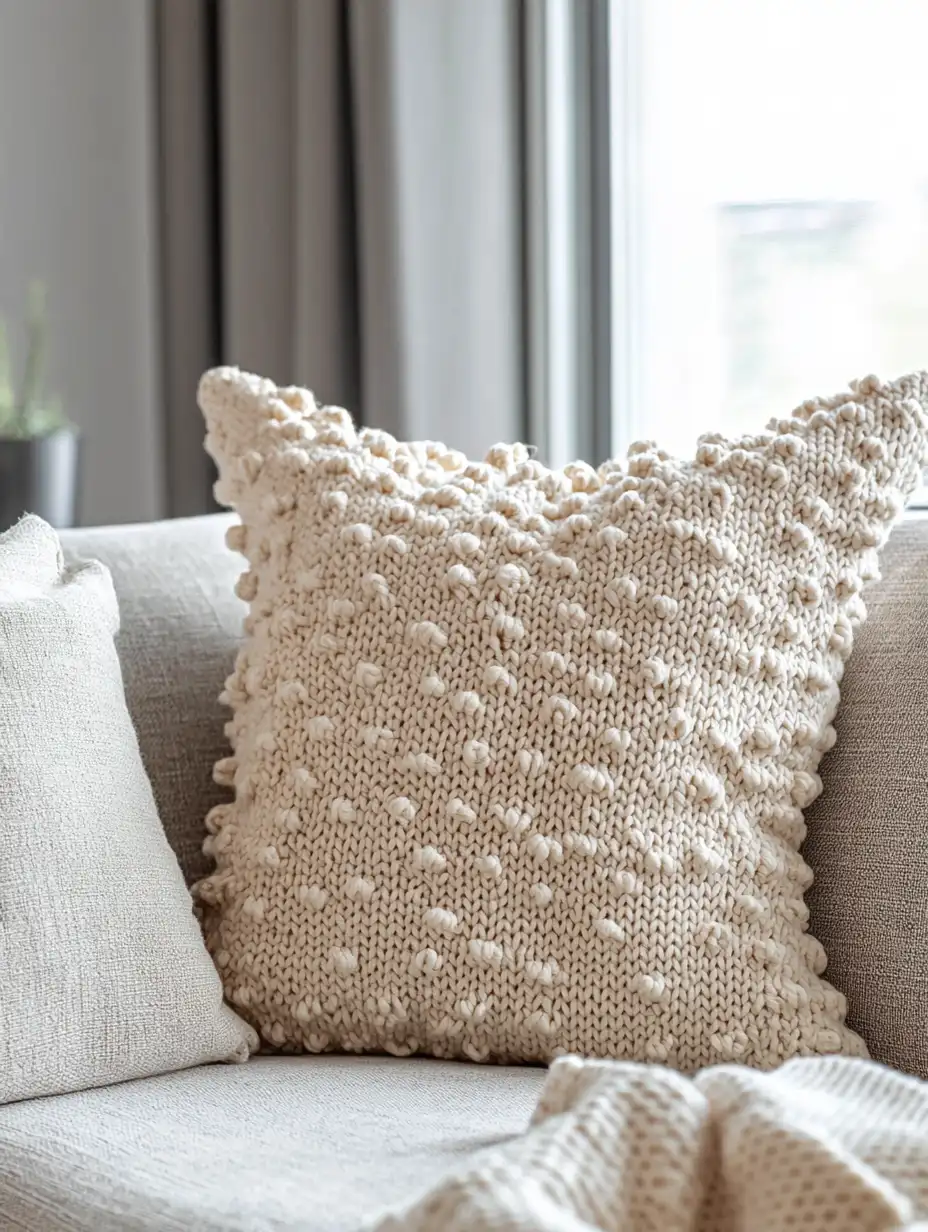
Bobble stitch, popcorn stitch, puff stitch: textured crochet pillow covers are having a significant moment in home interiors, and for good reason. A single stitch repeated across a flat panel creates a surface that invites touch, holds light in three dimensions, and transforms a plain cushion insert into something that looks considered. The bobble stitch is the most beginner-accessible: five incomplete double crochets drawn together in one stitch, spaced evenly across the fabric. Work it in a single neutral color and the texture does everything. A standard 18-inch pillow cover takes six to eight hours and is the kind of object that sits on a sofa indefinitely without looking dated.
Yarn: Bulky or chunky weight cotton in any single neutral
Hook: 6.5mm (K) or 8.0mm (L)
Time: 6–8 hours
Skill level: Beginner to intermediate
Trend note: Cream or warm white bobble texture on a natural linen insert looks like something from a high-end home store
7. Crochet Bucket Hat
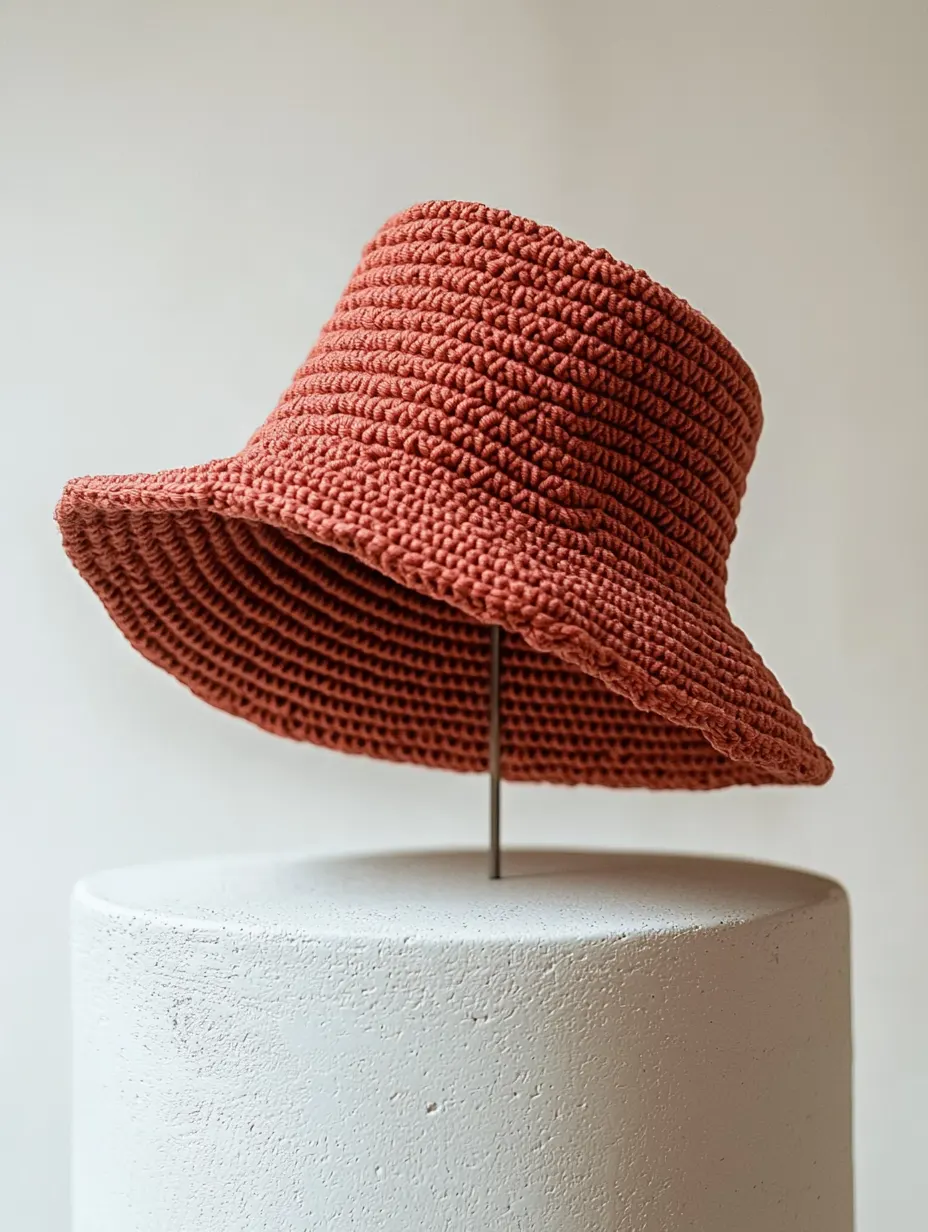
The bucket hat has been cycling in and out of fashion for decades, but the crocheted version has found a more permanent home because texture makes it feel distinct from its canvas or denim counterparts. Worked from the top crown down in single crochet with a slight increase rate that creates the characteristic slope, then finished with a wide brim worked flat, the construction is logical and self-explaining once you begin. Cotton yarn in a solid color keeps the stitch texture as the visual point. Wear it once and you’ll understand the appeal immediately: it sits differently on the head than any manufactured hat, with a slight give that makes it genuinely comfortable. Make one in a deep terracotta or sage green and it works across most of the year.
Yarn: DK or worsted weight 100% cotton
Hook: 4.0mm (G) or 5.0mm (H)
Time: 5–8 hours
Skill level: Intermediate
Trend note: Earthy tones: terracotta, clay, sage, warm stone: are the palette driving bucket hat searches right now
8. Mini Crossbody Bag
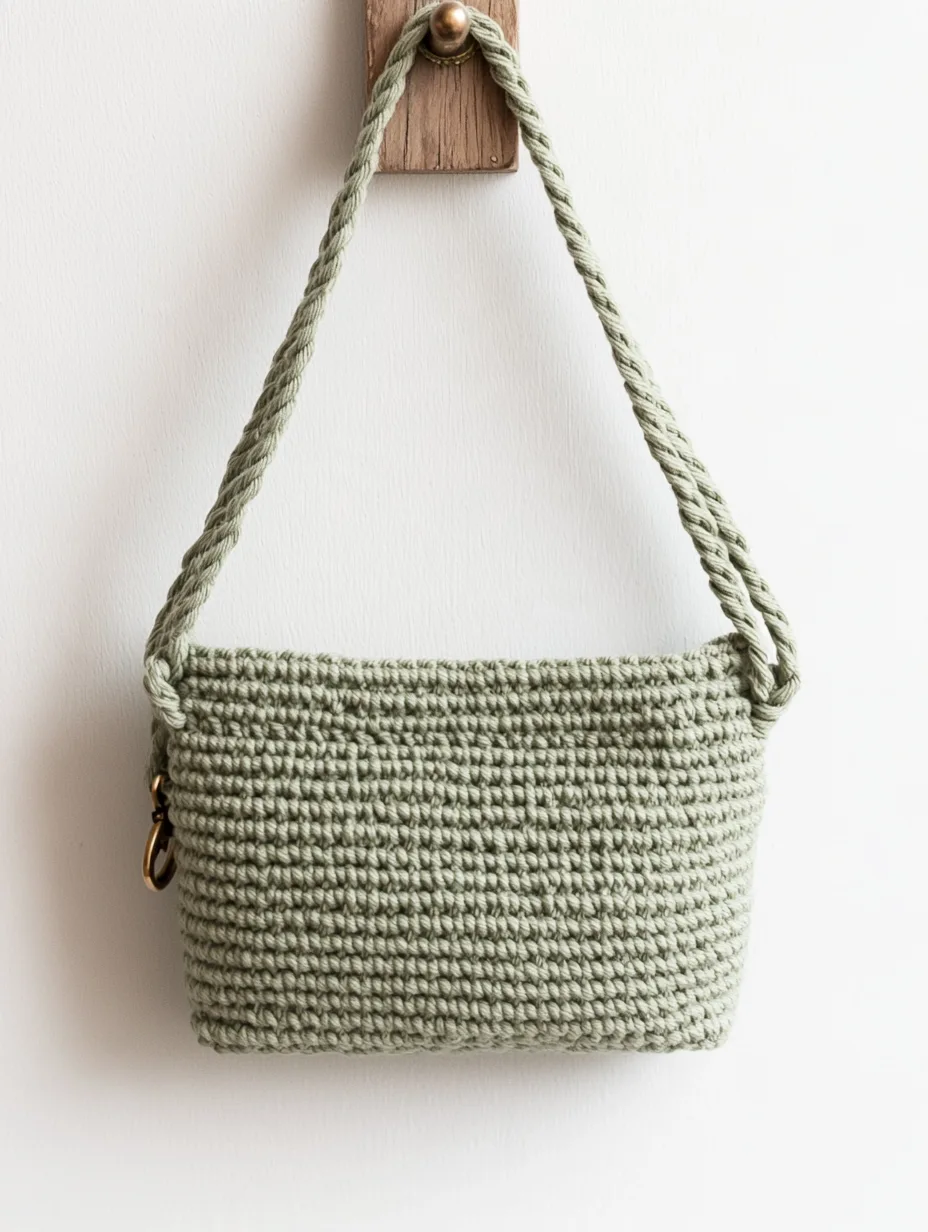
Small bags are dominant in fashion right now, and the crocheted mini crossbody fits the trend without requiring you to buy one. The construction is a small rectangular or oval body worked in the round, a simple flap closure, and a long chain or twisted cord strap. What makes it trend-relevant is the finishing: a magnetic snap closure sewn into the flap, a tasseled zipper pull, or a single large button chosen with care. Work it in a sturdy cotton or nylon-blend for durability, and line the interior with a scrap of fabric for structure. The whole project fits in a weekend and produces something genuinely usable for daily carry: small enough for a phone, keys, and cards, which is all most days actually require.
Yarn: Worsted weight cotton or nylon-blend in any solid color
Hook: 5.0mm (H)
Time: 5–7 hours
Skill level: Intermediate
Trend note: A simple fabric lining adds structure and makes the finished bag look significantly more polished
9. Mosaic Crochet Coaster Set
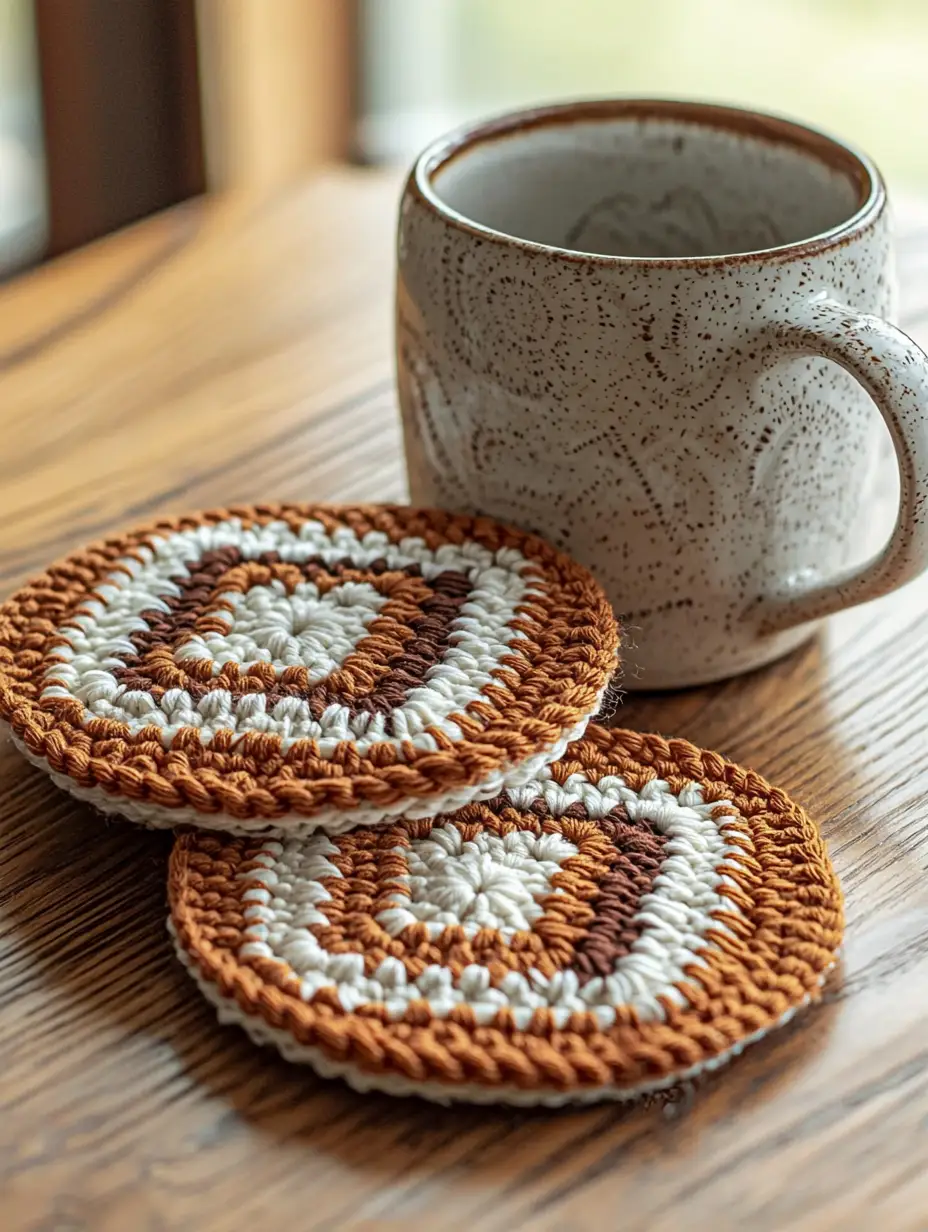
Mosaic crochet is one of the most satisfying techniques to learn because the graphic results look far more complex than the method deserves. Working with two colors but only ever carrying one at a time, you create geometric patterns by working slip stitches into rows from the previous color pass. The result is a clean, interlocking pattern that looks like inlay work. A set of four coasters is the ideal mosaic learning project: small enough to finish quickly, repetitive enough to let the pattern click, and varied enough that you can try a different motif on each one. A simple diamond, a chevron, a cross, and a check pattern: worked in two high-contrast colors: makes a set worth displaying.
Yarn: Worsted weight cotton in 2 high-contrast colors per coaster
Hook: 5.0mm (H)
Time: 1–2 hours each, 6–8 hours for a set
Skill level: Intermediate
Trend note: Black and cream, or terracotta and white, are the colorways making the most appearances in mosaic crochet content right now
10. Chunky Knit-Look Blanket
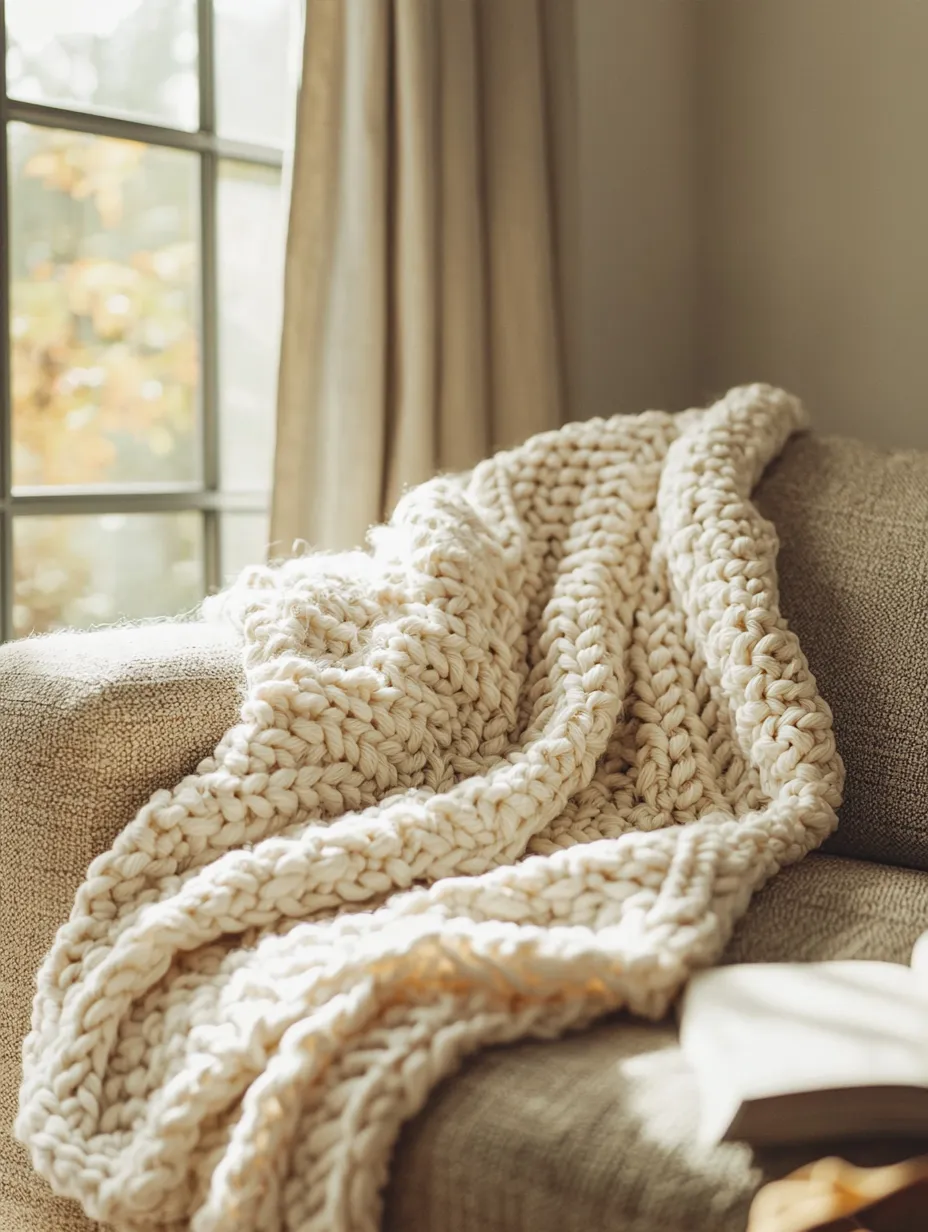
The waistcoat stitch: worked in the front loop only of a slip stitch in a way that creates a V-shaped knit-like surface: produces fabric that most people cannot immediately identify as crochet. In a super bulky yarn with a large hook, it grows fast and looks like the expensive chunky knit throws that circulate endlessly on home decor accounts. The technique is simply structured: work slowly, place your hook carefully in the correct loop, and the fabric builds itself into something with real visual weight. A lap blanket takes one long weekend; a throw takes two or three, but each session leaves you with a noticeably larger piece, which is its own kind of satisfaction.
Yarn: Super bulky or jumbo weight in cream, oatmeal, or warm grey
Hook: 12.0mm (P) or 15.0mm (Q)
Time: 8–15 hours depending on size
Skill level: Beginner to intermediate
Trend note: The knit-look surface in an undyed natural fiber is what makes this photograph the way it does: texture is everything here
11. Vintage-Inspired Doily Table Runner
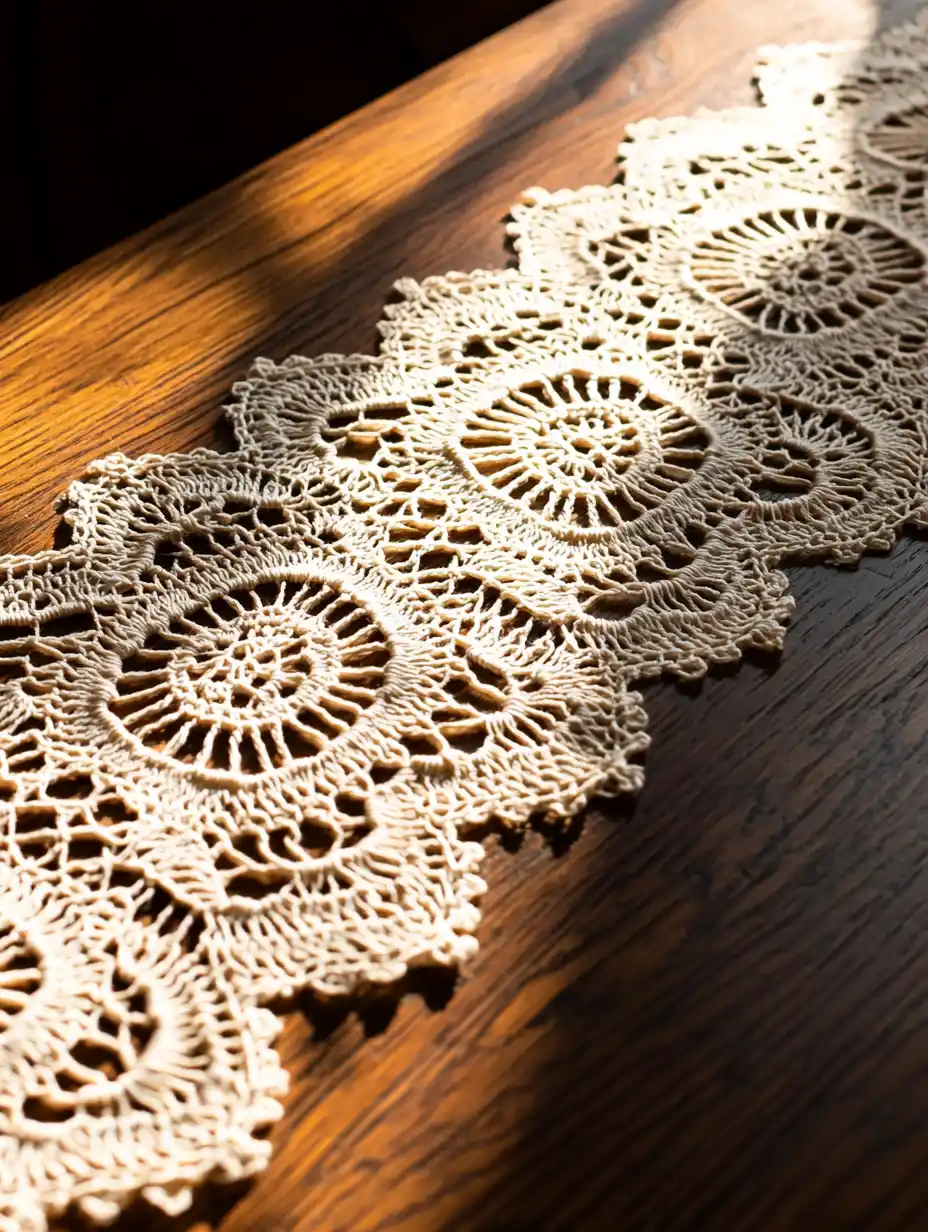
Doilies fell out of fashion for a long time and have come back as part of a broader reclamation of traditional craft: not as nostalgic kitsch but as genuine lace-making skill appreciated on its own terms. A table runner worked in fine cotton thread using a simple fan and shell lace pattern is quiet, precise work that rewards patience. The stitches are small and the progress feels slow, but the accumulation of open lacework across several hours produces something genuinely beautiful: the kind of textile that gets passed along rather than discarded. Lay it on a dark wood table and photograph it in afternoon light and you’ll understand why this is trending again.
Yarn: Size 10 crochet thread in white or natural ecru
Hook: 1.75mm or 2.0mm steel hook
Time: 10–15 hours
Skill level: Intermediate to advanced
Trend note: Natural ecru thread reads more contemporary than bright white: it photographs warmer and sits more easily in modern interiors
12. Crochet Crop Top
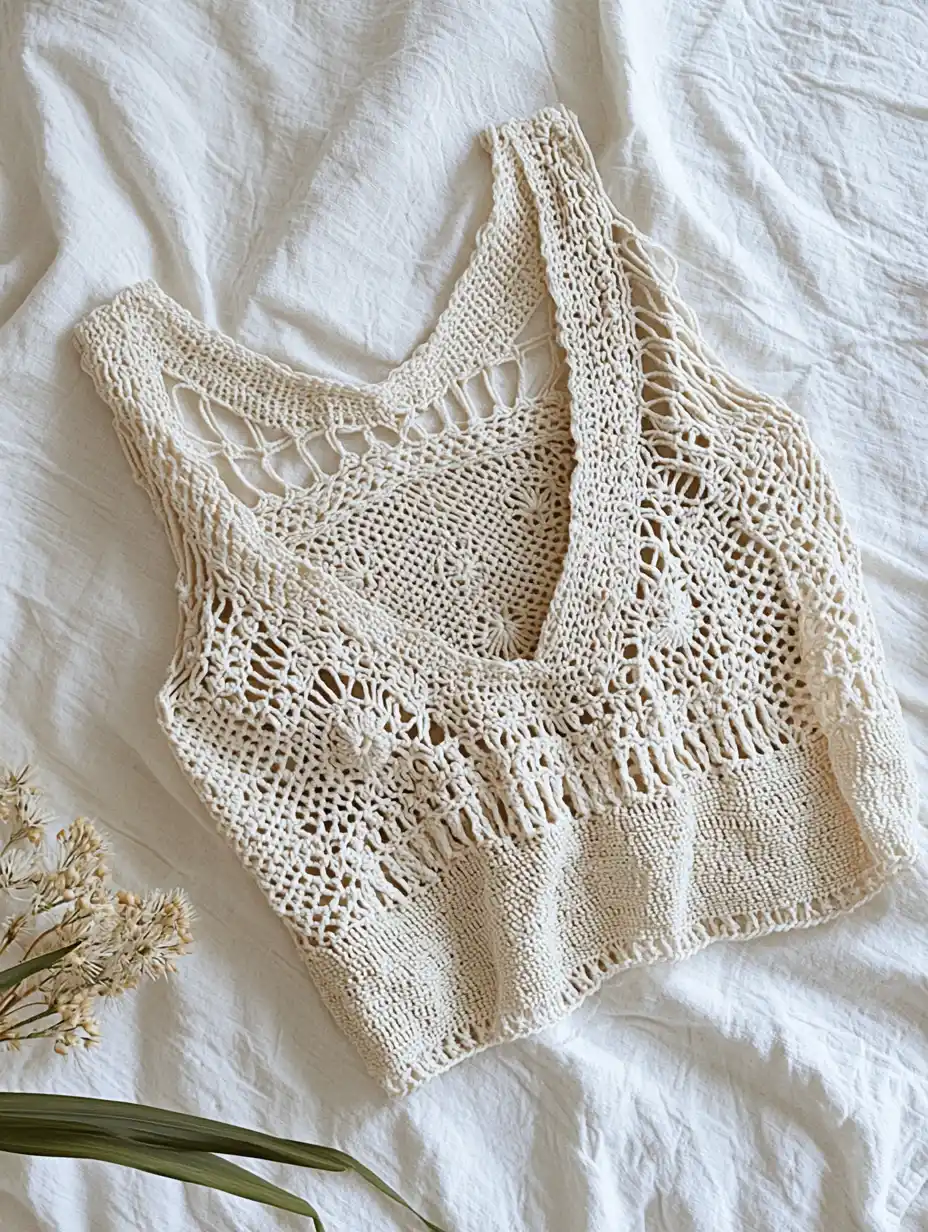
The crocheted crop top has become one of the defining crochet garment moments of recent years, and the best versions are built on restraint rather than complexity. A simple rectangle of single or half double crochet in cotton yarn, worked to the right dimensions and finished with armhole shaping, is all you need: the openwork nature of crochet gives it enough visual interest without added stitch pattern. Wear it over a bandeau or a fitted layer, and the handmade quality becomes the whole point of the outfit. Fit is everything with a crop top: measure carefully, swatch honestly, and add width before length if you’re unsure. Cotton in a warm ecru or natural white is the most versatile starting place.
Yarn: DK weight 100% cotton in ecru, white, or any solid color
Hook: 4.0mm (G)
Time: 8–12 hours
Skill level: Intermediate
Trend note: Open mesh or shell stitch panels give enough airiness that the top works through warm weather
13. Plant Hanger Set
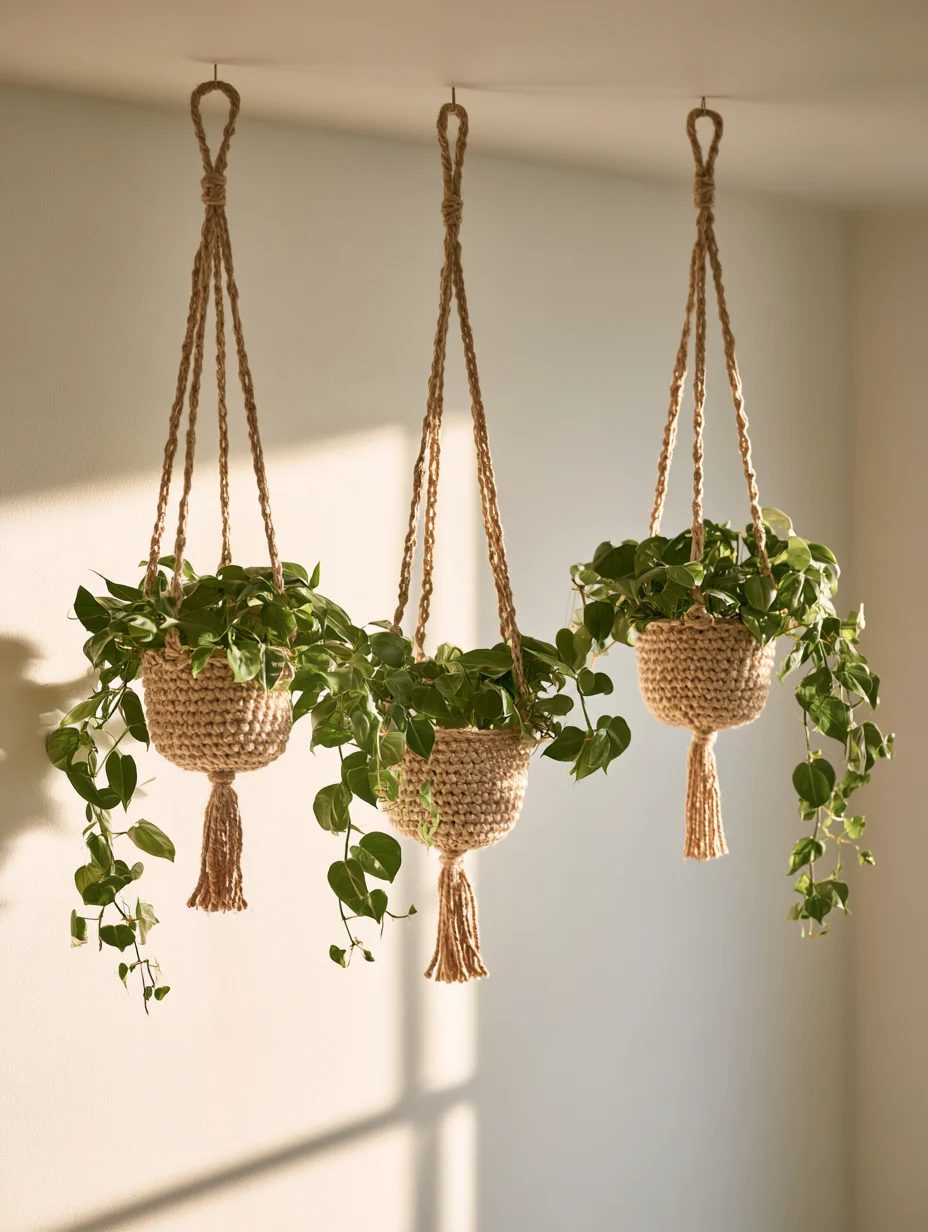
Crocheted plant hangers blur the line between macrame and crochet in a way that has made them popular with makers from both traditions. The structure is simple: a long cylindrical tube worked in the round to cradle a pot, with extending cords or chain lengths that gather at the top into a hanging loop. Three hangers at different heights: one for a trailing pothos, one for a small succulent, one for a herb pot: create a living wall arrangement that costs almost nothing in materials and transforms unused vertical space. Work in jute, hemp, or a thick natural cotton, and the hangers have enough structural integrity to hold a reasonably sized pot without stretching.
Yarn: Jute twine, hemp cord, or thick natural cotton
Hook: 6.0mm (J) or 8.0mm (L)
Time: 2–3 hours each
Skill level: Beginner
Trend note: Three hangers at varying drop lengths create the layered vertical garden look that performs extremely well in home decor content
14. Crochet Kindle or Tablet Sleeve
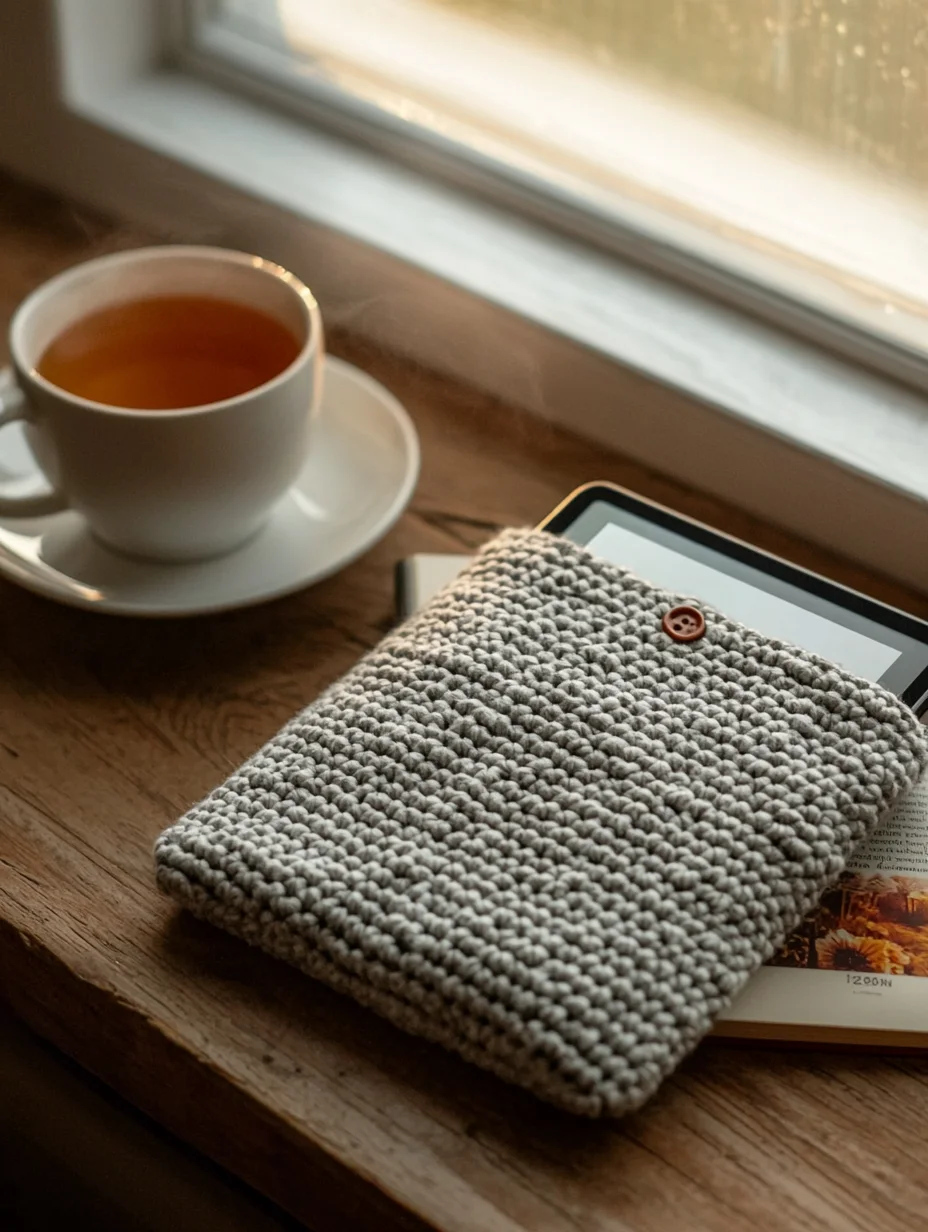
A crocheted sleeve for a Kindle or small tablet is a project that sits at the intersection of practical and personal: you’re protecting something you use every day in something you made yourself. The construction is an open-top envelope shape, worked flat in two panels and seamed on three sides, with an optional button or snap closure flap. Use a firm cotton in a stitch that creates dense, protective fabric: the waistcoat stitch or moss stitch both work well here: and the sleeve will cushion against minor impacts while being thin enough not to add bulk. Measure your device carefully before casting on and the fit will be snug and satisfying.
Yarn: Worsted weight cotton in any solid color
Hook: 5.0mm (H)
Time: 3–4 hours
Skill level: Beginner
Trend note: A crocheted tech accessory signals the kind of intentional, analog-adjacent lifestyle that resonates widely right now
15. Bobbly Beanie Hat
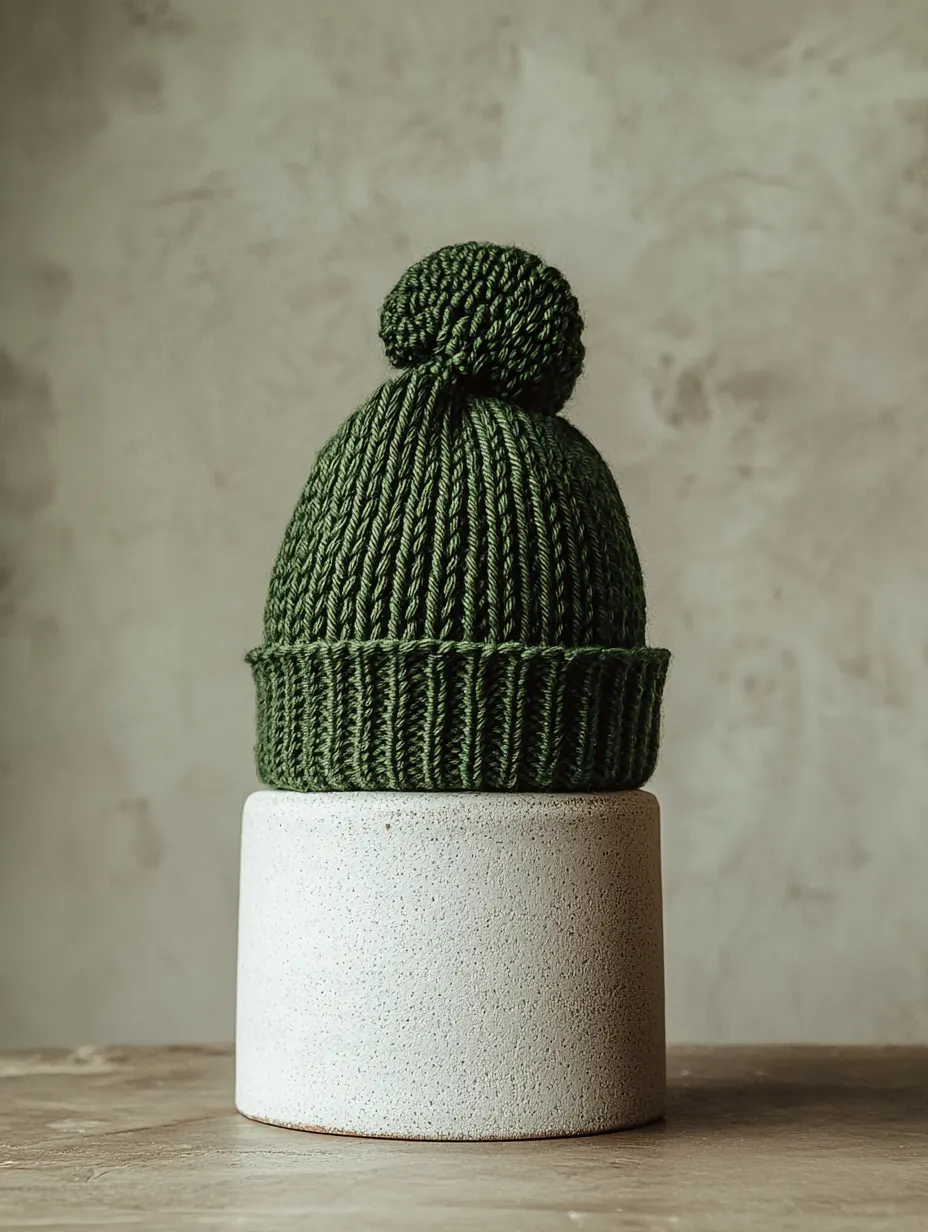
The bobble beanie has moved from basic winter hat to something more considered: worked in a single color with an all-over bobble pattern, it has a sculptural quality that flat-knit hats don’t. The hat is worked in the round from the brim up, with bobble stitches placed on every third or fourth stitch in alternating rows to create a dense, textured surface. In a warm-toned merino or wool blend, the finished hat holds its shape well and keeps exceptional warmth in the structured bobble fabric. The size is small enough that even a slow crocheter can finish in a day, which makes it a satisfying project when you want something wearable by the weekend.
Yarn: Worsted weight merino or wool blend in a single warm tone
Hook: 5.0mm (H) or 5.5mm (I)
Time: 4–6 hours
Skill level: Intermediate
Trend note: Deep teal, warm rust, forest green, and chocolate brown are the beanie colorways accumulating the most saves right now
16. Crochet Sun Hat with Wide Brim
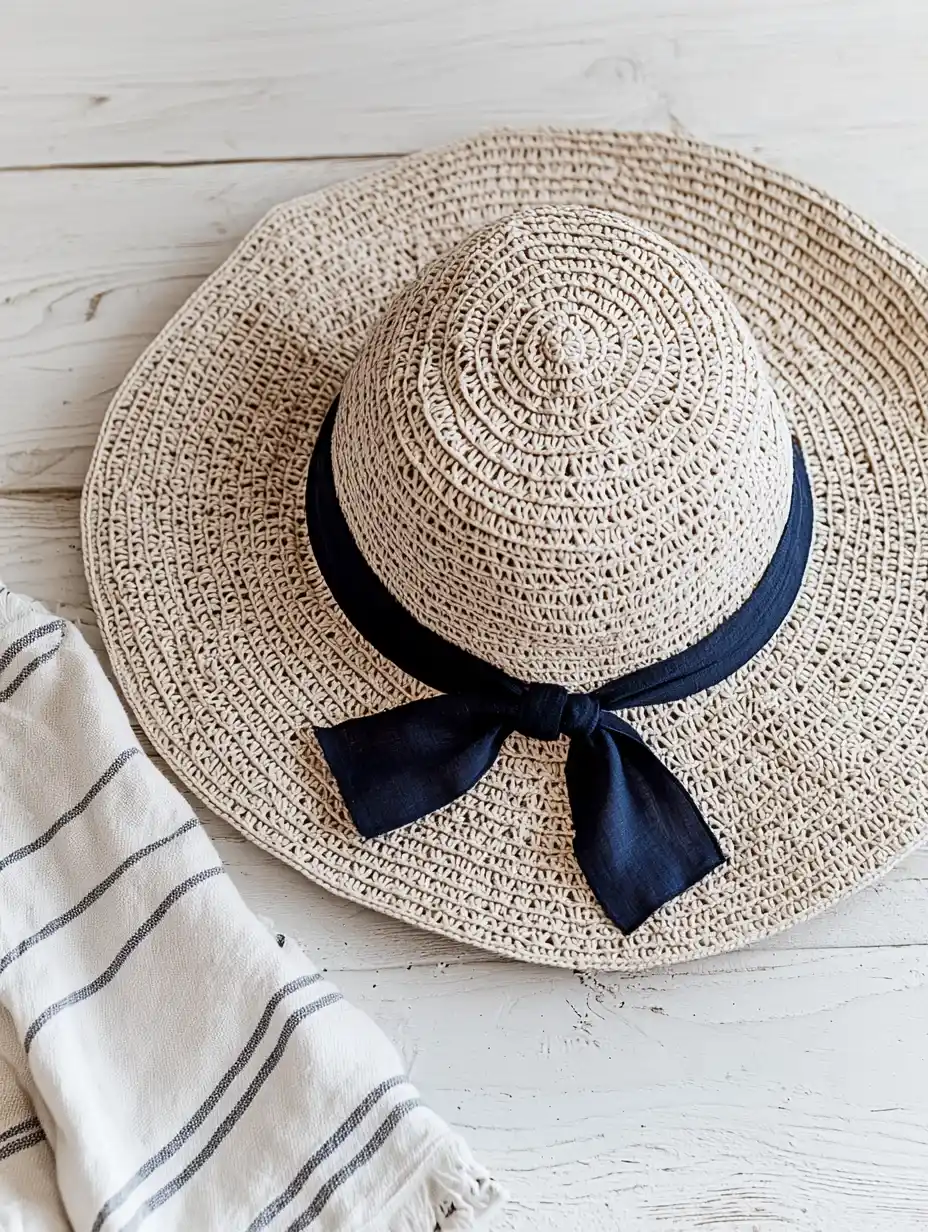
A wide-brim crochet sun hat in natural raffia or straw-substitute yarn is the warm-season accessory that gets the most attention of almost anything you can make. The construction increases in even rounds from a flat crown to the desired head circumference, then shifts to a flat working plane that creates the brim: the brim width is determined simply by how many rounds you continue. Raffia yarn is inexpensive, widely available, and stiff enough to hold the brim shape without blocking or stiffening agents. The whole hat takes one focused afternoon and is the kind of thing that photographs so well people assume it was purchased. Wear it on the first sunny day after you finish it and it will have paid for its materials twice over in compliments.
Yarn: Natural raffia or paper straw yarn
Hook: 4.0mm (G) or 5.0mm (H)
Time: 4–6 hours
Skill level: Intermediate
Trend note: A simple ribbon band in black or navy tied around the crown base elevates the hat significantly for almost no additional effort
17. Colorwork Mittens
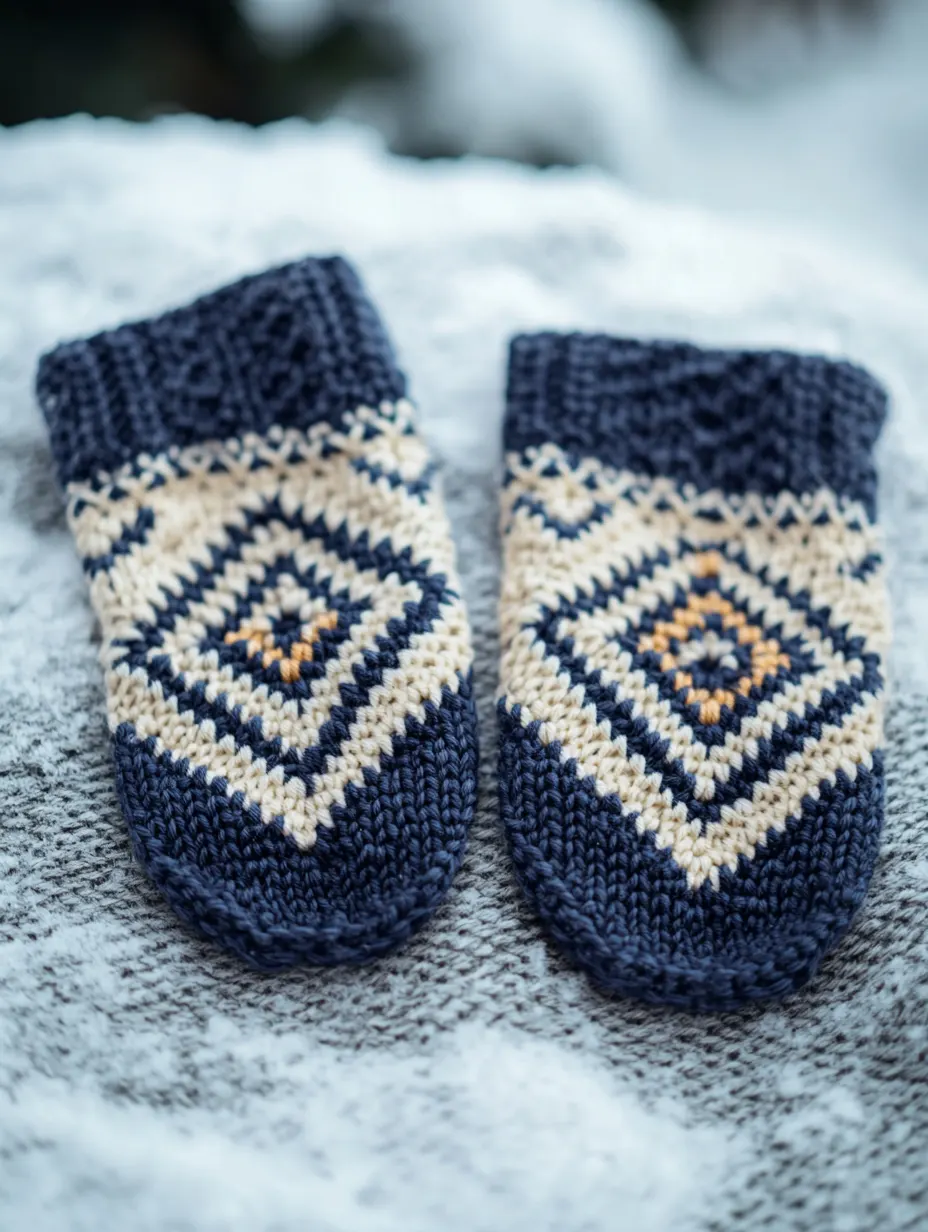
Colorwork crochet mittens: two colors carried together in a simple stranded or intarsia pattern across a small, shaped canvas: are one of the best ways to learn colorwork technique because the mitten is small enough to correct and restart without significant loss. A simple geometric pattern, a small snowflake, or a repeating diamond motif gives the colorwork enough visual interest to be worth the technique investment. The fabric produced by carrying two yarns is denser and warmer than single-color crochet, which makes colorwork mittens genuinely more functional as well as more beautiful. Work the first mitten slowly and carefully; the second will be noticeably faster as the pattern becomes familiar.
Yarn: DK weight wool in 2 contrasting colors
Hook: 4.0mm (G)
Time: 6–10 hours per pair
Skill level: Intermediate
Trend note: Nordic-inspired geometric motifs in cream and deep navy or red and oatmeal are the colorwork patterns with the most current resonance
18. Aesthetic Bookshelf Basket
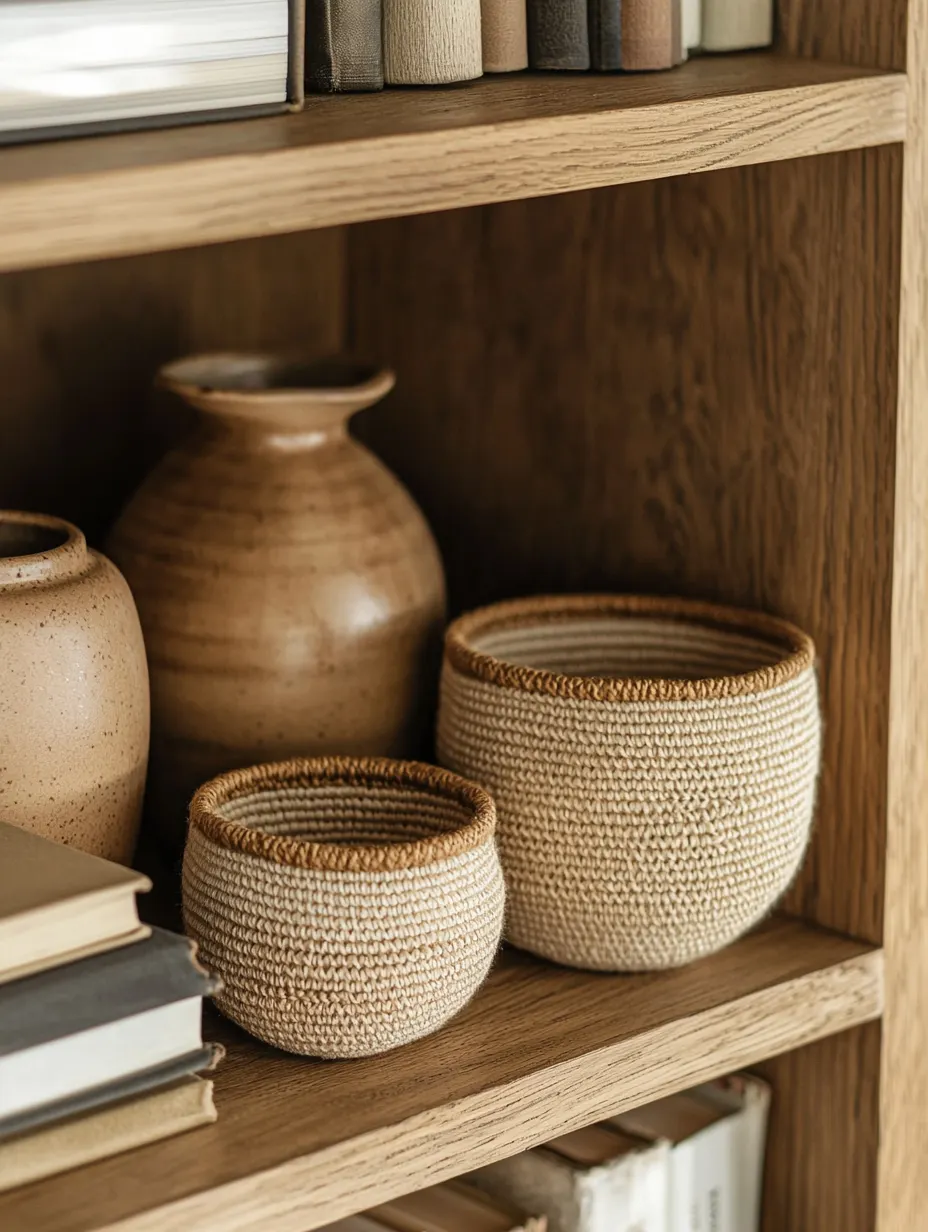
A crocheted basket sized for a bookshelf: roughly 8 inches wide by 6 inches tall: is the kind of storage object that makes a shelf look curated rather than cluttered. Worked in a natural cotton rope or thick cotton yarn in the round with a sturdy single crochet, the basket holds its shape without a liner or stiffener and takes a weekend to complete. The current bookshelf aesthetic is heavily textured and natural-material-forward: crocheted baskets sit beside ceramic vessels and woven trays as part of a considered arrangement rather than being tucked out of sight. Make two or three in graduating sizes from the same yarn and the set reads as a collection.
Yarn: Cotton rope or thick cotton in natural, cream, or warm grey
Hook: 6.0mm (J) or 8.0mm (L)
Time: 4–6 hours
Skill level: Beginner
Trend note: A single contrasting color row near the rim adds enough visual detail to make the basket look intentionally designed
19. Lacy Triangle Shawl
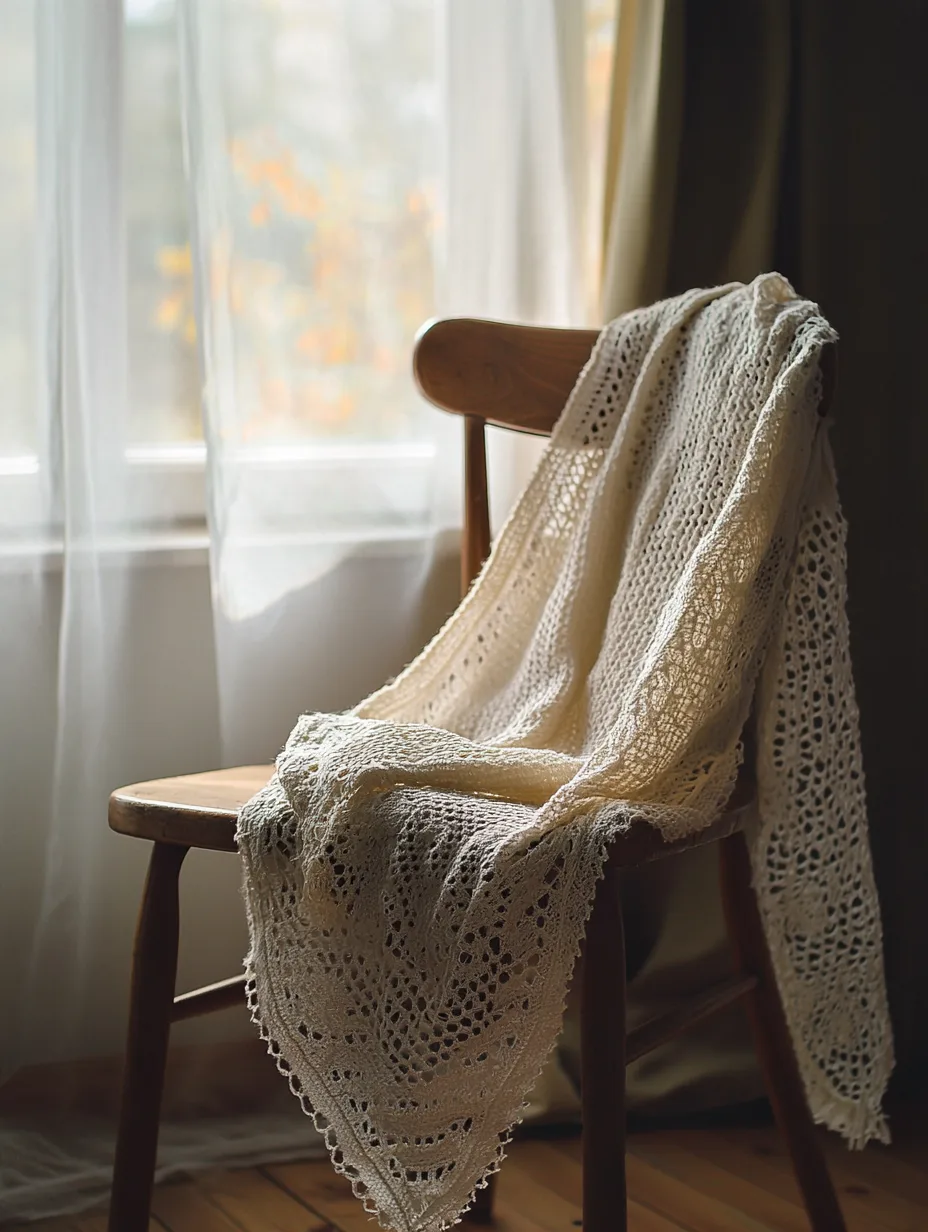
A triangle shawl worked from the center top down in a simple yarn-over lace pattern is one of those projects that feels meditative precisely because the row-by-row growth of the triangle is so visible and gradual. You begin with three stitches and end: many hours later: with several hundred, the piece widening steadily with each row in a way that makes progress impossible to miss. A lightweight mohair or silk-blend yarn gives the lace fabric the soft halo that makes it look ethereal when worn; a plain merino gives it more definition and structure. Either way, the finished shawl is an object that feels like an achievement: not because it’s technically difficult, but because it required sustained presence over many sessions.
Yarn: Lace or fingering weight mohair blend or merino
Hook: 4.5mm (G) or 5.0mm (H) for mohair; 3.5mm (E) for plain fingering
Time: 15–25 hours
Skill level: Intermediate
Trend note: Soft sage, dusty rose, and warm lavender in a mohair halo yarn are the shawl colorways generating the most engagement in crochet communities currently
20. Granny Stripe Afghan
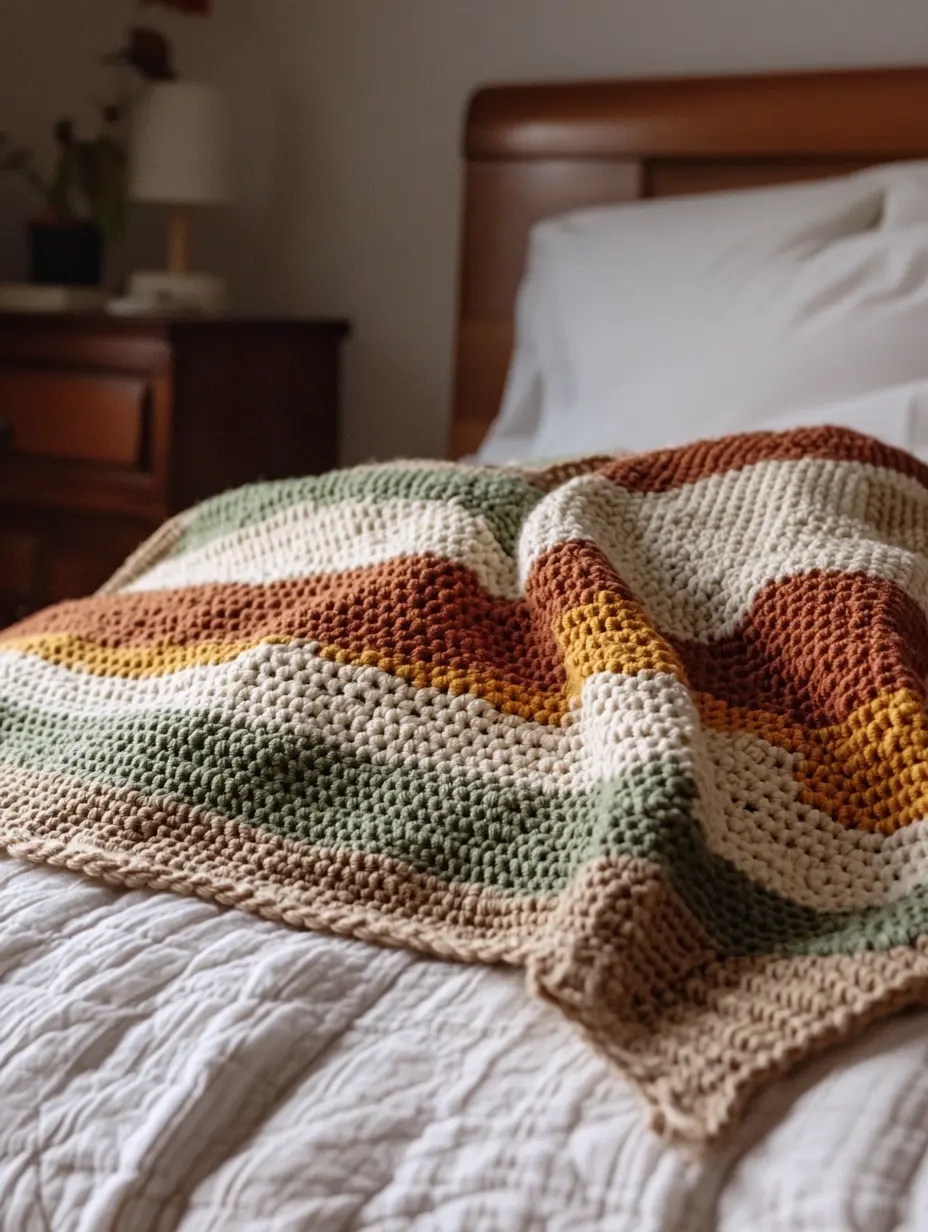
The granny stripe afghan is a classic for reasons that don’t diminish with repetition: the pattern is simple enough to work without looking at your hands, the stripe structure means color changes happen frequently enough to stay interesting, and the finished blanket is generous and soft and genuinely useful. The stitch is clusters of three double crochets separated by a chain space, worked in continuous rows that grow the stripe across the full width of the blanket. Choose a palette of eight to ten colors that share an undertone: all warm, or all muted, or all dusty: and the stripes will read as a coherent whole rather than a random sampling of your stash. This is the afghan to make if you want something you’ll still love in ten years.
Yarn: Worsted weight in 8–10 colors from a coherent palette
Hook: 5.0mm (H)
Time: 20–35 hours depending on size
Skill level: Beginner
Trend note: Muted earth tones: terracotta, warm sage, dusty mustard, cream, warm brown: are the granny stripe palette with the most sustained current appeal
21. Jellyfish Amigurumi
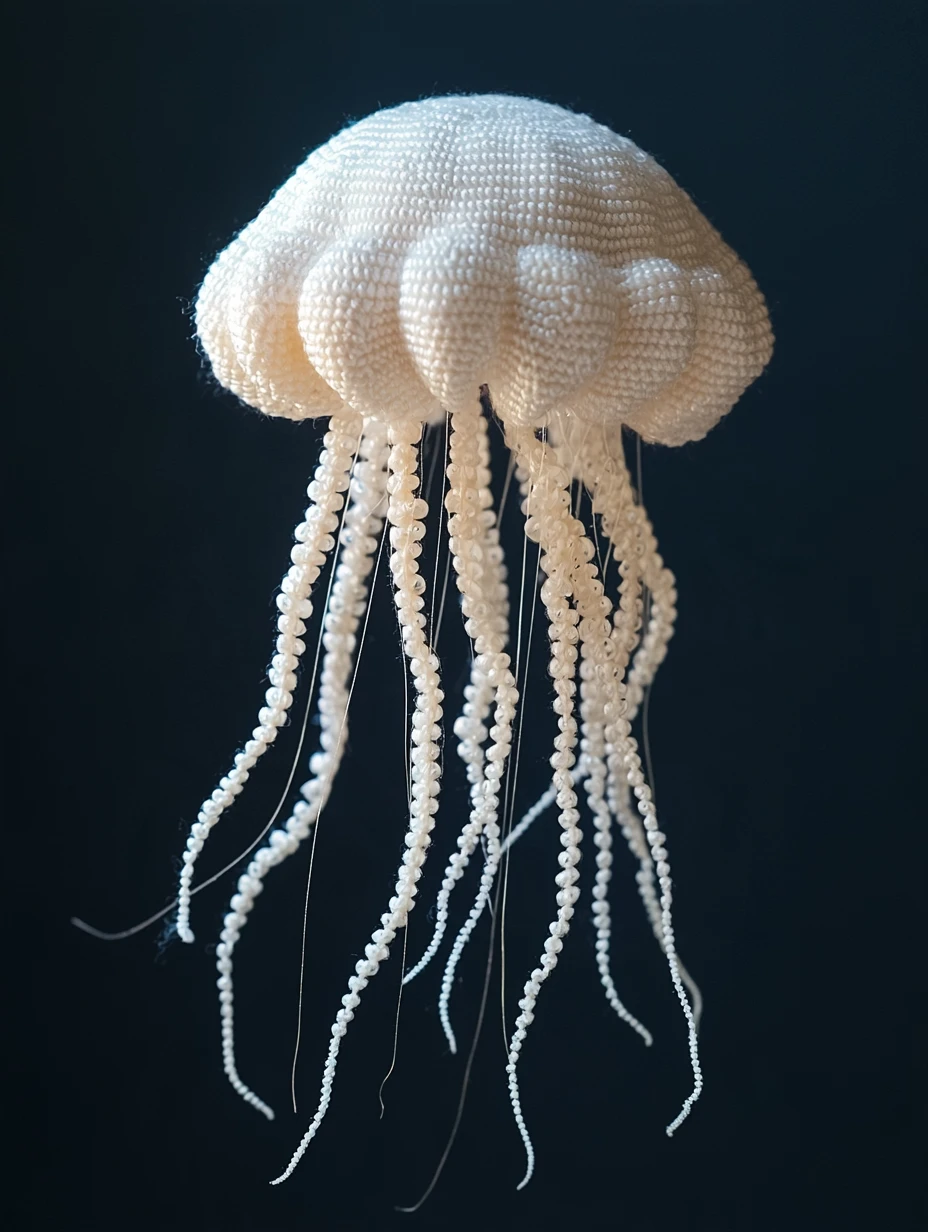
The jellyfish amigurumi has become one of the most-saved crochet patterns online for reasons that are immediately obvious when you see one: the round, soft-stuffed dome body with trailing tentacles of varying lengths creates something that looks genuinely alive in the most charming way possible. The construction is a simple dome shape worked in the round, stuffed firmly, then finished with tentacles of chain-and-slip-stitch cords attached around the lower edge. In a translucent or iridescent yarn: many manufacturers now produce yarn with a subtle sheen specifically marketed for jellyfish: the finished creature catches light in a way that standard acrylic doesn’t. Hang one by a loop from the top and it moves slightly in air currents, completing the illusion.
Yarn: DK weight with a subtle sheen or iridescent finish in any pale pastel
Hook: 4.0mm (G)
Time: 3–5 hours
Skill level: Beginner
Trend note: Pale blush, ice blue, and lilac with a pearl sheen are the jellyfish colorways currently appearing most across crochet platforms
Staying Current Without Chasing Every Trend
How to Read Crochet Trends Without Losing Your Own Voice
Trends in crochet move more slowly than in fashion, which is one of the things that makes them worth paying attention to. A color palette or stitch direction that appears in crochet content tends to have a two to three year arc rather than a single season, which means adopting it doesn’t require rushing or abandoning whatever you were already making. The most useful way to engage with a trend is to find the version of it that intersects with what you already enjoy making. If you make blankets, the granny stripe in earth tones is the trend that applies to you. If you make accessories, the coastal grandma tote or bucket hat. Let the trend inform the palette or the finishing detail rather than redirecting your whole practice.
Which Techniques Are Worth Learning for Current Crochet
Two techniques appear across more trending projects right now than any others: mosaic crochet and the waistcoat stitch. Mosaic crochet produces graphic, geometric colorwork using only one color per row, making it more accessible than stranded techniques while delivering visually complex results. The waistcoat stitch creates a knit-look fabric from crochet that photographs particularly well and suits the current preference for texture in home goods. Learning either one opens up a significant range of projects. A set of mosaic coasters takes a weekend to make and teaches the technique completely. A small swatch of waistcoat stitch in a chunky yarn takes an afternoon and gives you the fabric feel you need to decide whether to commit to a larger project.
Building a Yarn Stash That Works Across Trends
The most trend-adaptable yarn stash is built around neutrals and earth tones rather than saturated seasonal colors. Cream, oatmeal, warm grey, terracotta, sage, dusty rose, and warm brown form a foundation that has appeared in trending crochet for several years running and shows no sign of fading. From this base, one or two accent skeins in a more specific color: a deep teal, a muted cobalt, a soft lavender: can shift the palette of any project to meet the moment. Buy quality yarn in versatile colors and you’ll find that the stash you have almost always contains what the next trending project needs, without deliberate planning.
Frequently Asked Questions
Which projects on this list are best for beginners?
The boho fringe wall hanging, the plant hanger set, the bookshelf basket, and the jellyfish amigurumi are all genuinely beginner-accessible despite their visual impact. Each one uses simple stitches in a straightforward structure and delivers results that look more complex than the technique behind them. The chunky knit-look blanket is also excellent for beginners: the large hook and bulky yarn make the stitches easy to see and place, and the fabric grows visibly fast, which helps with momentum in the early stages of learning.
What yarn fiber works best for garments like crop tops and cardigans?
Cotton is the most practical choice for warm-weather garments like crop tops and lighter cardigans: it doesn’t stretch excessively with wear, washes well, and holds stitch definition clearly. For the granny square cardigan, a cotton-acrylic blend adds durability without losing breathability. Avoid 100% acrylic for fitted garments because it stretches significantly with body heat and gravity over time. If you want a cardigan with warmth and drape, a cotton-linen blend or a plant-fiber yarn like bamboo gives both without the maintenance requirements of wool.
How do I find free patterns for these trending projects?
Ravelry is the most comprehensive database, with thousands of free and paid patterns filterable by project type, yarn weight, and skill level. For trend-driven projects specifically, searching the project type plus the current year on Pinterest surfaces both patterns and finished project inspiration simultaneously. YouTube tutorials exist for nearly every project on this list: search the project name plus “crochet tutorial free pattern” for results that include both video guidance and written pattern downloads. Many independent designers offer free patterns on their own websites in exchange for newsletter subscriptions, which is worth accepting if you plan to make more than one or two projects from their catalog.
How long does it take to learn mosaic crochet?
Most crocheters who already know basic stitches can grasp the mosaic crochet method within one or two hours of practice. The technique itself is simple: you work one color per row, using slip stitches to pull color up from the previous row of that color: but the visual logic of reading a mosaic chart takes a little time to click. A small swatch of ten to fifteen rows is usually enough to understand how the colors interlock. The coaster set on this list is the ideal first mosaic project: the motif repeats are short, the gauge is forgiving, and the small size means you see the finished pattern quickly, which reinforces the learning faster than a larger project would.